- Stock: Out Of Stock
- Brand: ACI Pharmaceuticals
- Product ID: Hydroxyzine Hydrochloride
🔒 100% Secure Payment | bKash | Nagad | SSLCommerz | COD
⭐ Become a FREE Member: 7% Extra Savings • Free Delivery • Refill Reminders • Priority Support
This Item is for pre order
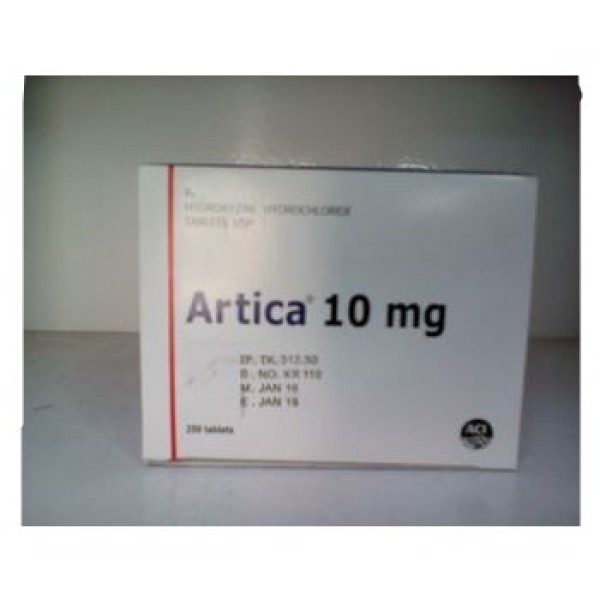
Artica 10 mg Tablet (Hydroxyzine HCl) – ACI Limited
| Brand Name | Artica 10 mg Tablet |
|---|---|
| Generic Name | Hydroxyzine Hydrochloride 10 mg |
| Strength | 10 mg per tablet |
| Dosage Form | Tablet |
| Manufacturer | ACI Limited, Bangladesh |
| Drug Class | First-generation Antihistamine / Anxiolytic / Antipruritic |
| Prescription Required | Yes (Rx) |
| Storage | Store below 30°C in a cool, dry place. Protect from light and moisture. |
1. About Artica 10 mg (Hydroxyzine HCl)
Artica 10 mg Tablet contains Hydroxyzine Hydrochloride 10 mg, a first-generation antihistamine with anxiolytic, antipruritic, and sedative properties, manufactured by ACI Limited, Bangladesh. The 10 mg dose is the low-strength formulation — used for paediatric dosing, elderly patients requiring a smaller starting dose, or mild anxiety and pruritus where the higher 25 mg dose is not required.
Unlike cetirizine (hydroxyzine's active metabolite), hydroxyzine itself has significant CNS sedation and anticholinergic properties that contribute to its anxiolytic and antipruritic effects. It is one of the few antihistamines approved as an anxiolytic agent by international regulatory bodies, with evidence-based use in generalised anxiety disorder and preoperative anxiety.
2. Mechanism of Action
Hydroxyzine is a piperazine antihistamine that competitively antagonises peripheral H1 histamine receptors (antipruritic, anti-allergic effect) and central H1 receptors in the limbic system (anxiolytic, sedative effect). Additional CNS activity includes muscarinic receptor antagonism (anticholinergic — dry mouth, urinary retention risk) and alpha-adrenergic blockade. Central H1 blockade is responsible for sedation and the anxiolytic effect, distinguishing hydroxyzine from second-generation antihistamines (cetirizine, loratadine) which do not significantly cross the blood-brain barrier.
Hydroxyzine is extensively metabolised in the liver, with cetirizine as the primary active metabolite (accounting for antihistamine activity). Onset: 15–30 minutes. Peak effect: 2 hours. Duration: 4–6 hours at 10 mg dose.
3. Indications
- Pruritus: Allergic pruritus, urticaria, atopic dermatitis, contact dermatitis — 10–25 mg TDS-QID
- Anxiety: Generalised anxiety disorder (GAD), acute situational anxiety — 10–25 mg TDS-QID
- Preoperative sedation: 10–25 mg 1 hour before procedure (with or without opioids)
- Paediatric use: Pruritus and anxiety in children — weight-based dosing (0.5–1 mg/kg/dose), 10 mg tablet suitable for children 20–25 kg
- Nausea/vomiting: Vestibular nausea, motion sickness (antihistamine mechanism)
4. Dosage and Administration
Pruritus (adults): 25 mg TDS–QID (Artica 25 mg). For mild pruritus or elderly: 10 mg TDS.
Anxiety (adults): 10–25 mg TDS–QID. Starting with 10 mg TDS is appropriate for elderly patients.
Preoperative sedation: 10–25 mg as a single pre-procedure dose.
Paediatric pruritus/anxiety (<6 years): 0.5 mg/kg per dose QID. For 20 kg child: ~10 mg per dose.
Take with or without food. At night, a larger dose (10–25 mg) helps sleep while controlling nocturnal itching. Maximum adult dose: 300 mg/day.
5. Contraindications
- Hypersensitivity to hydroxyzine, cetirizine, or piperazine derivatives
- QTc prolongation risk: do not use in patients with known QT prolongation, or those on other QT-prolonging drugs
- Pregnancy (especially first trimester and near term — neonatal effects)
- Porphyria
6. Warnings and Precautions
QTc prolongation: Hydroxyzine prolongs QTc interval. Avoid with other QTc-prolonging drugs (amiodarone, quinolones, macrolides, antipsychotics, antidepressants with QTc effect). ECG monitoring in high-risk patients. Low risk at 10 mg doses but still a consideration.
CNS sedation: Causes significant drowsiness — caution with driving, operating machinery. Additive sedation with alcohol, benzodiazepines, opioids, and other CNS depressants.
Anticholinergic effects: Urinary retention (especially in BPH), dry mouth, blurred vision, constipation, cognitive impairment in elderly (Beers Criteria — caution in elderly).
Elderly patients: Beers Criteria lists first-generation antihistamines as potentially inappropriate in elderly. Start with lowest dose (10 mg) and monitor.
7. Side Effects
Common: Drowsiness/sedation (most frequent), dry mouth, dizziness, headache, blurred vision.
Uncommon: Urinary retention, constipation, confusion (especially elderly), tachycardia.
Rare: QTc prolongation, seizures (at high doses), hypersensitivity reactions, paradoxical CNS stimulation (especially children — irritability, tremor).
8. Drug Interactions
- CNS depressants (alcohol, benzodiazepines, opioids): Additive sedation — reduce doses of both agents
- QTc-prolonging drugs: Amiodarone, haloperidol, azithromycin, ciprofloxacin, ondansetron — increased risk of torsades de pointes
- Anticholinergics: Additive anticholinergic effects (urinary retention, confusion, tachycardia)
- MAO inhibitors: Avoid — may prolong and intensify anticholinergic effects
9. Hydroxyzine in Diabetic Patients
Hydroxyzine is frequently used in diabetic patients for: (1) Diabetic pruritus — generalised itching associated with diabetes due to dry skin, neuropathy, and hepatic/renal causes; (2) Anxiety — T2DM is associated with high rates of comorbid anxiety disorders, and hydroxyzine's non-benzodiazepine anxiolytic mechanism is useful for short-term management without addiction risk; (3) Urticaria — diabetic patients on sulphonylureas or other medications occasionally develop drug-induced urticaria where hydroxyzine is first-line antipruritic. Monitor blood glucose — hydroxyzine has minimal direct metabolic effects.
10. Storage
- Below 30°C, cool, dry, protected from light and moisture. Keep in original blister.
Frequently Asked Questions (FAQ)
Q1: What is Artica 10 mg (Hydroxyzine) used for?
Artica 10 mg (Hydroxyzine HCl 10 mg) is a first-generation antihistamine manufactured by ACI Limited with three main indications: (1) Pruritus — allergic itching, urticaria, atopic dermatitis (10–25 mg TDS-QID); (2) Anxiety — generalised anxiety disorder and acute situational anxiety (10–25 mg TDS-QID); (3) Preoperative sedation. The 10 mg strength is used for elderly patients, paediatric doses, or mild presentations. Unlike second-generation antihistamines (cetirizine, fexofenadine), hydroxyzine causes significant sedation due to central H1 blockade.
Q2: Is hydroxyzine addictive?
No — hydroxyzine is not a controlled substance and does not have addiction or dependence potential. It does not act on GABA-A receptors (unlike benzodiazepines) or opioid receptors. This makes it a useful anxiolytic in patients where benzodiazepine dependency is a concern, such as patients with substance use history. Discontinuation does not require tapering. However, it can cause anticholinergic effects and QTc prolongation, which are the primary safety concerns with long-term use.
Q3: Can children take Artica 10 mg?
Yes — hydroxyzine is commonly used in paediatric dermatology and paediatric allergy for pruritus and urticaria. For children, the dose is weight-based: 0.5–1 mg/kg per dose given 3–4 times daily. Artica 10 mg tablet is suitable for children approximately 10–25 kg where the calculated dose is around 10 mg per dose. For smaller children (<10 kg), Artica Syrup (10 mg/5 ml) provides more accurate dosing. Note: paradoxical CNS stimulation (excitability, tremor) can occur in children — reduce dose if this occurs.
Q4: Does Artica 10 mg cause drowsiness?
Yes — drowsiness is the most common side effect of hydroxyzine, occurring in nearly all patients, especially at the 10–25 mg dose range. This is due to its central H1 receptor blockade. The sedation is often used therapeutically (nocturnal dosing for pruritus, preoperative sedation), but patients should not drive or operate heavy machinery after taking Artica. Alcohol and other CNS depressants markedly increase drowsiness. Tolerance to sedation develops with regular use, but antipruritic efficacy is maintained.