- Stock: Out Of Stock
- Brand: ACI Pharmaceuticals
- Product ID: Hydroxyzine Hydrochloride
🔒 100% Secure Payment | bKash | Nagad | SSLCommerz | COD
⭐ Become a FREE Member: 7% Extra Savings • Free Delivery • Refill Reminders • Priority Support
This Item is for pre order
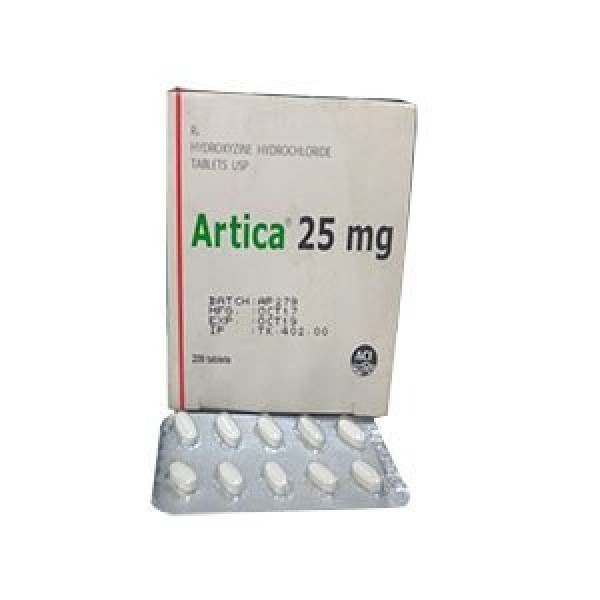
Artica 25 mg Tablet (Hydroxyzine HCl) – ACI Limited
| Brand Name | Artica 25 mg Tablet |
|---|---|
| Generic Name | Hydroxyzine Hydrochloride 25 mg |
| Strength | 25 mg per tablet (standard adult dose) |
| Dosage Form | Tablet |
| Manufacturer | ACI Limited, Bangladesh |
| Drug Class | First-generation Antihistamine / Anxiolytic / Antipruritic |
| Prescription Required | Yes (Rx) |
| Storage | Store below 30°C in a cool, dry place. Protect from light and moisture. |
1. About Artica 25 mg (Hydroxyzine HCl)
Artica 25 mg Tablet contains Hydroxyzine Hydrochloride 25 mg — the standard adult dose of hydroxyzine — manufactured by ACI Limited, Bangladesh. Hydroxyzine is a first-generation piperazine antihistamine with established anxiolytic, antipruritic, and sedative properties. The 25 mg dose is the most widely prescribed strength for adults with pruritus, anxiety, and preoperative sedation.
Hydroxyzine 25 mg TDS–QID represents the standard clinical regimen for chronic urticaria, atopic dermatitis pruritus, and generalised anxiety disorder. Its dual antihistamine + anxiolytic mechanism sets it apart from second-generation antihistamines, making it particularly useful when both itching and anxiety/sleep disturbance are present simultaneously — a common combination in chronic dermatological conditions.
2. Mechanism of Action
Hydroxyzine 25 mg produces its clinical effects through: (1) Peripheral H1 antagonism — blocks histamine at skin mast cells and mucosal surfaces, reducing wheal-and-flare reactions, pruritus, and allergic symptoms; (2) Central H1 blockade in the limbic system — responsible for anxiolytic and sedative effects; (3) Muscarinic antagonism — contributes to drying of secretions and causes anticholinergic adverse effects; (4) Alpha-1 adrenergic blockade — mild anxiolytic contribution. Hydroxyzine is metabolised by CYP3A4/CYP2D6 with cetirizine as the principal active metabolite. Half-life: ~20 hours in adults (longer in elderly — once-daily or BD dosing at 25 mg may be sufficient).
3. Indications for Artica 25 mg
- Urticaria (hives): Chronic spontaneous urticaria, acute allergic urticaria — 25 mg TDS–QID
- Pruritus: Atopic dermatitis, contact dermatitis, drug reactions, renal pruritus, hepatic pruritus — 25 mg TDS–QID
- Anxiety: Generalised anxiety disorder, adjustment disorder with anxiety — 25 mg TDS–QID (evidence-based, non-addictive alternative to benzodiazepines)
- Preoperative medication: 25–50 mg 1 hour before procedure as sedative/anxiolytic premedication
- Alcohol withdrawal: Adjunct in mild-moderate withdrawal (reduces agitation and anxiety)
- Nausea and vomiting: Vestibular nausea, motion sickness
4. Dosage and Administration
Pruritus (adults): 25 mg three to four times daily. Nocturnal dosing: 25–50 mg at night to control nocturnal pruritus and aid sleep.
Anxiety (adults): 25 mg TDS–QID. Some patients respond to 12.5 mg (half-tablet) BD with minimal sedation.
Preoperative sedation: 25–50 mg as a single dose 1 hour pre-procedure.
Elderly: Start at 10 mg (Artica 10 mg) or half of Artica 25 mg — increased sensitivity to anticholinergic effects and sedation. Once-daily dosing at night may be appropriate.
Maximum dose: 300 mg/day (adults). Take with or without food — food may reduce GI irritation.
5. Contraindications
- Hypersensitivity to hydroxyzine, cetirizine, or piperazine derivatives
- QTc prolongation or concurrent QTc-prolonging medications
- Pregnancy (first trimester especially; near-term neonatal effects)
- Porphyria
6. Warnings and Precautions
QTc prolongation: Most significant cardiovascular concern. Hydroxyzine prolongs the QTc interval in a dose-dependent manner — risk higher at 25 mg vs 10 mg. Avoid in patients with baseline QTc >450 ms, hypokalaemia, or on other QTc-prolonging drugs (amiodarone, quinolones, azithromycin, antipsychotics, methadone, ondansetron).
Driving and machinery: Artica 25 mg causes significant drowsiness. Patients must not drive, operate machinery, or perform safety-critical tasks after use.
Elderly — Beers Criteria: First-generation antihistamines (including hydroxyzine) are listed as potentially inappropriate for older adults due to anticholinergic effects (confusion, urinary retention, constipation, falls). If hydroxyzine is used, the lowest effective dose with nocturnal-only administration is preferred.
Benign prostatic hyperplasia (BPH): Anticholinergic effect can precipitate acute urinary retention — use with caution.
7. Side Effects
Common: Drowsiness/sedation (most frequent, especially first few doses), dry mouth, dizziness, blurred vision.
Uncommon: Constipation, urinary hesitancy/retention, headache, tachycardia.
Rare but serious: QTc prolongation/torsades de pointes (especially with combinations), paradoxical CNS stimulation (more in children), seizures at high doses, anaphylaxis.
8. Drug Interactions
- CNS depressants: Alcohol, benzodiazepines, opioids, sleep aids — additive sedation requiring dose reduction
- QTc-prolonging drugs: Haloperidol, amiodarone, azithromycin, ciprofloxacin, ondansetron, tricyclic antidepressants — increased torsades risk
- Anticholinergics: Additive dry mouth, urinary retention, cognitive impairment
- CYP2D6/3A4 inhibitors: Fluoxetine, paroxetine — may increase hydroxyzine levels
9. Hydroxyzine vs Cetirizine: Key Differences
Hydroxyzine 25 mg and cetirizine 10 mg are related but clinically distinct. Cetirizine is hydroxyzine's active metabolite — non-sedating, no anxiolytic effect, no QTc concern. Hydroxyzine is preferred when: sedation is therapeutically useful (nocturnal pruritus, insomnia-comorbid itching, preoperative anxiety), an anxiolytic effect is needed alongside antihistamine activity, or when cetirizine's antipruritic effect alone is insufficient for severe urticaria. Cetirizine is preferred when non-sedating daytime antihistamine effect is needed.
10. Storage
- Below 30°C, cool, dry, protected from light and moisture. Keep in original blister. Keep out of reach of children.
Frequently Asked Questions (FAQ)
Q1: What is Artica 25 mg (Hydroxyzine 25 mg) used for?
Artica 25 mg is the standard adult hydroxyzine dose for three main conditions: (1) Pruritus — chronic urticaria, atopic dermatitis, allergic skin reactions (25 mg TDS–QID); (2) Anxiety — generalised anxiety disorder and acute situational anxiety as a non-addictive anxiolytic (25 mg TDS–QID); (3) Preoperative sedation (25–50 mg single pre-procedure dose). The 25 mg dose provides the full antipruritic and anxiolytic benefits of hydroxyzine while being the standard starting dose for most adult patients with normal renal/hepatic function.
Q2: How is Artica 25 mg different from sleeping tablets?
Artica 25 mg (hydroxyzine) is not a hypnotic sleeping tablet but its sedation can be used therapeutically for sleep onset at night alongside its antipruritic effect. Unlike benzodiazepines and z-drugs (zopiclone, zolpidem), hydroxyzine is not addictive and does not suppress REM sleep to the same extent. However, tolerance to its sleep-promoting effect develops over weeks. It is particularly useful for the combination of nocturnal pruritus + poor sleep — managing both with one bedtime dose. It does not produce physical dependence.
Q3: Can Artica 25 mg be used for long-term anxiety treatment?
Hydroxyzine 25 mg is suitable for short-to-medium term anxiety treatment (weeks to several months) as part of a comprehensive anxiety management plan. Unlike benzodiazepines, it does not cause dependence. However, long-term use requires monitoring for: QTc prolongation, anticholinergic effects (especially in elderly), and tolerance to sedative effects. For long-term anxiety management, SSRIs/SNRIs (sertraline, escitalopram) are first-line pharmacotherapy; hydroxyzine is useful as an adjunct or short-term bridge. Regular review with prescriber is advised.
Q4: What heart condition makes Artica 25 mg dangerous?
QTc prolongation on ECG is the main cardiac contraindication to hydroxyzine 25 mg. Patients with congenital long QT syndrome, acquired QT prolongation (from electrolyte abnormalities, medications, or heart disease), or a QTc >450 ms on ECG should not use hydroxyzine. The risk of ventricular tachyarrhythmia (torsades de pointes) is increased when hydroxyzine is combined with other QTc-prolonging drugs: amiodarone, haloperidol, quinolone antibiotics (ciprofloxacin, moxifloxacin), macrolides (azithromycin), ondansetron, and methadone. If in doubt, an ECG before initiation is prudent.