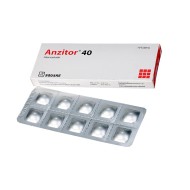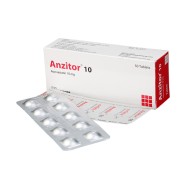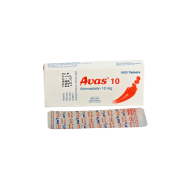
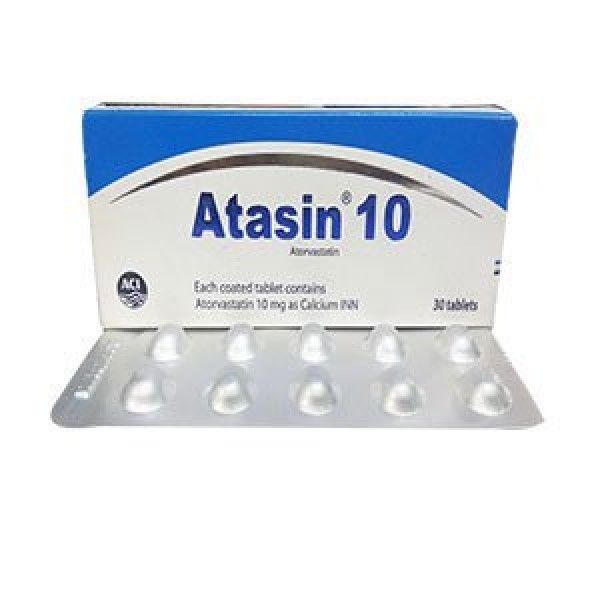
- Stock: Out Of Stock
- Brand: ACI Pharmaceuticals
- Product ID: Atorvastatin Calcium
🔒 100% Secure Payment | bKash | Nagad | SSLCommerz | COD
⭐ Become a FREE Member: 7% Extra Savings • Free Delivery • Refill Reminders • Priority Support
This Item is for pre order
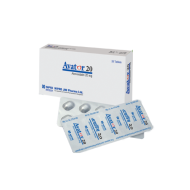
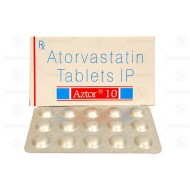
Atasin 10 mg Tablet (Atorvastatin) – ACI Limited
| Brand Name | Atasin 10 mg Tablet |
|---|---|
| Generic Name | Atorvastatin Calcium 10 mg |
| Strength | 10 mg per tablet |
| Dosage Form | Tablet |
| Manufacturer | ACI Limited, Bangladesh |
| Drug Class | HMG-CoA Reductase Inhibitor (Statin) |
| Prescription Required | Yes (Rx) |
| Storage | Store below 30°C in a cool, dry place. Protect from light and moisture. |
1. About Atasin 10 mg (Atorvastatin)
Atasin 10 mg Tablet contains Atorvastatin Calcium 10 mg, a potent third-generation HMG-CoA reductase inhibitor (statin) for cholesterol reduction, manufactured by ACI Limited, Bangladesh. The 10 mg dose is the standard starting dose for most adults newly initiating statin therapy, for patients at low-moderate cardiovascular risk, or for patients who are statin-intolerant at higher doses.
Atorvastatin is the world's best-selling statin and one of the most evidence-based drugs in cardiovascular medicine. The 4S, PROVE-IT, ASCOT-LLA, TNT, and JUPITER trials established atorvastatin's benefit in primary and secondary cardiovascular prevention. In Bangladesh, atorvastatin is a cornerstone of dyslipidaemia management in patients with T2DM, hypertension, and coronary artery disease.
2. Mechanism of Action
Atorvastatin competitively inhibits HMG-CoA reductase — the rate-limiting enzyme in hepatic cholesterol biosynthesis — reducing hepatic cholesterol synthesis. This triggers upregulation of LDL receptors on hepatocytes, dramatically increasing clearance of LDL-cholesterol and VLDL particles from the bloodstream. Additionally, atorvastatin reduces hepatic VLDL production (lowering triglycerides) and modestly raises HDL-cholesterol.
Beyond lipid effects, atorvastatin has pleiotropic anti-inflammatory and plaque-stabilising effects: inhibits endothelial oxidative stress, reduces CRP, inhibits macrophage infiltration into atheromatous plaques, and improves endothelial function. These non-lipid effects contribute to cardiovascular benefit beyond LDL reduction.
3. Indications
- Primary hypercholesterolaemia: Elevated LDL-C as monotherapy or combined with dietary therapy
- Mixed dyslipidaemia (Fredrickson Type IIa and IIb): Elevated LDL + triglycerides
- Cardiovascular prevention: Primary prevention in patients with multiple CV risk factors (T2DM, hypertension, smoking, family history)
- Secondary prevention: Post-MI, post-ACS, post-CABG, post-PCI — reduce recurrent events
- Diabetic dyslipidaemia: All T2DM patients aged 40+ or with CV risk factors per ADA/international guidelines
4. Dosage and Administration
Starting dose (most patients): Atorvastatin 10–20 mg once daily at any time of day (atorvastatin has a 14-hour half-life — time of administration does not affect efficacy, unlike short-acting statins).
Maintenance: Titrate at 4-week intervals based on LDL-C response. Standard dose range 10–80 mg/day. Target LDL-C: <2.6 mmol/L (general), <1.8 mmol/L (high risk), <1.4 mmol/L (very high risk per ESC 2019).
Renal impairment: No dose adjustment required (atorvastatin is hepatically metabolised, not renally cleared).
Hepatic impairment: Contraindicated in active liver disease.
5. Contraindications
- Active liver disease or unexplained persistent elevations in hepatic transaminases
- Pregnancy and breastfeeding (teratogenic — contraindicated in women of childbearing potential without effective contraception)
- Hypersensitivity to atorvastatin or any excipients
6. Warnings and Precautions
Myopathy/rhabdomyolysis: Muscle pain, tenderness, or weakness — especially with high doses, elderly, renal impairment, hypothyroidism, or concurrent CYP3A4 inhibitors. Check CK if symptomatic. Discontinue if CK >10× ULN or rhabdomyolysis suspected.
Hepatotoxicity: Check LFTs before starting and if symptomatic. Avoid in active liver disease. Transient transaminase elevations common — clinically significant hepatotoxicity rare.
Diabetes risk: Statins modestly increase T2DM risk (~10% relative risk). Cardiovascular benefit far outweighs this risk in at-risk patients. Monitor glucose.
Drug interactions via CYP3A4: Atorvastatin is metabolised by CYP3A4 — strong inhibitors dramatically increase atorvastatin levels and myopathy risk.
7. Side Effects
Common: Muscle aches/myalgia (most common complaint), headache, nasopharyngitis, GI symptoms (nausea, constipation, dyspepsia).
Uncommon: Elevated transaminases, insomnia, peripheral neuropathy.
Rare: Rhabdomyolysis, serious hepatotoxicity, lupus-like syndrome, interstitial lung disease.
8. Drug Interactions (CYP3A4)
- Strong CYP3A4 inhibitors: Clarithromycin, itraconazole, ketoconazole, HIV protease inhibitors — markedly increase atorvastatin levels → avoid or limit to 10–20 mg
- Cyclosporine: Contraindicated or max 10 mg atorvastatin
- Gemfibrozil: Increases myopathy risk — avoid combination; fenofibrate preferred if fibrate needed
- Digoxin: Atorvastatin slightly increases digoxin levels — monitor
- Warfarin: May potentiate anticoagulant effect — monitor INR at initiation
9. Atorvastatin in Diabetes (ACI Bangladesh Context)
ADA guidelines recommend statin therapy for all T2DM patients aged ≥40 years, regardless of baseline LDL. Atorvastatin is the preferred statin in diabetic dyslipidaemia due to its high-potency LDL-C reduction, evidence base (CARDS trial: 37% CVD reduction in T2DM), and availability. Atasin 10 mg is the starting dose — most diabetic patients with elevated cardiovascular risk will require titration to 20–40 mg for guideline-recommended LDL targets. The modest risk of new-onset diabetes from statin therapy does not apply to T2DM patients who already have the condition.
10. Storage
- Below 30°C, cool and dry, protected from light. Keep in original blister.
Frequently Asked Questions (FAQ)
Q1: What is Atasin 10 mg (Atorvastatin) used for?
Atasin 10 mg (Atorvastatin Calcium 10 mg) by ACI Limited is a statin medication for lowering LDL-cholesterol ("bad" cholesterol) and reducing cardiovascular risk. Used for: primary hypercholesterolaemia (high LDL), mixed dyslipidaemia, primary cardiovascular prevention (especially in T2DM, hypertension), and secondary prevention after MI or ACS. It is the starting dose for most adults — provides approximately 30–35% LDL-C reduction, with higher doses providing greater reduction (up to 50–55% at 40–80 mg).
Q2: When should Atasin 10 mg be taken — morning or night?
Atorvastatin can be taken at any time of day — morning, afternoon, or evening — because its long half-life (~14 hours) and active metabolites provide 24-hour HMG-CoA reductase inhibition regardless of dosing time. This is unlike short-acting statins (simvastatin, pravastatin) where evening dosing is recommended to match peak cholesterol synthesis (which occurs at night). Choose a consistent time that fits your routine — medication adherence is more important than timing.
Q3: Can Atasin 10 mg cause muscle pain?
Yes — myalgia (muscle ache or weakness) is the most common side effect, affecting approximately 5–10% of patients on atorvastatin. It is usually mild and resolves with dose reduction. Risk is higher with higher doses, in elderly patients, those with hypothyroidism, renal impairment, or concurrent CYP3A4 inhibitors (clarithromycin, itraconazole). Severe muscle pain with dark urine (rhabdomyolysis) is rare but serious — stop atorvastatin immediately and seek medical attention. Check CK levels if symptomatic myalgia persists.
Q4: How long does it take for Atasin 10 mg to lower cholesterol?
Significant LDL-C reduction is evident within 2–4 weeks of starting atorvastatin 10 mg. Maximum effect at the 10 mg dose is reached by 4–6 weeks. Lipid profiles are typically checked 6–8 weeks after initiation to assess response and guide dose titration. Atorvastatin provides approximately 30–35% LDL-C reduction at 10 mg. If LDL target is not achieved, the dose is doubled to 20 mg (each doubling of dose provides approximately 6% additional LDL-C reduction — the "rule of 6s").