- Stock: Out Of Stock
- Brand: ACI Pharmaceuticals
- Product ID: Chloroquine Phosphate
🔒 100% Secure Payment | bKash | Nagad | SSLCommerz | COD
⭐ Become a FREE Member: 7% Extra Savings • Free Delivery • Refill Reminders • Priority Support
This Item is for pre order
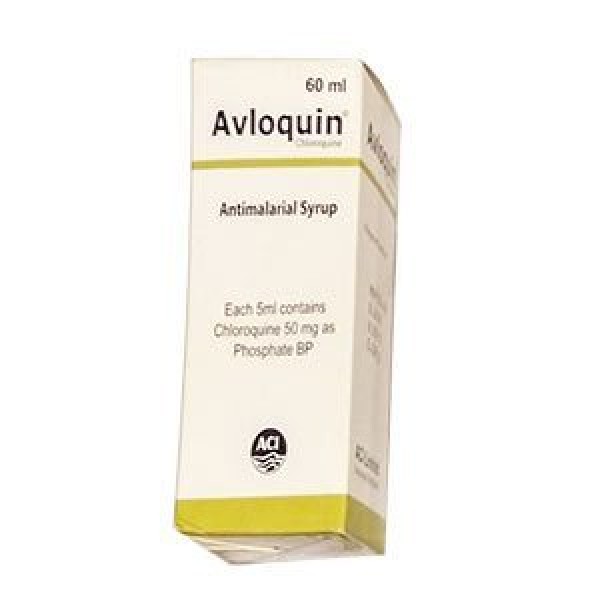
Avloquin Syrup 125mg/5ml – Chloroquine for Paediatric Malaria in Bangladesh
| Brand Name | Avloquin Syrup |
|---|---|
| Generic Name | Chloroquine Phosphate 125mg/5ml (75mg base per 5ml) |
| Strength | 125mg phosphate per 5ml (75mg base per 5ml) |
| Dosage Form | Oral Syrup |
| Manufacturer | ACI Limited, Bangladesh |
| Drug Class | 4-Aminoquinoline Antimalarial |
| Prescription Required | Yes (Rx) |
| Storage | Below 30°C, away from direct sunlight. Do not freeze. |
1. Chloroquine Syrup for Children: Why the Liquid Formulation Matters
Avloquin Syrup 125mg/5ml, by ACI Limited, provides chloroquine phosphate 125mg per 5ml (equivalent to 75mg chloroquine base per 5ml) in an oral liquid suitable for children who cannot swallow tablets. In malaria-endemic regions of Bangladesh — particularly the Chittagong Hill Tracts (CHT) — children are disproportionately affected by malaria, as they lack the partial immunity that adults in endemic areas develop over time. Paediatric dosing of chloroquine must be based on weight in kg (not age), as chloroquine has a narrow therapeutic index and under-dosing risks treatment failure while overdosing is dangerous — chloroquine toxicity in children can cause fatal cardiac arrhythmias even at modest overdose levels. Avloquin Syrup allows precise weight-based dosing in small ml volumes appropriate for children.
2. Malaria in Children vs Dengue: Differential Diagnosis in Bangladesh
In Bangladesh, both malaria and dengue are vector-borne febrile illnesses. Misdiagnosis is clinically significant — treating dengue with chloroquine (a bacterial/viral infection requiring supportive care) wastes antibiotics and delays appropriate management. Key distinguishing features: Malaria (P. vivax): periodic fever pattern (every 48 hours "tertian" pattern), rigors (severe shaking chills), sweating, anaemia, splenomegaly in repeated infections, positive blood film or RDT for malaria. Dengue: abrupt onset high fever, severe headache, retro-orbital pain, myalgia ("breakbone fever"), rash (maculopapular appearing days 3–5), thrombocytopenia on CBC, positive NS1 antigen or dengue IgM. Overlap: both cause fever, fatigue, and are more common during and after monsoon. In CHT children with fever, test for both malaria (RDT) and dengue (NS1 + CBC) simultaneously where possible before starting chloroquine.
3. Paediatric Dosage
Chloroquine base dose: 10mg/kg on day 1, 10mg/kg on day 2 (or split as 5mg/kg twice), 5mg/kg on day 3 — total 25mg/kg base over 3 days. Using Avloquin Syrup 75mg base per 5ml: Day 1 volume (ml) = (weight × 10) ÷ 75 × 5 = (weight × 10) ÷ 15. For 10kg child: (10 × 10) ÷ 15 = 6.7ml. Day 2: same dose. Day 3: (10 × 5) ÷ 15 = 3.3ml. Maximum dose: adult dose (600mg base day 1 = 40ml). Take with food or milk to reduce nausea. For children who vomit within 30 minutes of a dose, repeat the full dose. If vomiting occurs after 30 minutes, no repeat needed. Chloroquine syrup is bitter — mixing with a small amount of fruit juice may improve palatability, though this may slow absorption slightly.
4. P. vivax Malaria: Adding Primaquine for Radical Cure
Chloroquine alone treats the blood-stage infection (acute attack) in P. vivax malaria but does NOT eliminate liver-stage hypnozoites, which can cause relapses weeks to months later. Primaquine is required for radical cure (elimination of hypnozoites). Bangladesh National Malaria Guidelines: primaquine 0.25mg/kg/day × 14 days alongside or after chloroquine course. Critical prerequisite: G6PD testing before primaquine — primaquine causes severe haemolytic anaemia in G6PD-deficient individuals. In areas where G6PD testing is unavailable, weekly primaquine (0.75mg/kg once weekly × 8 weeks) has lower haemolysis risk in G6PD-deficient patients. Chloroquine syrup alone without primaquine may lead to P. vivax relapses — complete the radical cure regimen as prescribed.
5. Chloroquine Toxicity in Children: Recognition and Emergency Management
Chloroquine has a narrow therapeutic index in children — overdose can be rapidly fatal. Toxic dose is approximately 5× the therapeutic dose. Signs of chloroquine toxicity: (1) Cardiac: QRS widening, QTc prolongation, ventricular arrhythmias — potentially fatal; (2) Neurological: convulsions, loss of consciousness; (3) Hypokalaemia; (4) Hypotension. Emergency management (hospital): diazepam infusion (reduces cardiac toxicity in chloroquine overdose — a unique pharmacological interaction), adrenaline, IV fluids, cardiac monitoring. Any suspected accidental chloroquine overdose in a child requires immediate hospital emergency attendance — do not wait for symptoms to develop as deterioration can be sudden.
Frequently Asked Questions (FAQ)
Q1: My child has fever after returning from Cox's Bazar — should I give chloroquine syrup?
Not without diagnostic testing. Cox's Bazar is in the malaria-endemic zone of Bangladesh. Malaria is possible if your child visited forested or rural areas, especially at dawn/dusk without mosquito protection. However, dengue is also prevalent in Cox's Bazar. Before giving chloroquine: (1) Take the child to a doctor or clinic — a rapid diagnostic test (RDT) for malaria and a CBC for dengue should be done the same day; (2) Do not start chloroquine based on symptoms alone; (3) If RDT is positive for P. vivax, chloroquine syrup is the appropriate treatment. If dengue is suspected, chloroquine is not indicated — management is supportive (fluids, paracetamol, monitoring platelet count).
Q2: How do I measure the correct dose of chloroquine syrup?
Use the oral measuring syringe or medicine cup provided — not a household teaspoon. Calculate the dose: (child's weight in kg × 10) ÷ 15 = ml per dose for days 1 and 2; halve this for day 3. Example for 12kg child: (12 × 10) ÷ 15 = 8ml for days 1 and 2; 4ml for day 3. Shake the bottle well before each dose. Give with food or milk to reduce stomach upset. If the child vomits within 30 minutes, give the same dose again once. Measure carefully — chloroquine overdose in children can be serious.
Q3: My child completed chloroquine but malaria came back — what happened?
Recurrence of P. vivax malaria after chloroquine is usually due to relapse from liver hypnozoites (not resistance) — chloroquine clears blood-stage parasites but cannot eliminate dormant liver forms. This is why primaquine must be given alongside or after chloroquine for radical cure. If your child did not receive primaquine, or could not complete the 14-day primaquine course, relapse is expected. Return to your doctor for a new course of chloroquine + primaquine (after G6PD testing). If chloroquine-resistant P. vivax is suspected (confirmed by blood film showing persistent parasitaemia on day 3), escalation to ACT is required.
Q4: Is chloroquine syrup safe for malnourished children?
Chloroquine can be used in malnourished children with malaria — malnutrition does not directly contraindicate chloroquine. Important considerations: (1) Malnourished children are at higher risk of severe malaria and may deteriorate faster — if there are signs of severe malaria (inability to feed, convulsions, reduced consciousness), immediate hospital referral rather than outpatient chloroquine; (2) Chloroquine absorption may be affected by severe gastrointestinal malnutrition — monitor clinical response; (3) Concurrent treatment of malnutrition (therapeutic feeding, micronutrient supplementation) should proceed alongside malaria treatment; (4) Malnourished children may have lower albumin — potentially altering free drug levels, but standard weight-based dosing remains appropriate in clinical practice.