
- Stock: Out Of Stock
- Brand: ACI Pharmaceuticals
- Product ID: Cephradine
🔒 100% Secure Payment | bKash | Nagad | SSLCommerz | COD
⭐ Become a FREE Member: 7% Extra Savings • Free Delivery • Refill Reminders • Priority Support
This Item is for pre order
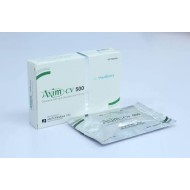
Avlosef 500mg IV Injection – Parenteral Cephradine for Surgical Prophylaxis & Hospital Infections
| Brand Name | Avlosef 500mg Injection |
|---|---|
| Generic Name | Cephradine (Cefradine) 500mg for Injection |
| Strength | 500mg per vial |
| Dosage Form | Powder for IV/IM Injection |
| Manufacturer | ACI Limited, Bangladesh |
| Drug Class | First-Generation Cephalosporin Antibiotic (Parenteral) |
| Prescription Required | Yes (Rx) |
| Storage | Dry powder: below 25°C. Reconstituted: use within 2 hours at room temperature or 24 hours refrigerated. |
1. IV vs Oral Cephradine: When Parenteral Route Is Required
Avlosef 500mg Injection by ACI Limited contains cephradine 500mg as a sterile lyophilised powder for reconstitution and IV or IM administration. While oral cephradine capsules achieve excellent bioavailability (~90%), parenteral administration is indicated when: (1) Patient cannot tolerate or absorb oral medications — vomiting, post-operative ileus, severe sepsis with reduced GI perfusion; (2) Immediate high plasma concentrations are needed — serious infections requiring rapid bactericidal action; IV cephradine achieves peak plasma concentrations of 40–80 mcg/ml after a 500mg IV bolus versus 9–17 mcg/ml with oral 500mg; (3) Peri-operative surgical prophylaxis — IV route guarantees drug delivery regardless of GI function; (4) Hospital-acquired infections where IV therapy is standard of care before step-down to oral. IV cephradine should be transitioned to oral Avlosef 500mg capsules as soon as the patient is able to take oral medications — IV-to-oral switch reduces catheter-related complications and reduces hospital stay.
2. Surgical Prophylaxis with IV Cephradine
IV cephradine is used for peri-operative surgical site infection (SSI) prophylaxis in clean and clean-contaminated surgical procedures where S. aureus and S. epidermidis are the primary target organisms. Evidence-based prophylaxis guidance: (1) Timing: Administer within 60 minutes before surgical incision — this is critical for efficacy. Give before tourniquet inflation in limb surgery; (2) Single dose: A single pre-operative dose of cephradine 1–2g IV is as effective as multi-dose regimens for most clean procedures; (3) Re-dosing: For operations lasting more than 4 hours (2× cephradine half-life), re-dose with 500mg–1g IV intra-operatively; (4) Post-operative continuation: Routine post-operative prophylaxis continuation beyond 24 hours does NOT reduce SSI rates and should be avoided; (5) Diabetic patients undergoing surgery: Have significantly higher SSI risk — strict peri-operative glycaemic control (target BG 6–10 mmol/L) is as important as antibiotic prophylaxis. Weight-based dosing may be appropriate in obese diabetic patients.
3. IV/IM Administration Technique
Reconstitution of Avlosef 500mg vial: (1) IV bolus: Add 5ml sterile water for injection → shake to dissolve → administer slowly IV over 3–5 minutes; (2) IV infusion: Reconstitute in 5ml then dilute further in 50–100ml 0.9% saline or 5% glucose → infuse over 15–30 minutes; (3) IM injection: Reconstitute in 1.2ml sterile water for injection → inject deep IM into gluteal muscle or lateral thigh. IM cephradine is painful — IV route preferred where possible. Compatibility: cephradine is compatible with 0.9% sodium chloride and 5% dextrose. Incompatible with aminoglycosides in the same IV line — administer separately. Inspect visually for particulate matter before use — discard if cloudiness or precipitate observed.
4. Dosage
Adults: 500mg–1g IV/IM every 4–6 hours depending on severity. For surgical prophylaxis: 1–2g IV single dose 30–60 minutes before incision. Paediatric dosing: 50–100mg/kg/day IV in 4 divided doses. Maximum: 8g/day in severe infections. Renal dose adjustment (same as oral): GFR 20–50ml/min: reduce dose or extend interval; GFR <20ml/min: 250mg every 6 hours. Duration: IV therapy for 48–72 hours or until clinically stable, then switch to oral. Total antibiotic course: 7–14 days depending on indication.
5. Combination with Metronidazole for Contaminated Surgery
For clean-contaminated or contaminated procedures involving bowel, biliary tract, or gynaecological organs, cephradine alone is insufficient because it lacks anaerobic coverage. Cephradine + metronidazole combination provides: (1) Cephradine: coverage of Gram-positive cocci (S. aureus, Streptococcus) and some Gram-negatives (E. coli); (2) Metronidazole: coverage of anaerobes (Bacteroides fragilis, Clostridium) and Helicobacter pylori. Clinical applications in Bangladesh: appendicectomy, caesarean section, colorectal surgery, perforated viscus. Standard regimen: cephradine 1g IV + metronidazole 500mg IV pre-operatively. This combination is widely used in district and tertiary hospitals in Bangladesh for abdominal and obstetric surgery.
Frequently Asked Questions (FAQ)
Q1: What is the difference between IV cephradine and oral cephradine capsules?
Both contain the same drug (cephradine) and the same spectrum of activity. The key differences are: (1) Peak concentrations: IV achieves 4–5× higher peak plasma levels than oral — needed for severe infections; (2) Reliability: IV bypasses the GI tract — reliable when vomiting, ileus, or poor absorption; (3) Speed of action: IV achieves therapeutic levels within minutes vs 1–2 hours for oral; (4) Cost and convenience: IV requires hospital administration; oral is for outpatient/home use. For clinical purposes, once stable on IV, switching to oral Avlosef capsules achieves equivalent tissue levels for most non-critical infections, shortening hospital stay.
Q2: Can cephradine injection be mixed in the same IV line as gentamicin?
No — cephradine and aminoglycosides (gentamicin, amikacin) are physically incompatible and must not be mixed in the same IV line or syringe. Mixing causes precipitation, inactivating both drugs. If both are needed: (1) Flush the IV line with saline between each drug; (2) Use separate IV access if available; (3) Administer at different times if using the same line with adequate flushing. This incompatibility is clinically important in Bangladesh where cephradine + gentamicin is a common combination for neonatal sepsis and surgical infections.
Q3: Why do surgical patients need antibiotics before and not just after the operation?
The timing of surgical prophylaxis is one of the most evidence-based principles in infection prevention. Bacteria introduced during surgery begin colonising tissue and forming biofilm within the first 3 hours. Antibiotics must be present in tissue at the time of the incision — not after. Studies show: (1) Antibiotics given within 60 minutes before incision: significantly reduce SSI rates; (2) Antibiotics given after incision: no reduction in SSI rates — equivalent to no prophylaxis; (3) Antibiotics started post-operatively: ineffective for prophylaxis. The misconception that "post-op antibiotics prevent infection" is wrong — prophylactic antibiotics work preventatively, not curatively. Post-operative antibiotics are only appropriate if treating an existing infection, not for prophylaxis.
Q4: How quickly should I notice improvement when receiving IV cephradine for an infection?
Clinical improvement with IV cephradine in a susceptible bacterial infection typically appears within 24–48 hours: (1) Fever: Should begin trending down within 24 hours; persistent fever at 48–72 hours suggests treatment failure, resistant organism, or non-bacterial cause; (2) Cellulitis: Marking the border of skin redness helps track progression — the border should stop advancing within 24–48 hours; (3) Wound infection: Swelling and erythema reduce within 48–72 hours with appropriate drainage and IV antibiotics; (4) Systemic signs: Heart rate, white cell count, and CRP should normalise within 3–5 days. If not improving by 48–72 hours, reassess: consider blood/wound cultures, resistance, different organism, abscess requiring drainage, or non-infective diagnosis.