
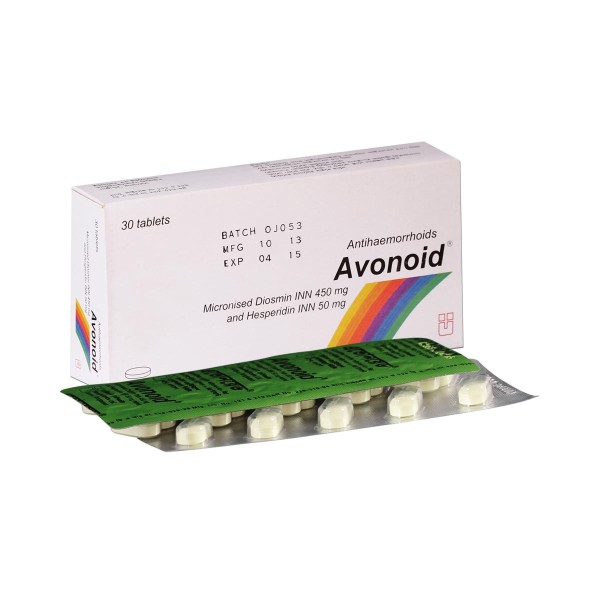
- Stock: In Stock
- Brand: Unimed Unihealth MFG. Ltd.
- Product ID: Micronised Diosmin + Hesperidin
100% Secure Payment
bKash | Nagad | Cards via SSLCommerz | COD
Monthly Medicines Available | Free Delivery on Eligible Orders
Product Overview
| Brand Name | AVONOID Tablet |
|---|---|
| Generic Name | Diosmin 450 mg + Hesperidin 50 mg (Micronised Purified Flavonoid Fraction) |
| Manufacturer | ACI Limited, Bangladesh |
| Strength | Diosmin 450 mg + Hesperidin 50 mg per tablet |
| Dosage Form | Tablet |
| Therapeutic Class | Venotonic / Phlebotonic — Micronised Purified Flavonoid Fraction (MPFF) |
| MRP (Bangladesh) | ৳8.00 per tablet |
| Prescription Status | Physician guidance recommended |
What Is AVONOID (Diosmin + Hesperidin)?
AVONOID Tablet is a micronised purified flavonoid fraction (MPFF) manufactured by ACI Limited, Bangladesh, containing Diosmin 450 mg and Hesperidin 50 mg per tablet. MPFF is derived from plant-based bioflavonoids and is processed by micronisation — a technique that reduces particle size to below 2 microns, dramatically increasing the surface area and bioavailability of the active flavonoids compared to non-micronised preparations. Diosmin and hesperidin are naturally occurring flavone glycosides that exert complementary venotonic, anti-inflammatory, and antioxidant effects on the venous system. AVONOID is indicated primarily for chronic venous insufficiency — a condition with a particularly high burden in diabetic patients in Bangladesh, where peripheral neuropathy, vascular disease, and impaired wound healing converge to create a challenging management environment for venous leg ulcers, oedema, and venous stasis.
Mechanism of Action: Venotonic and Anti-inflammatory Effects
MPFF (diosmin + hesperidin) exerts its therapeutic effect through multiple complementary mechanisms in the venous and lymphatic vasculature. At the venous level, MPFF normalises venous tone by increasing the noradrenaline-mediated vasoconstrictor response of vascular smooth muscle, thereby reducing venous distensibility and venous pressure. It inhibits the release and activity of prostaglandin E2 and thromboxane B2, which are mediators of venous wall inflammation and oedema. MPFF reduces the expression of endothelial adhesion molecules (ICAM-1, VCAM-1) that recruit leukocytes to the venous wall — a key step in the inflammatory cascade that drives venous insufficiency progression and skin changes. At the capillary and microcirculatory level, MPFF improves capillary barrier function, reduces capillary permeability, and enhances lymphatic drainage. These combined effects reduce venous hypertension, limb oedema, subcutaneous inflammation, and the risk of venous ulceration. The micronisation process ensures rapid gastrointestinal absorption, with peak plasma concentration reached within 3–4 hours of oral dosing.
Chronic Venous Insufficiency: Indications and Diabetic Relevance
AVONOID is indicated for the signs and symptoms of chronic venous insufficiency (CVI) — a condition characterised by sustained venous hypertension in the lower extremities due to incompetent venous valves, venous obstruction, or impaired calf muscle pump function. Clinical manifestations of CVI include leg heaviness, aching, fatigue, nocturnal cramps, ankle swelling, skin hyperpigmentation, lipodermatosclerosis, and venous ulceration. In diabetic patients, the risk of venous insufficiency is compounded by peripheral neuropathy (loss of calf muscle pump reflex), microangiopathy (impaired capillary function), macrovascular disease (arterial insufficiency exacerbating venous disease), and impaired wound healing. Diabetic venous leg ulcers represent one of the most complex and costly wound management challenges in Bangladesh, where outpatient wound care resources are limited. MPFF has been shown in randomised controlled trials to accelerate the healing of venous leg ulcers when added to standard compression therapy, increase ulcer closure rates at 6 months, and reduce recurrence — making it a valuable adjunct in diabetic wound management protocols.
Dosage and Administration
For chronic venous insufficiency, the standard adult dose of AVONOID is two tablets (Diosmin 900 mg + Hesperidin 100 mg total) once daily, preferably taken with the main meal in the evening. Some international guidelines recommend a split dosing regimen of one tablet twice daily. For venous ulcer management as an adjunct to compression therapy, the standard two-tablet-per-day dose should be maintained throughout the ulcer healing process. The therapeutic effect of MPFF on venous tone and inflammation is gradual — initial symptomatic improvement (reduction in heaviness and oedema) typically occurs within 2–4 weeks, while measurable improvements in venous ulcer healing typically require 4–6 months of continuous therapy. AVONOID should be taken as part of a comprehensive venous disease management programme that includes compression stockings or bandaging, elevation of the affected limb when at rest, and appropriate wound care for ulcers. Tablets should be swallowed whole with water; they should not be crushed or chewed.
Evidence Base for MPFF in Venous Disease
MPFF (diosmin + hesperidin) is among the most studied phlebotonic agents. The MPFF venous ulcer meta-analysis (Coleridge-Smith et al.) demonstrated that MPFF added to standard compression significantly increases the proportion of ulcers healed at 6 months and reduces time to healing. The RELIEF study showed that MPFF significantly reduced leg symptoms (heaviness, pain, swelling) and improved quality of life in patients with CVI over 4 months. MPFF is endorsed by the European Chapter of the International Union of Phlebology for symptomatic treatment of CVI (evidence grade A for leg symptoms and B for venous ulcer healing). In the context of diabetes, MPFF has been studied in diabetic foot ulcer and microangiopathy settings with encouraging results, though evidence in this specific population remains less robust than in non-diabetic CVI.
Drug Interactions and Safety
AVONOID has a favourable drug interaction profile. At standard therapeutic doses, MPFF does not significantly inhibit or induce cytochrome P450 enzymes, minimising pharmacokinetic interactions. There are no clinically significant interactions with common antidiabetic agents, antihypertensives, or anticoagulants. Flavonoids may theoretically modulate platelet aggregation at very high doses, but at standard AVONOID dosing this is not clinically relevant. MPFF is generally well tolerated with a safety profile comparable to placebo in clinical trials. It is considered safe during the second and third trimesters of pregnancy for the treatment of symptomatic haemorrhoids, though use in the first trimester is avoided due to limited data. AVONOID is safe for elderly diabetic patients without dose adjustment.
Adverse Effects
AVONOID is generally very well tolerated. The most common adverse effects are mild gastrointestinal complaints — nausea, dyspepsia, diarrhoea, or abdominal discomfort — which affect a small proportion of patients and are usually transient. Taking the tablet with a meal reduces gastrointestinal intolerance. Headache and dizziness are reported rarely. Skin reactions such as rash or urticaria are very uncommon hypersensitivity reactions. Unlike systemic vasodilators or diuretics, MPFF does not cause haemodynamic effects such as hypotension, and does not cause electrolyte disturbances, making it safe in the context of antihypertensive and antidiabetic polypharmacy.
Storage
Store AVONOID Tablets at room temperature below 30°C, away from moisture, heat, and direct sunlight. Keep out of reach of children. Do not use after the printed expiry date. Dispense in original packaging.
Frequently Asked Questions (FAQ)
Q1: How does AVONOID help with varicose veins and leg swelling in diabetes?
A: Diosmin and hesperidin in AVONOID strengthen vein walls, reduce venous inflammation, and improve lymphatic drainage. In diabetic patients, where peripheral neuropathy and vascular disease worsen leg swelling and venous insufficiency, AVONOID helps reduce leg heaviness, oedema, and venous ulcer risk as part of a comprehensive venous care programme.
Q2: How long does it take for AVONOID to show results?
A: Symptomatic improvement in leg heaviness and swelling typically begins within 2–4 weeks of daily treatment. For venous ulcer healing, clinical trials show significant benefit when MPFF is used continuously for 4–6 months alongside compression therapy. AVONOID is a chronic disease management agent, not a rapid-acting remedy.
Q3: Can AVONOID be taken with blood pressure or diabetes medications?
A: Yes. AVONOID has no clinically significant interactions with common antidiabetic, antihypertensive, or other cardiovascular medications at standard doses. It is safe for concurrent use in the complex polypharmacy typical of diabetic patients with comorbidities.
Q4: Is AVONOID a treatment for varicose veins or just a symptom reliever?
A: AVONOID addresses the venous inflammation and increased capillary permeability that cause symptoms of chronic venous insufficiency. It reduces symptoms, slows progression, and supports ulcer healing — but it does not structurally eliminate varicose veins. Patients with significant varicose veins should discuss surgical or interventional options with a vascular specialist alongside medical management.
Medical Disclaimer: This information is provided for educational purposes only. Always consult a licensed physician before starting any new medication. DiabetesStore.com.bd does not assume liability for clinical decisions made based on this content.
