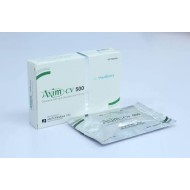

- Stock: Out Of Stock
- Brand: Acme Laboratories Limited
- Product ID: Salmeterol + Fluticasone Propionate
🔒 100% Secure Payment | bKash | Nagad | SSLCommerz | COD
⭐ Become a FREE Member: 7% Extra Savings • Free Delivery • Refill Reminders • Priority Support
This Item is for pre order
Axinat-F (25 mcg+250 mcg)/puff Powder Inhaler — Clinical Overview
| Brand Name | Axinat-F (25+250 mcg) Powder Inhaler |
|---|---|
| Generic Name | Salmeterol + Fluticasone Propionate |
| Manufacturer | ACI Limited, Bangladesh |
| Strength | Salmeterol 25 mcg + Fluticasone 250 mcg per actuation |
| Dosage Form | Dry Powder Inhaler (DPI) |
| Drug Class | ICS/LABA Combination (Inhaled Corticosteroid + Long-Acting Beta-2 Agonist) |
| Prescription Status | Prescription Only Medicine (POM) |
What is Axinat-F 25+250 mcg Powder Inhaler?
Axinat-F (25 mcg+250 mcg) is a high-strength fixed-dose combination dry powder inhaler (DPI) manufactured by ACI Limited, Bangladesh. Each actuation delivers salmeterol 25 mcg (LABA) and fluticasone propionate 250 mcg (ICS) — double the fluticasone dose of the Axinat-F 25+125 formulation. This higher-dose ICS/LABA combination is prescribed when patients require more intensive corticosteroid coverage, such as in moderate-to-severe uncontrolled asthma or COPD with frequent exacerbations.
The 250 mcg fluticasone component provides greater anti-inflammatory suppression of airway eosinophilia, mucus production, and airway hyper-responsiveness compared to the 125 mcg strength, while salmeterol provides equivalent 12-hour bronchodilation across both formulations.
Mechanism of Action
Both components act synergistically — the same mechanism as Axinat-F 25+125 but at a higher ICS intensity:
- Salmeterol 25 mcg: Beta-2 agonist bronchodilation lasting 12 hours. Onset within 10–20 minutes. Maintains airway patency and reduces bronchospasm frequency.
- Fluticasone 250 mcg: Potent ICS at medium-high dose — suppresses transcription of pro-inflammatory genes (via glucocorticoid receptor-NF-κB interaction), reduces eosinophil counts in airway mucosa, decreases mucus hypersecretion, and prevents airway structural remodelling. At 250 mcg per actuation via DPI, systemic bioavailability remains low (~1%) due to predominantly lung deposition and extensive first-pass hepatic metabolism of swallowed fraction.
- Pharmacodynamic synergy: ICS/LABA combinations produce greater FEV1 improvement, better symptom scores, and fewer exacerbations than either drug alone at equivalent doses.
Indications — When is the 250 mcg Dose Indicated?
- Moderate-to-severe asthma (Step 3–4): When lower ICS doses or 25+125 mcg formulation provide inadequate control — persistent night-time symptoms, frequent SABA use, or frequent exacerbations
- Severe COPD (GOLD Stage III–IV) with frequent exacerbations: FEV1 <50% predicted with ≥2 exacerbations per year despite standard dual bronchodilator therapy
- Step-up from Axinat-F 25+125: Patients whose symptoms are inadequately controlled on the lower dose
Dosage and Administration
- Asthma (adults/adolescents ≥12 years): 1 puff (25+250 mcg) twice daily
- Severe COPD: 1 puff (25+250 mcg) twice daily
DPI technique: Open and prime the device as per manufacturer instructions. Exhale fully away from the device. Place mouthpiece between lips and inhale quickly and deeply. Hold breath 10 seconds. Exhale slowly. Always rinse mouth with water and spit out after each dose — this prevents oral candidiasis from fluticasone deposited in the oropharynx.
Axinat-F 25+125 vs 25+250 — Choosing the Right Strength
| Axinat-F 25+125 | Axinat-F 25+250 | |
|---|---|---|
| Fluticasone dose | 125 mcg/puff (medium ICS) | 250 mcg/puff (medium-high ICS) |
| Total daily fluticasone (BID) | 250 mcg/day | 500 mcg/day |
| Asthma severity target | Moderate (Step 3) | Moderate-severe (Steps 3–4) |
| COPD exacerbation reduction | Moderate | Higher (in frequent exacerbators) |
| Systemic corticosteroid risk | Very low | Low (still far less than oral steroids) |
| HPA axis suppression risk | Minimal | Small increase |
Diabetes and Axinat-F 25+250 — Special Considerations
The higher fluticasone dose in the 25+250 formulation requires more attention in diabetic patients:
- Blood glucose monitoring: At 250 mcg per puff (500 mcg/day total), a small but real fraction of fluticasone reaches the systemic circulation. In patients with impaired glucose tolerance or existing diabetes, even low-level systemic corticosteroid exposure can worsen insulin resistance. Monitor blood glucose for the first 2–4 weeks after starting and whenever the dose is increased.
- HPA axis and adrenal function: At 500 mcg fluticasone/day, mild adrenal suppression is possible with long-term use — though far less than with oral corticosteroids. Patients who have required multiple systemic steroid courses (and may already have some adrenal suppression) should be monitored.
- Exacerbation prevention benefit: Each avoided COPD or asthma exacerbation that would have required oral prednisolone represents a major glycaemic benefit for the diabetic patient. A 5-day prednisolone course can raise blood glucose by 5–15 mmol/L in diabetics. Effective ICS/LABA therapy significantly reduces this burden.
- Ocular considerations: Long-term ICS use is associated with increased risk of posterior subcapsular cataracts and open-angle glaucoma — both already more prevalent in diabetic patients. Regular ophthalmology review is important for patients on long-term Axinat-F 25+250.
- Drug interactions: CYP3A4 inhibitors (itraconazole, fluconazole, ritonavir) can markedly increase fluticasone plasma levels, raising the risk of steroid side effects including hyperglycaemia. Avoid co-administration if possible.
Side Effects
- Common: Oral candidiasis, dysphonia/hoarseness (rinse mouth after every dose)
- Common (salmeterol component): Tremor, palpitations, headache, muscle cramps
- Uncommon: Blood glucose elevation (particularly in diabetics), hypokalaemia, paradoxical bronchospasm
- Rare (long-term high-dose): Adrenal suppression, reduced bone mineral density, cataracts, growth retardation in children
Frequently Asked Questions (FAQ)
When should I use Axinat-F 25+250 instead of Axinat-F 25+125?
Axinat-F 25+250 is prescribed when the lower-dose 25+125 formulation provides insufficient asthma or COPD control — for example, if you continue to have frequent night-time symptoms, need your rescue inhaler more than twice a week, or experience more than one exacerbation per year. The step-up should be made by a doctor after reviewing your symptom diary, peak flow readings, and spirometry.
Does the higher fluticasone dose (250 mcg) in Axinat-F affect blood glucose more than the 125 mcg dose?
Potentially, yes — slightly more. At 250 mcg per puff (500 mcg/day), a small amount of fluticasone may enter the bloodstream and increase blood glucose in susceptible individuals, particularly diabetic patients. However, the risk remains far lower than with systemic (oral or injected) corticosteroids. Diabetic patients starting Axinat-F 25+250 should monitor blood glucose more frequently in the first few weeks and discuss any changes with their doctor.
Is Axinat-F 25+250 safe for long-term use?
Yes — inhaled fluticasone at 250 mcg per puff (500 mcg/day) has an established long-term safety profile, with significantly fewer systemic effects than oral corticosteroids. Long-term use requires periodic monitoring for cataracts, bone density (DEXA scan every 2–3 years in high-risk patients), and HPA axis function. Always use the lowest effective dose and review the need for the higher strength at each follow-up.
Can I stop Axinat-F 25+250 suddenly if my breathing improves?
No — do not stop suddenly without medical advice. ICS therapy works by preventing inflammation over time — stopping abruptly can cause asthma to flare significantly. If you feel well controlled, discuss with your doctor whether stepping down to Axinat-F 25+125 mcg is appropriate. In COPD, regular maintenance therapy continues long-term regardless of symptom status.