- Stock: In Stock
- Brand: Aristopharma
- Product ID: Fexofenadine Hydrochloride
🔒 100% Secure Payment | bKash | Nagad | SSLCommerz | COD
⭐ Become a FREE Member: 7% Extra Savings • Free Delivery • Refill Reminders • Priority Support
This Item is for pre order
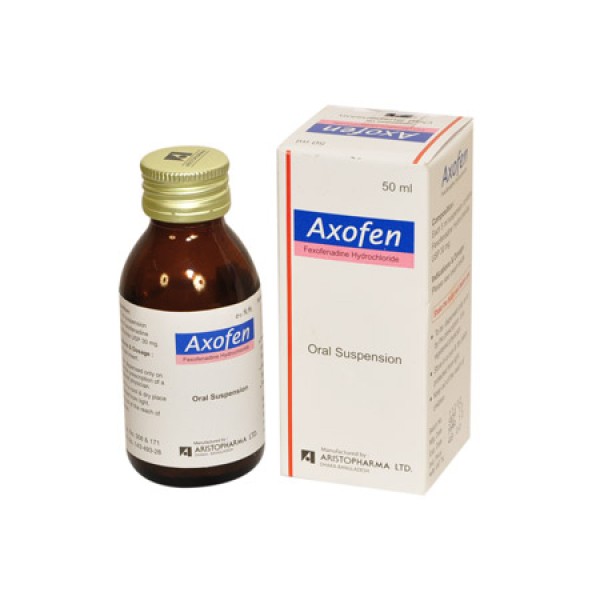
Axofen Suspension 30 mg/5 ml (Fexofenadine HCl) — Clinical Overview
| Brand Name | Axofen (Susp) USP 30 mg/5 ml |
|---|---|
| Generic Name | Fexofenadine Hydrochloride |
| Manufacturer | ACI Limited, Bangladesh |
| Strength | 30 mg fexofenadine per 5 ml |
| Dosage Form | Oral Suspension |
| Drug Class | Second-Generation (Non-Sedating) Antihistamine — Selective H1 Receptor Antagonist |
| Prescription Status | Prescription Only Medicine (POM) |
What is Axofen Suspension?
Axofen Suspension is a paediatric oral antihistamine manufactured by ACI Limited, Bangladesh, containing fexofenadine hydrochloride 30 mg per 5 ml. Fexofenadine is a second-generation, non-sedating antihistamine — the active metabolite of terfenadine — that selectively blocks peripheral histamine H1 receptors without penetrating the blood-brain barrier. The suspension formulation makes accurate weight-based dosing straightforward for children who cannot swallow tablets.
Axofen Suspension is indicated for children aged 6–11 years with seasonal allergic rhinitis or chronic idiopathic urticaria. Unlike first-generation antihistamines (e.g., promethazine, diphenhydramine), fexofenadine does not cause sedation, cognitive impairment, or anticholinergic side effects in children — making it the preferred option for school-age children who need to remain alert and focused.
Mechanism of Action
Fexofenadine selectively and competitively antagonises peripheral histamine H1 receptors, preventing histamine from binding to these receptors on blood vessels, mucous membranes, and skin. This blocks the downstream cascade of allergic symptoms:
- Sneezing and rhinorrhoea — blocked by reducing histamine stimulation of nasal mucosa
- Ocular itching and lacrimation — reduced via conjunctival H1 receptor blockade
- Urticarial wheals and flare — suppressed by preventing histamine-induced vasodilation and plasma protein extravasation
Because fexofenadine has extremely low CNS penetration (P-glycoprotein efflux at the blood-brain barrier actively pumps it out), it does not block central H1 receptors — preserving normal histamine-mediated wakefulness and CNS function in children.
Indications
- Seasonal allergic rhinitis (children 6–11 years): Sneezing, runny nose, nasal itching, watery eyes from seasonal pollen or allergens
- Perennial allergic rhinitis: Year-round symptoms from house dust mites, pet dander, or mould
- Chronic idiopathic urticaria (children 6–11 years): Recurring hives and itch without an identifiable cause
Dosage and Administration
- Children 6–11 years: 30 mg (5 ml) twice daily — morning and evening, 12 hours apart
- Renal impairment: Reduce to 30 mg (5 ml) once daily in children with significant renal impairment
Shake well before each use. Measure doses using the graduated oral syringe or measuring spoon provided. May be given with or without food. Avoid administration with fruit juice (orange, apple, grapefruit) — give with water only, as fruit juices can reduce fexofenadine absorption by up to 36% by inhibiting intestinal OATP transport proteins. Store below 30°C; do not refrigerate unless stated on the label. Discard any remaining suspension after the expiry date.
Diabetes and Allergic Disease in Children — Special Considerations
Children with Type 1 diabetes are no less susceptible to allergic conditions than non-diabetic children. Managing allergy treatment appropriately in this group requires careful consideration:
- Sugar content of suspension: Check the product labelling for sucrose or glucose content in the suspension base. Parents of children with Type 1 diabetes should account for any sugar-containing excipients when calculating insulin doses. If the suspension base is sugar-free, this concern is eliminated.
- Non-sedating advantage for children with diabetes: Older antihistamines (promethazine, diphenhydramine) cause sedation that may mask hypoglycaemic symptoms in children — particularly dangerous for those on insulin regimens. Fexofenadine's non-sedating profile ensures symptoms of hypoglycaemia remain recognisable.
- No anticholinergic effects: Anticholinergic antihistamines can cause blurred vision, dry mouth, and urinary retention — all conditions that can be confused with diabetic autonomic complications. Fexofenadine avoids these entirely.
- No drug interactions: Fexofenadine is not significantly metabolised by CYP450 enzymes. It does not interact with insulin, metformin, or any antidiabetic commonly used in paediatric practice.
- Nasal corticosteroid combination: For children with moderate-to-severe allergic rhinitis, fexofenadine suspension is often combined with intranasal corticosteroids. Inhaled/intranasal steroids can cause minor blood glucose elevation — monitor accordingly.
Side Effects
- Common: Headache, upper respiratory tract infection (incidence similar to placebo in clinical trials)
- Uncommon: Nausea, vomiting, fatigue
- Rare: Hypersensitivity reactions; paradoxical CNS stimulation (very rare in children)
Fexofenadine has an exceptionally clean safety profile — in paediatric clinical trials, its side effect incidence was indistinguishable from placebo for most parameters including sedation and cognitive effects.
Frequently Asked Questions (FAQ)
Is Axofen Suspension safe for children with Type 1 diabetes on insulin?
Yes — fexofenadine has no pharmacokinetic interactions with insulin or other antidiabetic medications. Its non-sedating profile is particularly important in diabetic children because sedating antihistamines can mask hypoglycaemia symptoms. Parents should check whether the suspension contains sugar in its base, and if so, account for it in insulin calculations. Ask your pharmacist about the sugar content of the specific batch.
Will Axofen Suspension make my child drowsy at school?
No — fexofenadine is extensively studied as a non-sedating antihistamine. Clinical trials in children show no significant difference in sedation or cognitive performance compared to placebo. Unlike older antihistamines such as promethazine or chlorphenamine, Axofen Suspension will not impair your child's alertness, learning, or school performance.
Can I give Axofen Suspension with fruit juice?
No — fruit juices (orange, apple, grapefruit) inhibit intestinal transporter proteins (OATP1A2) that fexofenadine depends on for absorption. Taking Axofen with fruit juice can reduce its effectiveness by up to 36%. Always give the suspension with plain water. Separate from fruit juice consumption by at least 2 hours.
How long does it take for Axofen Suspension to work?
Fexofenadine is absorbed quickly — peak blood levels are reached in about 1–3 hours after an oral dose. Symptom relief typically begins within 1 hour. Maximum effect is seen within 2–3 hours and is maintained for 12 hours with a morning and evening dosing schedule.