- Stock: In Stock
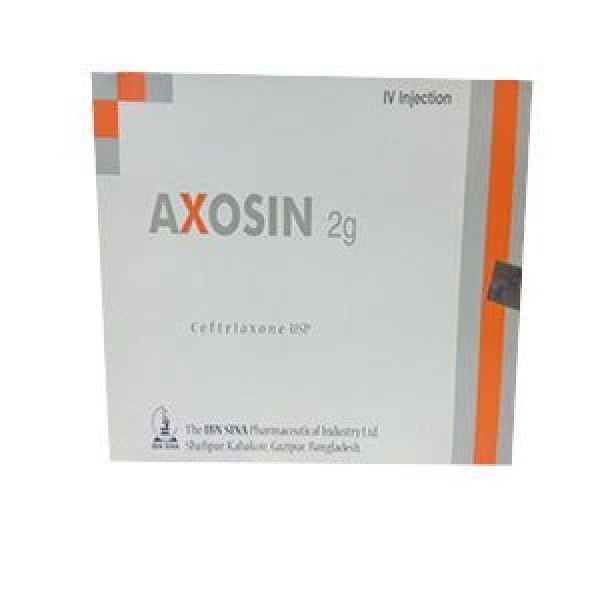
- Brand: Ibn-Sina Pharmaceuticals Ltd.
- Product ID: Ceftriaxone
Available Options
🔒 100% Secure Payment | bKash | Nagad | SSLCommerz | COD
⭐ Become a FREE Member: 7% Extra Savings • Free Delivery • Refill Reminders • Priority Support
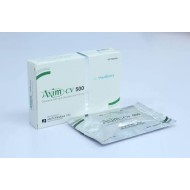
Axosin IV 2gm Injection (Ceftriaxone Sodium) — Clinical Overview
| Attribute | Details |
|---|---|
| Brand Name | Axosin |
| Generic Name | Ceftriaxone Sodium |
| Strength | 2 grams (2000 mg) |
| Dosage Form | Powder for Intravenous (IV) Injection/Infusion |
| Drug Class | Third-generation Cephalosporin Antibiotic |
| Manufacturer | ACI Limited, Bangladesh |
| Route of Administration | Intravenous (IV infusion) |
| Pack Size | Single vial |
What Is Axosin IV 2gm and When Is the Higher Dose Required?
Axosin IV 2gm contains ceftriaxone sodium 2 grams — the full high-dose formulation manufactured by ACI Limited, Bangladesh. While the 1g dose covers most common infections, the 2g dose is required for the most serious bacterial infections where maximum bactericidal concentrations are needed: bacterial meningitis, severe sepsis with suspected highly resistant organisms, febrile neutropenia empirical therapy, and infective endocarditis.
Ceftriaxone's mechanism of action — inhibition of penicillin-binding proteins (PBPs) leading to cell wall synthesis arrest and bacterial lysis — operates in a time-dependent manner. The 2g dose extends the time during which free (unbound) drug concentrations exceed the minimum inhibitory concentration (MIC) for less susceptible organisms, thereby broadening clinical efficacy. With ~95% protein binding and a half-life of 6–9 hours, a single 2g IV dose maintains effective free drug levels for the full 24-hour dosing interval against organisms with MICs up to 0.5 mg/L.
Primary Indications for Axosin IV 2gm
Bacterial meningitis: the standard adult dose is 2g IV every 12 hours (4g/day) for the first 48 hours, then potentially de-escalated based on culture results. Ceftriaxone achieves CSF penetration of 1–18% of serum concentration in inflamed meninges, which is therapeutically adequate for susceptible pathogens including Neisseria meningitidis, Streptococcus pneumoniae, and Haemophilus influenzae. Severe community-acquired pneumonia (CURB-65 score ≥3 or ICU admission): 2g once daily in combination with a macrolide or respiratory fluoroquinolone. Hospital-acquired infections (not involving Pseudomonas): 2g once daily where higher MIC breakpoints are suspected. Infective endocarditis — penicillin-susceptible viridans streptococci: 2g IV once daily for 4 weeks as monotherapy (preferred in penicillin-allergic patients). Febrile neutropenia empirical therapy: 2g IV once daily combined with metronidazole or an anti-anaerobic agent to cover likely enteric pathogens.
IV Reconstitution Protocol for 2gm Vial
The 2g vial requires careful reconstitution. Step 1 — Initial reconstitution: dissolve the 2g powder in 20 mL of sterile water for injection (SWFI). The resulting concentration is 100 mg/mL. Do NOT use calcium-containing diluents. Step 2 — Infusion preparation: transfer the reconstituted solution to 50–100 mL of 0.9% sodium chloride or 5% dextrose. Step 3 — Infusion duration: administer over a minimum of 30 minutes, preferably 30–60 minutes. For doses of 2g, an infusion time of 60 minutes may be preferred in elderly patients or those with cardiovascular compromise. Step 4 — Line compatibility: ceftriaxone is incompatible with calcium-containing solutions (Ringer's lactate, Hartmann's solution, parenteral nutrition containing calcium). Flush the line with 0.9% NaCl before and after each infusion. Step 5 — Extended infusion consideration: in ICU settings with pharmacokinetic targets in mind, extended infusion over 3–4 hours may be used to optimise time-above-MIC, though evidence is stronger for other beta-lactams than for ceftriaxone given its longer half-life.
Stability: reconstituted and diluted solutions are stable for 6 hours at room temperature (up to 25°C) or 24 hours refrigerated. Protect from light. Never freeze the solution.
Bacterial Meningitis Management with Axosin IV 2gm
Bacterial meningitis is a neurological emergency with high mortality if treatment is delayed. Axosin IV 2gm is a frontline choice for empirical treatment of adult bacterial meningitis in Bangladesh. The WHO recommends ceftriaxone 2g IV every 12 hours as first-line empirical therapy for suspected bacterial meningitis in adults and children over 3 months. Empirical therapy should be started immediately — do not delay antibiotics to wait for LP results if meningitis is clinically suspected. Dexamethasone 0.15 mg/kg IV every 6 hours for 4 days, starting before or with the first antibiotic dose, is co-recommended to reduce cerebral oedema, CSF inflammation, and the risk of sensorineural hearing loss (particularly important in H. influenzae and S. pneumoniae meningitis). Typical total duration: 7 days for N. meningitidis, 10–14 days for S. pneumoniae, 21 days for Listeria (but ceftriaxone is not active against Listeria — add ampicillin if Listeria is suspected in immunocompromised patients or those over 50 years).
Infective Endocarditis — Outpatient Parenteral Antibiotic Therapy (OPAT)
Ceftriaxone 2g IV once daily is one of the few beta-lactam regimens suitable for OPAT (outpatient parenteral antibiotic therapy) due to its long half-life and once-daily dosing. This is clinically important in Bangladesh where prolonged hospital stays for endocarditis are costly and beds are limited. For penicillin-susceptible viridans streptococcal endocarditis (MIC ≤0.125 mg/L), ceftriaxone 2g IV once daily for 4 weeks is a guideline-endorsed monotherapy option (ESC/AHA). OPAT programmes allow patients to receive their daily IV dose at a clinic or community health centre and return home, reducing hospitalisation costs while maintaining treatment efficacy. Axosin IV 2gm is well-suited for this model, offering ACI quality at a competitive price point.
Combination Therapy Considerations
Ceftriaxone monotherapy is insufficient for certain pathogens and clinical scenarios. Common combinations: Ceftriaxone + metronidazole — standard for intra-abdominal infections, aspiration pneumonia, and mixed aerobic/anaerobic infections; ceftriaxone has no anaerobic activity and metronidazole fills this gap. Ceftriaxone + azithromycin/clarithromycin — first-line for severe community-acquired pneumonia; macrolide covers atypical organisms (Mycoplasma, Legionella, Chlamydia). Ceftriaxone + ampicillin — for bacterial meningitis in patients over 50 or immunocompromised, to cover Listeria monocytogenes. Ceftriaxone + gentamicin — synergistic for enterococcal endocarditis and severe gram-negative sepsis. Note: never add aminoglycosides to the same IV bag as ceftriaxone.
Renal and Hepatic Dosing Adjustments
Ceftriaxone has dual elimination (renal and hepatic), which makes it uniquely advantageous in patients with organ impairment. Renal impairment: no dose adjustment required for creatinine clearance above 10 mL/min. In severe renal failure (CrCl <10 mL/min), maximum dose should be limited to 2g/day and biliary/renal accumulation monitored. Haemodialysis does not significantly remove ceftriaxone; supplemental doses post-dialysis are not required. Hepatic impairment: mild-to-moderate hepatic impairment — no adjustment required. Severe hepatic impairment combined with significant renal impairment — reduce dose and monitor carefully. This dual elimination means that in patients with either renal OR hepatic impairment alone, ceftriaxone can be used at standard doses with appropriate monitoring, unlike purely renally excreted antibiotics.
Frequently Asked Questions (FAQ)
Q1: When is the 2gm dose of ceftriaxone preferred over the 1gm dose?
The 2g dose is indicated for the most serious infections: bacterial meningitis (standard adult dose 2g every 12 hours), severe sepsis, febrile neutropenia, and infective endocarditis. The higher dose extends the free drug concentration above the MIC of less susceptible pathogens, improving outcomes in life-threatening infections. For routine community-acquired pneumonia, pyelonephritis, or uncomplicated sepsis in stable patients, 1g once daily is generally adequate.
Q2: Can Axosin IV 2gm be used as once-daily dosing for all indications?
For most indications, 2g IV once daily is the standard. However, for bacterial meningitis, 2g every 12 hours (4g/day total) is recommended for the first 48–72 hours due to the need for higher CSF concentrations. Once-daily 2g dosing is appropriate for endocarditis OPAT programmes, severe pneumonia, and complicated infections where the MIC of the organism is below 0.5 mg/L.
Q3: How should the 2gm vial be prepared for IV infusion?
Dissolve the 2g powder in 20 mL of sterile water for injection to achieve a 100 mg/mL concentration. Then dilute in 50–100 mL of 0.9% NaCl or 5% dextrose. Infuse over 30–60 minutes. Never mix with calcium-containing solutions. The prepared infusion is stable for 6 hours at room temperature or 24 hours refrigerated.
Q4: Is ceftriaxone 2gm safe in patients with both kidney disease and liver disease?
Caution is required if both organs are significantly impaired. Ceftriaxone is eliminated both renally (33–67%) and biliary (17–50%). In isolated renal or hepatic failure, the other elimination pathway compensates. When both are severely impaired simultaneously, drug accumulation can occur — the maximum dose should not exceed 2g/day, and clinical monitoring for adverse effects (biliary sludge, coagulation changes) is essential. Therapeutic drug monitoring is not routinely available for ceftriaxone in Bangladesh, so clinical vigilance is the practical guide.
Medical Disclaimer: This information is intended for healthcare professional reference and patient education only. Axosin IV 2gm is a prescription-only injectable antibiotic requiring hospital or supervised clinical administration. Dosage selection and treatment duration must be determined by a qualified physician based on infection type, severity, culture results, and patient-specific factors. Do not self-administer injectable medications.