🔒 100% Secure Payment | bKash | Nagad | SSLCommerz | COD
⭐ Become a FREE Member: 7% Extra Savings • Free Delivery • Refill Reminders • Priority Support
This Item is for pre order
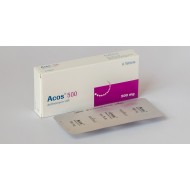
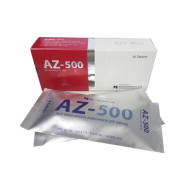
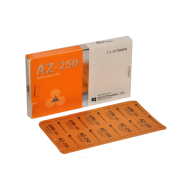
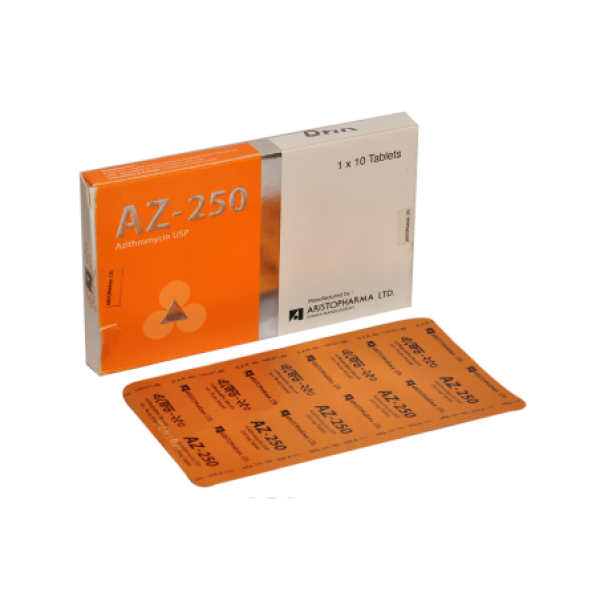
Az 250 Tablet (Azithromycin 250mg) — Clinical Overview
| Attribute | Details |
|---|---|
| Brand Name | Az |
| Generic Name | Azithromycin |
| Strength | 250 mg |
| Dosage Form | Film-coated Tablet |
| Drug Class | Macrolide Antibiotic (Azalide subclass) |
| Manufacturer | ACI Limited, Bangladesh |
| Route of Administration | Oral |
| Usual Pack Size | Per tablet / strip |
What Is Az 250 Tablet and How Does It Work?
Az 250 is azithromycin 250 mg film-coated tablet manufactured by ACI Limited, Bangladesh. Azithromycin belongs to the azalide subclass of macrolide antibiotics and works by binding irreversibly to the 50S ribosomal subunit of susceptible bacteria, blocking peptide translocation and inhibiting protein synthesis. This produces a bacteriostatic effect against most organisms, with bactericidal action at high concentrations against certain pathogens including Haemophilus influenzae and Streptococcus pneumoniae.
A distinguishing feature of azithromycin is its exceptional tissue distribution: it concentrates in phagocytes (macrophages, neutrophils) and tissues at concentrations 10–100 times higher than plasma levels. This produces prolonged post-antibiotic effects even after plasma drug levels decline, which is why 3–5 day short courses achieve outcomes equivalent to 7–10 day courses of other antibiotics. Its half-life of approximately 68 hours enables once-daily dosing, improving patient adherence.
Approved Indications for Az 250 Tablet
Az 250 mg is indicated for: community-acquired pneumonia (mild severity, CURB-65 0–1) as monotherapy covering typical and some atypical pathogens; acute exacerbations of chronic obstructive pulmonary disease (AECOPD); pharyngitis and tonsillitis caused by Streptococcus pyogenes in patients who cannot use beta-lactams; acute sinusitis; uncomplicated skin and soft tissue infections; urogenital infections due to Chlamydia trachomatis (1g single dose = four 250mg tablets); chancroid (caused by Haemophilus ducreyi); traveller's diarrhoea caused by Campylobacter or enterotoxigenic E. coli; and Mycobacterium avium complex (MAC) prophylaxis and treatment in HIV patients (high-dose azithromycin regimens).
Dosage Regimens for Common Indications
Community-acquired pneumonia (adults): 500 mg on day 1 (two 250mg tablets), then 250 mg once daily on days 2–5. Total course: 5 days. Community-acquired pneumonia (3-day regimen): 500 mg once daily for 3 days (two tablets daily). Pharyngitis/tonsillitis (penicillin-allergic patients): 500 mg on day 1, then 250 mg on days 2–5. Acute sinusitis: 500 mg once daily for 3 days. Skin and soft tissue infections: 500 mg day 1, 250 mg days 2–5. Chlamydial urogenital infection: 1g (four 250mg tablets) as a single oral dose. Traveller's diarrhoea (Campylobacter): 1g single dose or 500 mg once daily for 3 days. Paediatric dosing: 10 mg/kg on day 1, then 5 mg/kg on days 2–5 (use suspension for children unable to swallow tablets). Take with or without food; food does not significantly affect absorption of tablet formulations.
Azithromycin in Typhoid Fever — Bangladesh Context
Enteric fever caused by Salmonella typhi is endemic in Bangladesh and azithromycin has become a key oral treatment option. Azithromycin 1g on day 1 then 500mg once daily for 6 more days (total 7 days) is an effective oral regimen for uncomplicated typhoid in patients who can take oral medication. This regimen is particularly valuable because azithromycin remains active against fluoroquinolone-resistant S. typhi strains, which are increasingly common in Bangladesh and South Asia. Azithromycin does not require dose adjustment for renal impairment, making it useful in patients where fluoroquinolones would be contraindicated. However, azithromycin is not recommended for severe typhoid with intestinal complications — injectable ceftriaxone is preferred in such cases.
Macrolide Resistance — A Growing Concern in Bangladesh
Azithromycin resistance is increasing globally and in Bangladesh. Key resistance mechanisms include ribosomal methylation (erm genes) and efflux pumps (mef genes), which are prevalent in Streptococcus pneumoniae and Staphylococcus aureus in South Asia. Macrolide resistance rates in S. pneumoniae exceed 20–40% in many Bangladesh hospital studies, limiting azithromycin's utility as monotherapy for pneumonia. Clinicians should be aware that azithromycin monotherapy for community-acquired pneumonia may fail in areas with high macrolide resistance. For hospitalised pneumonia patients, combination therapy or beta-lactam-based regimens may be preferred. Culture and sensitivity testing remains important for optimising antibiotic therapy.
Drug Interactions and Contraindications
QT prolongation: azithromycin prolongs the cardiac QT interval. Avoid concurrent use with other QT-prolonging drugs including antiarrhythmics (amiodarone, sotalol), antipsychotics (haloperidol, quetiapine), fluoroquinolones (particularly moxifloxacin), and antimalarials (chloroquine, halofantrine). Avoid in patients with known long QT syndrome, hypokalaemia, hypomagnesaemia, or heart failure. Warfarin: azithromycin may increase warfarin anticoagulant effect; monitor INR closely. Antacids (aluminium/magnesium hydroxide): reduce azithromycin peak absorption by ~24%; take azithromycin 1 hour before or 2 hours after antacids. Ergot alkaloids: azithromycin inhibits CYP3A4 weakly; avoid with ergotamine to prevent vasospasm. Contraindicated in known hypersensitivity to azithromycin, erythromycin, or other macrolide antibiotics.
Safety in Special Populations
Pregnancy: FDA Category B; no teratogenicity shown in animal studies; azithromycin is generally considered safe in pregnancy when clinically indicated, particularly for Chlamydia treatment. Breastfeeding: azithromycin is secreted in breast milk in low concentrations; generally considered compatible with breastfeeding. Hepatic impairment: azithromycin is primarily hepatically metabolised and excreted in bile; use with caution in severe hepatic disease; hepatotoxicity (cholestatic jaundice) has been rarely reported. Renal impairment: no dose adjustment required for GFR above 10 mL/min. Elderly: increased risk of QT prolongation; cardiac monitoring advisable if concurrent QT-prolonging drugs are used.
Frequently Asked Questions (FAQ)
Q1: Can Az 250 tablet be used to treat COVID-19?
No. Multiple large randomised controlled trials (including the WHO SOLIDARITY trial and the UK RECOVERY trial) have definitively demonstrated that azithromycin does not reduce mortality, hospital admission, or duration of illness in COVID-19. The initial hypothesis that azithromycin might have antiviral or anti-inflammatory effects in COVID-19 was not supported by clinical evidence. Azithromycin should not be used for COVID-19 treatment. Using it inappropriately contributes to antimicrobial resistance. Az 250 remains effective for its approved bacterial indications including pneumonia, STIs, and typhoid.
Q2: Is a 3-day course of azithromycin as effective as a 5-day course?
For certain indications yes. The 3-day azithromycin regimen (500mg once daily for 3 days) achieves equivalent clinical outcomes to the 5-day regimen (500mg on day 1, then 250mg on days 2–5) for community-acquired pneumonia, sinusitis, and AECOPD in adults. This is due to azithromycin's prolonged tissue half-life — therapeutic tissue concentrations persist for several days after the last dose. Both regimens provide approximately 10 days of effective antibacterial activity in respiratory tissues. The 3-day regimen improves adherence and reduces total antibiotic exposure.
Q3: Why is the Az 250mg dose used for some indications and 500mg for others?
The 250mg tablet is used as part of multi-day regimens: day 1 loading dose of 500mg (two tablets), then 250mg daily for 4 more days. This loading regimen rapidly achieves therapeutic tissue concentrations, then maintains them throughout the course. For single-dose treatment of chlamydia, four 250mg tablets (1g total) are taken together. The 250mg tablet offers flexibility for these variable dosing schedules and is appropriate for patients needing the lower maintenance dose.
Q4: Can Az 250 tablet be taken with food?
Yes. Food does not significantly affect the bioavailability of azithromycin film-coated tablets (unlike azithromycin capsules, which should be taken on an empty stomach). Az 250mg tablets may be taken with or without food, which can help reduce the gastrointestinal side effects (nausea, abdominal discomfort) that are the most common adverse effects of azithromycin. Taking the tablet with food is recommended for patients who experience gastric irritation.
Medical Disclaimer: This information is for healthcare professional reference and patient education only. Az 250 Tablet is a prescription-only antibiotic. Dosage, indication, and treatment duration must be determined by a qualified physician. Self-medication with antibiotics contributes to antimicrobial resistance. Always consult a licensed healthcare provider.