- Stock: Out Of Stock
- Brand: Incepta Pharmaceuticals
- Product ID: Azelastine Hdrochioride bp
🔒 100% Secure Payment | bKash | Nagad | SSLCommerz | COD
⭐ Become a FREE Member: 7% Extra Savings • Free Delivery • Refill Reminders • Priority Support
This Item is for pre order
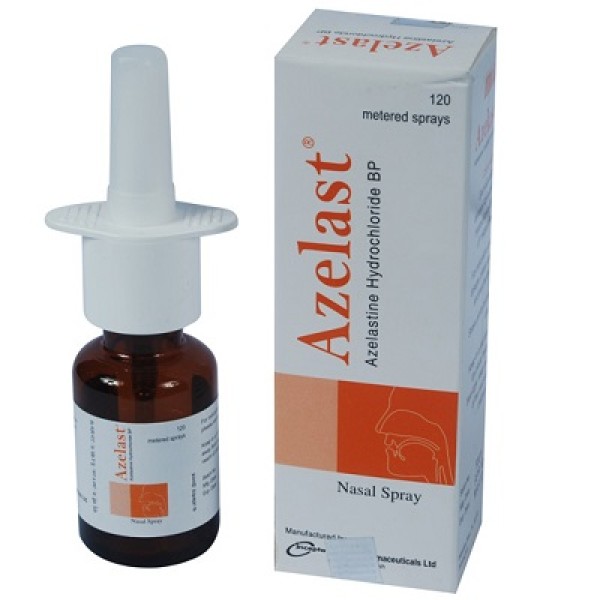
AZELAST Nasal Spray MDI — Azelastine HCl for Allergic Rhinitis
| Attribute | Details |
|---|---|
| Brand Name | AZELAST |
| Generic Name | Azelastine Hydrochloride |
| Dosage Form | Metered Dose Intranasal Spray |
| Drug Class | Second-generation H1 Antihistamine (Topical Intranasal) |
| Manufacturer | Incepta Pharmaceuticals Ltd., Bangladesh |
| Route of Administration | Intranasal |
About AZELAST Nasal Spray MDI
AZELAST Nasal Spray MDI is azelastine hydrochloride metered dose intranasal spray manufactured by Incepta Pharmaceuticals Ltd., Bangladesh. This MDI (metered dose inhaler) format delivers a precise, reproducible dose of azelastine HCl directly to the nasal mucosa with each actuation. Unlike pump nasal sprays, the metered dose inhaler format ensures consistent dosing without priming requirements, making AZELAST MDI particularly user-friendly for patients who find pump sprays difficult to prime consistently. The intranasal route delivers azelastine directly to the site of allergic inflammation, achieving high local drug concentrations in the nasal mucosa while minimising systemic exposure and avoiding the sedation associated with oral antihistamines.
Allergic rhinitis affects a substantial proportion of the Bangladeshi population — epidemiological surveys suggest a prevalence of 20–30% in urban areas, driven by year-round high concentrations of house dust mite allergens, cockroach allergens, and mould spores in the tropical climate. Seasonal exacerbations occur with dry-season pollen and burning season particulates. AZELAST Nasal Spray MDI provides rapid, targeted relief for both seasonal (SAR) and perennial (PAR) allergic rhinitis — the two main clinical presentations seen in Bangladesh.
Comparative Pharmacology — Azelastine vs Oral Antihistamines
A key clinical advantage of AZELAST Nasal Spray MDI over oral antihistamines is its superior efficacy for nasal congestion. Nasal congestion is the most bothersome rhinitis symptom for most patients, but it responds poorly to oral antihistamines because it is driven primarily by vascular engorgement mediated by bradykinin, leukotrienes, and kinins — not histamine. Azelastine, uniquely among antihistamines, has clinically meaningful anti-leukotriene activity in addition to H1 blockade, making it more effective for nasal congestion than cetirizine, loratadine, or fexofenadine. Head-to-head trials have shown azelastine nasal spray to be superior to oral loratadine and comparable to intranasal corticosteroids for total nasal symptom score. Further advantages over oral antihistamines: onset within 15–30 minutes vs 30–60 minutes for oral absorption; no first-pass hepatic metabolism; no QT prolongation risk (unlike some older antihistamines); minimal sedation due to negligible systemic absorption; local anti-inflammatory effects (mast cell stabilisation) not seen with systemic antihistamines.
Allergic Rhinitis in Diabetic Patients
Patients with diabetes mellitus have a higher prevalence of allergic conditions, including allergic rhinitis, which is thought to be related to immune dysregulation associated with chronic hyperglycaemia. Uncontrolled allergic rhinitis significantly impacts sleep quality, daytime alertness, and quality of life in diabetic patients, and may contribute to elevated stress hormone levels (cortisol, adrenaline) that worsen glycaemic control. Effective rhinitis management with AZELAST Nasal Spray MDI may therefore have downstream benefits for diabetic patients by improving sleep, reducing cortisol-driven hyperglycaemia, and improving overall wellbeing. AZELAST Nasal Spray MDI does not contain corticosteroids and does not raise blood glucose — making it particularly appropriate for diabetic patients who need to avoid corticosteroid-containing nasal preparations.
Use in Special Populations
Children (5 years and above): 1 spray per nostril twice daily; efficacy and safety data support azelastine nasal spray use from age 5. Elderly patients: no dose adjustment required; azelastine nasal spray has an excellent tolerability profile in the elderly; the minimal sedation is an important advantage over oral antihistamines, which frequently cause anticholinergic side effects (urinary retention, confusion) in elderly patients. Renal impairment: no dose adjustment required for mild-to-moderate renal impairment; azelastine is primarily hepatically metabolised. Hepatic impairment: use with caution in severe hepatic impairment as reduced metabolism may increase systemic exposure. Pregnancy: Pregnancy Category C; intranasal corticosteroids are generally preferred in pregnancy; use AZELAST only if clearly needed and under physician guidance. Lactation: azelastine is excreted in breast milk; not recommended during breastfeeding without physician guidance.
Frequently Asked Questions (FAQ)
Q1: How is AZELAST Nasal Spray MDI different from regular pump nasal sprays?
The MDI (metered dose inhaler) format delivers a consistent, pre-measured dose with each actuation from a pressurised canister — similar in principle to asthma inhalers. Traditional pump nasal sprays use a manual pump mechanism that requires priming (4–6 pumps initially, and re-priming if unused for several days). The MDI format does not require priming, delivers dose reliably from the first actuation, and ensures consistent dosing throughout the device's lifetime. Some patients find the MDI format easier to use and more portable. Both formats deliver azelastine effectively to the nasal mucosa.
Q2: Can AZELAST Nasal Spray MDI be used together with a nasal corticosteroid spray?
Yes — combination intranasal antihistamine (azelastine) plus intranasal corticosteroid therapy is recommended for patients with moderate-to-severe persistent allergic rhinitis not adequately controlled with either agent alone. A fixed-dose combination product (azelastine + fluticasone, e.g., Dymista) is available in some markets. In Bangladesh, using AZELAST alongside a separate intranasal corticosteroid (mometasone, budesonide) provides complementary anti-inflammatory mechanisms: azelastine provides rapid (15–30 min) H1 and leukotriene blockade; corticosteroids provide slower-onset but more complete suppression of the inflammatory cascade. This combination is more effective than either alone for severe rhinitis.
Q3: Why does AZELAST Nasal Spray leave a bitter taste?
The bitter or unpleasant taste after azelastine nasal spray is a well-known side effect reported by approximately 20% of users. It occurs when a small amount of the spray solution drains from the nose into the back of the throat (nasopharynx) and reaches the taste receptors. To minimise this: keep the head slightly forward during administration (not tilted back); do not sniff forcefully after administering the spray; and rinse the mouth with water after use. The bitter taste is harmless and temporary but can reduce patient acceptance — informing patients to expect this and how to minimise it improves adherence.
Q4: How long should AZELAST Nasal Spray MDI be used for allergic rhinitis?
For seasonal allergic rhinitis (SAR), AZELAST is used throughout the symptomatic season — typically weeks to months depending on the allergen season. For perennial allergic rhinitis (PAR), which is year-round, AZELAST may be used continuously. There is no documented loss of efficacy (tachyphylaxis) with continuous azelastine nasal spray use. Occasional as-needed use is appropriate for mild intermittent rhinitis; regular twice-daily prophylactic use provides better control for moderate-to-severe or persistent symptoms. Discuss with your physician whether continuous or seasonal use is appropriate for your specific pattern of allergic rhinitis.
Medical Disclaimer: AZELAST Nasal Spray MDI is indicated for allergic rhinitis. Diagnosis should be confirmed by a physician. If nasal polyps, sinusitis, deviated septum, or non-allergic rhinitis is suspected, specialist evaluation (ENT or allergist) is recommended. Not a substitute for allergen avoidance measures.