- Stock: Pre-Order
- Brand: Opsonin Pharma Limited
- Product ID: Azithromycin
Available Options
🔒 100% Secure Payment | bKash | Nagad | SSLCommerz | COD
⭐ Become a FREE Member: 7% Extra Savings • Free Delivery • Refill Reminders • Priority Support
This Item is for pre order
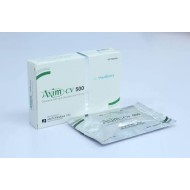
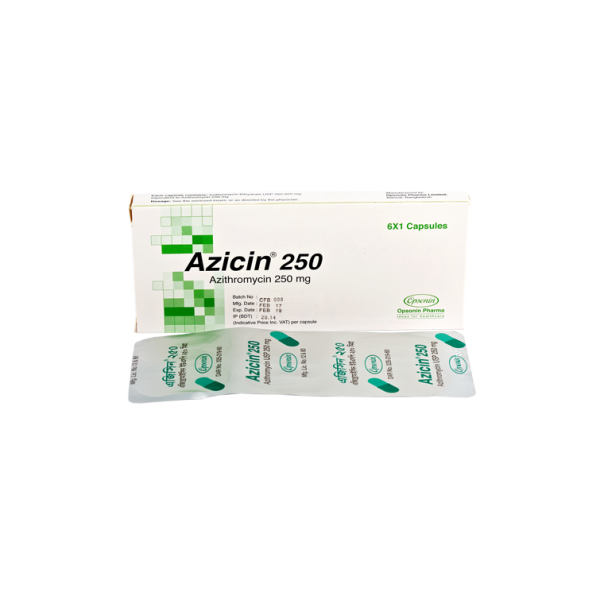
Azicin 250 Capsule — Azithromycin 250mg for Respiratory & Soft Tissue Infections
| Attribute | Details |
|---|---|
| Brand Name | Azicin |
| Generic Name | Azithromycin |
| Strength | 250 mg |
| Dosage Form | Capsule |
| Drug Class | Macrolide Antibiotic (Azalide) |
| Manufacturer | Opsonin Pharma Limited, Bangladesh |
| Route of Administration | Oral |
About Azicin 250 Capsule
Azicin 250 Capsule contains azithromycin 250 mg in capsule form, manufactured by Opsonin Pharma Limited, Bangladesh. Azithromycin 250 mg is the standard unit dose for the classic 5-day azithromycin course (500 mg on day 1, then 250 mg on days 2–5) — the regimen established in early Phase III trials for community-acquired pneumonia and upper respiratory tract infections. This 5-day protocol utilising 250mg dosage units was the original regulatory basis for azithromycin approval worldwide and remains widely prescribed in Bangladesh and globally. The 250mg capsule is bioequivalent to the 250mg tablet formulation; the choice between capsule and tablet is largely patient preference, as some patients find capsules easier to swallow than larger tablets. Azicin 250 Capsule should be taken on an empty stomach (at least 1 hour before or 2 hours after meals) as food significantly reduces the rate of absorption of the capsule formulation.
The Classic 5-Day Azithromycin Course
The 5-day regimen using 250 mg capsules remains the standard for community-acquired pneumonia and pharyngotonsillitis. Day 1: 500 mg (two Azicin 250 capsules taken together as a loading dose); Days 2–5: 250 mg (one Azicin 250 capsule) once daily. Total course: 1500 mg azithromycin over 5 days. Pharmacokinetic rationale: The loading dose on Day 1 rapidly saturates tissue-binding sites, achieving bactericidal tissue concentrations within 2–4 hours. The prolonged tissue half-life then maintains effective concentrations for 5–7 days beyond the last dose — providing approximately 10–12 days of antibacterial tissue effect from a 5-day course. This is the pharmacological basis for azithromycin's efficacy with shorter courses compared with other antibiotics. Clinical outcome data from randomised trials confirm the 5-day 250mg regimen is as effective as 10-day amoxicillin-clavulanate for mild-moderate CAP.
Respiratory Infections in the Bangladesh Context
Community-acquired respiratory infections are among the most common reason for antibiotic prescribing in Bangladesh. The burden is greatest during the cooler dry season (November–February) when rhinovirus, influenza, and Streptococcus pneumoniae circulate, and during the monsoon (June–September) when dampness and crowding facilitate Mycoplasma pneumoniae spread. Azithromycin 250mg is active against the principal bacterial causes of community-acquired pneumonia in Bangladesh: Streptococcus pneumoniae (though resistance is increasing in some regions), Haemophilus influenzae, Moraxella catarrhalis, Mycoplasma pneumoniae, Chlamydophila pneumoniae, and Legionella pneumophila. For mild-to-moderate CAP managed in the outpatient setting, azithromycin monotherapy or azithromycin plus a beta-lactam (for atypical pathogen coverage) is standard. The once-daily dosing is particularly valuable for adherence in ambulatory patients.
Azithromycin 250mg and Diabetic Infections
Patients with diabetes mellitus are at significantly increased risk of respiratory tract infections and have higher rates of hospitalisation for pneumonia compared to non-diabetic individuals. Hyperglycaemia impairs mucociliary clearance, reduces surfactant function, impairs alveolar macrophage phagocytosis, and reduces neutrophil chemotaxis — collectively compromising pulmonary host defences. Azicin 250 Capsule is an appropriate choice for outpatient bacterial respiratory infections in diabetic patients. Importantly: azithromycin does not affect blood glucose directly; it has no significant interactions with metformin; for patients on QT-prolonging medications (some antipsychotics or antihistamines), the QT-prolongation risk of azithromycin should be discussed with the physician; patients on insulin should be aware that acute infection typically requires increased insulin doses due to counter-regulatory stress hormones.
Frequently Asked Questions (FAQ)
Q1: Should Azicin 250 Capsule be taken with or without food?
Unlike azithromycin tablet formulations, the 250mg capsule formulation should be taken on an empty stomach — at least 1 hour before meals or 2 hours after eating. Food significantly reduces the rate (and potentially extent) of absorption of azithromycin capsules by slowing gastric emptying and reducing dissolution. The difference is clinically meaningful: taking capsules with food can reduce peak plasma concentration (Cmax) by approximately 50% compared with fasting. If taking the first loading dose (500mg = two capsules), ensure fasting to achieve the rapid, high peak concentration needed to saturate tissue binding sites quickly. If GI side effects (nausea, abdominal discomfort) are problematic, consult your physician about whether the tablet formulation (less affected by food) would be preferable.
Q2: How is Azicin 250 Capsule different from Azicin 500mg?
Azicin 250 Capsule contains 250mg azithromycin per capsule; Azicin 500 contains 500mg per unit. The 250mg capsule is used in the classic 5-day regimen (500mg loading on Day 1 = two capsules, then one capsule daily for Days 2–5). The 500mg formulation enables a shorter 3-day course (500mg once daily for 3 days = 1500mg total) that achieves the same total dose with fewer capsules and days — preferred for adherence-critical situations. Both deliver the same total azithromycin exposure (1500mg) and are clinically equivalent for most indications. The 500mg tablets are preferred for traveller's diarrhoea single-dose (one 500mg tablet × 2 = 1g) and STI treatment (single 1g dose).
Q3: Can Azicin 250 Capsules be used for strep throat?
Yes — azithromycin 250mg is an appropriate alternative for group A streptococcal pharyngitis (strep throat) in penicillin-allergic patients. The regimen is 500mg on Day 1, then 250mg on Days 2–5 (total 5 days). Azithromycin achieves clinical cure rates of 90–93% for streptococcal pharyngitis, comparable to penicillin. However, penicillin V (or amoxicillin) remains the first-line choice for strep throat in non-penicillin-allergic patients due to its established efficacy and lower resistance selection pressure. Azithromycin resistance in Group A Streptococcus is increasing globally; if azithromycin is used and symptoms do not improve within 48–72 hours, reassessment is essential.
Q4: Is it safe to take Azicin 250 with common diabetes medications?
Azithromycin has no clinically significant pharmacokinetic interactions with metformin, glibenclamide, gliclazide, glimepiride, or insulin. There are no documented pharmacodynamic interactions affecting blood glucose. However, azithromycin mildly inhibits CYP3A4 and may modestly increase levels of some statins (atorvastatin, simvastatin) — relevant since many diabetic patients are on statin therapy. The clinical significance is minor at 5-day courses. The main safety consideration in diabetic patients is QT interval: if the patient is also taking QT-prolonging medications (some antihistamines, antipsychotics), the physician should be informed before prescribing azithromycin, as additive QT prolongation is possible.
Medical Disclaimer: Azicin 250 Capsule requires a prescription. Self-diagnosis and self-treatment of respiratory infections may delay appropriate therapy for serious conditions (pneumonia, tuberculosis). If symptoms include high fever, breathlessness, chest pain, or do not improve within 48–72 hours, seek immediate medical assessment.