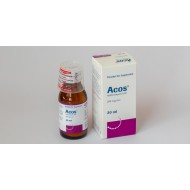
- Stock: In Stock
- Brand: Opsonin Pharma Limited
- Product ID: Azithromycin
🔒 100% Secure Payment | bKash | Nagad | SSLCommerz | COD
⭐ Become a FREE Member: 7% Extra Savings • Free Delivery • Refill Reminders • Priority Support
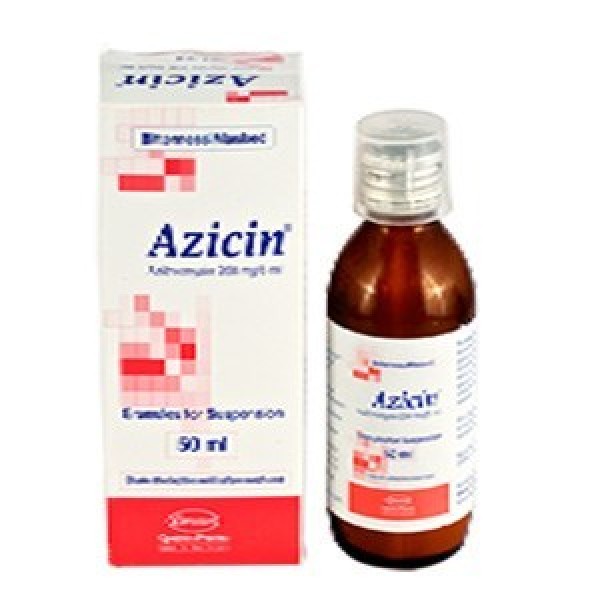
Azicin 50ml Suspension — Azithromycin 200mg/5ml for Adolescents, Adults & High-Dose Regimens
| Attribute | Details |
|---|---|
| Brand Name | Azicin |
| Generic Name | Azithromycin |
| Strength | 200 mg / 5 mL |
| Dosage Form | Oral Suspension (after reconstitution) |
| Pack Size | 50 mL bottle |
| Drug Class | Macrolide Antibiotic (Azalide) |
| Manufacturer | Opsonin Pharma Limited, Bangladesh |
| Route of Administration | Oral |
About Azicin 50ml Suspension
Azicin 50ml Suspension provides azithromycin 200 mg per 5 mL as an oral liquid after reconstitution, manufactured by Opsonin Pharma Limited, Bangladesh. The 50 mL pack contains 2000 mg (2 g) total azithromycin — the largest pack size in the Azicin suspension range and the most versatile for covering the full spectrum of clinical needs. The 50 mL bottle is appropriate for: adolescents over 30 kg needing a 5-day treatment course; adult patients with dysphagia requiring a complete 5-day adult-dose course (37.5 mL for 500mg Day 1 + 250mg Days 2–5); typhoid fever treatment using higher-dose regimens (20 mg/kg/day); and clinical situations where extended or higher-dose azithromycin suspension is required under physician supervision. Having the full 2000 mg available provides dosing flexibility without need for partial bottles or multiple dispensing events.
Adult Dosing in Suspension Format
For adult patients who cannot swallow solid dosage forms (tablets or capsules), Azicin 50ml Suspension at 200mg/5mL provides the following standard adult regimens. Standard 5-day CAP/URTI regimen (500mg Day 1, then 250mg Days 2–5): Day 1 = 12.5 mL; Days 2–5 = 6.25 mL each = 25 mL; Total = 37.5 mL — the 50 mL bottle provides this in full with approximately 12.5 mL remaining. Standard 3-day regimen (500mg/day × 3 days): 3 × 12.5 mL = 37.5 mL — the 50 mL bottle provides this comfortably. Single-dose STI treatment (1g = 1000mg): 1000mg = 25 mL — the 50 mL bottle provides a single dose with 25 mL remaining (which can be used for a partner's treatment if two adults are being treated simultaneously). The 50 mL format is therefore preferred for all adult suspension applications.
Typhoid Fever — High-Dose Regimen Coverage
Azithromycin is increasingly used as first-line therapy for uncomplicated enteric fever (typhoid and paratyphoid) in Bangladesh, where extensively drug-resistant (XDR) Salmonella typhi with resistance to fluoroquinolones and third-generation cephalosporins has emerged. The treatment dose for typhoid is higher than for respiratory infections: 20 mg/kg/day (maximum 1g/day) for 5–7 days. Volume requirements at 20mg/kg/day using 200mg/5mL suspension:
| Weight | Daily dose | Daily volume | 5-day total | 7-day total |
|---|---|---|---|---|
| 25 kg | 500 mg | 12.5 mL | 62.5 mL* | 87.5 mL* |
| 20 kg | 400 mg | 10 mL | 50 mL ✓ | 70 mL* |
| 15 kg | 300 mg | 7.5 mL | 37.5 mL ✓ | 52.5 mL* |
| Adult (1g max) | 1000 mg | 25 mL | 125 mL* | 175 mL* |
*Multiple bottles required. For adults and larger children with typhoid, oral azithromycin tablets (500mg) are more practical; suspension is appropriate for smaller children where tablet dosing is impractical.
Pertussis (Whooping Cough) — Azithromycin Treatment and Prophylaxis
Azithromycin is the preferred antibiotic for treatment and post-exposure prophylaxis (PEP) of pertussis (Bordetella pertussis infection) in all age groups, including infants under 1 month. For children: 10 mg/kg/day × 5 days (or 10 mg/kg single dose for some protocols). For post-exposure prophylaxis of close contacts of a confirmed pertussis case, the same regimen is recommended to prevent clinical disease. Azicin 50ml Suspension provides sufficient volume for treating multiple household contacts of a pertussis case — an important practical consideration given the high household transmission rate of pertussis (>80% in susceptible contacts). For a 20kg school-aged child: 200mg/day × 5 days = 1000mg = 25mL — the 50mL bottle provides two such courses, allowing simultaneous treatment of siblings if clinically indicated.
Diabetic Patients Requiring Liquid Antibiotic Formulations
Certain diabetic patients may require liquid antibiotic formulations due to concurrent conditions: post-gastroparesis feeding tube nutrition (though suspension via NG/PEG tube requires specific guidance), post-surgical dysphagia after oesophageal or gastric procedures more common in obesity-associated type 2 diabetes, or neurological dysphagia in patients with diabetic autonomic neuropathy affecting the swallowing reflex. In all these settings, Azicin 50ml Suspension provides oral azithromycin in a liquid form that can be administered without swallowing solid dosage forms. Sugar-sensitive patients should be aware of the total carbohydrate content of the suspension (from sweeteners and flavouring excipients) — though the quantity per dose is unlikely to significantly affect blood glucose in most diabetic patients taking typical volumes (6–12.5 mL per dose).
Frequently Asked Questions (FAQ)
Q1: Why choose the 50mL bottle over the 35mL bottle of Azicin suspension?
The 50mL bottle (2000mg total) is the better choice when: the patient is a heavier child over 28–30 kg needing a full 5-day course; the patient is an adult using suspension (a full adult 5-day course requires approximately 37.5mL, just exceeding the 35mL bottle); typhoid treatment is required (higher dose of 20mg/kg/day typically needs more volume); two children in the household need concurrent treatment; or when clinical uncertainty about the required course length suggests having additional volume available is prudent. The 35mL bottle suffices for children 20–28 kg on a standard 5-day respiratory course.
Q2: Can the same 50mL bottle be used for two people?
In principle, a single 50mL bottle contains enough azithromycin for certain two-person treatment scenarios — for example, two children each completing a 3-day course up to 20kg, or two partners receiving a 1g single dose for STI treatment (25mL each). However, sharing prescription medication between individuals without independent medical assessment is not standard practice and is generally discouraged. Each patient should have their own prescription and dispensing. If two household members genuinely need simultaneous treatment, a physician should prescribe for both separately. The practical exception is post-exposure prophylaxis of close contacts, where simultaneous household treatment is often recommended by the prescribing physician and a shared bottle may be explicitly directed.
Q3: Does the azithromycin suspension contain sugar?
Azithromycin oral suspension formulations typically contain sucrose or other sweeteners as excipients for palatability. Patients with diabetes or those on sugar-restricted diets should be aware of this. However, the amount of sugar per dose is relatively small (the suspension is taken in volumes of 5–12.5mL per dose), and the glycaemic impact in most diabetic patients is unlikely to be clinically significant at this volume. Patients with severe dietary carbohydrate restrictions or type 1 diabetes on tight carbohydrate counting should ask their pharmacist about the precise sucrose content per dose. Sugar-free alternatives (azithromycin tablets or capsules) are preferred for diabetic patients who can swallow solid dosage forms.
Q4: What is the shelf life of Azicin 50ml suspension after opening/reconstitution?
Like all reconstituted azithromycin suspensions, Azicin 50ml Suspension must be used within 10 days of reconstitution (adding water to the dry granules). After 10 days, any remaining suspension must be discarded — the antibiotic may degrade and dosing accuracy cannot be guaranteed beyond this period. The dry granules before reconstitution remain stable until the printed expiry date if stored correctly (cool, dry place away from direct sunlight). Always reconstitute only when treatment is starting, not in advance. If a patient completes their prescribed course before 10 days, dispose of any remaining suspension appropriately.
Medical Disclaimer: Azicin 50ml Suspension dosing must be prescribed by a physician with accurate weight-based calculation. For typhoid fever, pertussis, and STI treatment, specialist or physician guidance is essential for correct regimen selection. Sugar content in the suspension may be relevant for tight glycaemic management in diabetic patients.