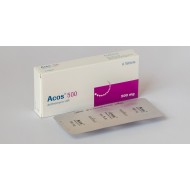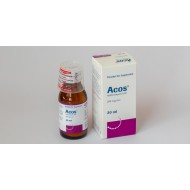

- Stock: In Stock
- Brand: Opsonin Pharma Limited
- Product ID: Azithromycin
Available Options
100% Secure Payment
bKash | Nagad | Cards via SSLCommerz | COD
Monthly Medicines Available | Free Delivery on Eligible Orders
Azicin 500 Capsule — Azithromycin 500mg for 3-Day Regimens & Severe Infections
| Attribute | Details |
|---|---|
| Brand Name | Azicin |
| Generic Name | Azithromycin |
| Strength | 500 mg |
| Dosage Form | Capsule |
| Drug Class | Macrolide Antibiotic (Azalide) |
| Manufacturer | Opsonin Pharma Limited, Bangladesh |
| Route of Administration | Oral |
About Azicin 500 Capsule
Azicin 500 Capsule contains azithromycin 500 mg per capsule, manufactured by Opsonin Pharma Limited, Bangladesh. The 500 mg dose is the highest single-capsule azithromycin strength available for oral administration and enables the shortest standard azithromycin regimens: a 3-day course (500 mg once daily for 3 days = 1500 mg total) that is clinically equivalent in outcome to the 5-day 250 mg course for community-acquired pneumonia and upper respiratory tract infections. The 3-day regimen achieves significantly better patient adherence than longer courses — studies consistently show that completion rates approach 95%+ for 3-day regimens compared with 60–75% for 7–10 day antibiotic courses. Azicin 500 Capsule should be taken on an empty stomach (1 hour before or 2 hours after food) to maximise absorption rate, as the capsule formulation is more sensitive to food effects than tablet formulations.
The 3-Day Azithromycin 500mg Regimen
The short 3-day 500mg once-daily course is now the preferred azithromycin regimen in many international guidelines due to its adherence advantages and equivalent clinical outcomes. One capsule of Azicin 500 is taken once daily for 3 consecutive days. Total course: 3 capsules, 1500 mg azithromycin. Pharmacokinetic equivalence: azithromycin's extraordinarily long tissue half-life (68 hours) and high volume of distribution (31 L/kg) mean that therapeutic tissue concentrations are maintained for 5–7 days after the last dose of a 3-day course — providing 8–10 days of total antibacterial tissue exposure from just 3 days of dosing. This is why the 3-day course is non-inferior to the 5-day 250mg course: the total antibacterial tissue exposure is similar. Indications where the 3-day 500mg course is used: community-acquired pneumonia (mild-moderate), acute exacerbation of chronic bronchitis (AECB), pharyngotonsillitis (penicillin-allergic), uncomplicated skin and soft tissue infections, and sinusitis (acute bacterial rhinosinusitis, ABRS).
Step-Down IV-to-Oral Therapy
A clinically important use of Azicin 500 Capsule is as oral step-down therapy after initial intravenous azithromycin in hospitalised patients with community-acquired pneumonia. IV-to-oral stepdown is a pharmacoeconomically rational strategy: IV antibiotics cost significantly more than oral equivalents, and once a patient demonstrates clinical stability (improving fever, improving oxygenation, tolerating oral intake), switching to oral azithromycin 500mg achieves the same microbiological and clinical outcomes as continuing IV therapy. Criteria for IV-to-oral stepdown in CAP: afebrile for 24 hours; improving respiratory rate and oxygenation; able to tolerate oral medications; no concerns about gut absorption. Azithromycin's near-complete oral bioavailability (~37–55% — high for a drug with such extensive tissue distribution) makes it particularly suitable for oral stepdown. Azicin 500mg capsule (taken fasting as soon as the patient can tolerate oral intake) enables seamless stepdown without dose adjustment.
COPD Exacerbation Management
In patients with chronic obstructive pulmonary disease (COPD), acute exacerbations (AECOPD) are frequently triggered by bacterial infections, most commonly Haemophilus influenzae, Moraxella catarrhalis, and Streptococcus pneumoniae. Azithromycin 500mg is used as a 3-day course for AECOPD, particularly in patients with penicillin allergy (where amoxicillin-clavulanate cannot be used) or in areas with high beta-lactam resistance rates. A landmark trial (AZALEA trial) demonstrated that azithromycin was non-inferior to doxycycline for AECOPD with evidence of bacterial infection. Additionally, for COPD patients with frequent exacerbations (>3/year), long-term prophylactic azithromycin (250mg three times weekly or 500mg once weekly) has been shown to reduce exacerbation frequency — though this prophylactic use is a specialist decision due to cardiac and resistance concerns.
Diabetic Respiratory Complications
Diabetes mellitus significantly increases the risk and severity of respiratory infections. Diabetic patients have a 2–3 times higher risk of pneumococcal pneumonia hospitalisations and a higher mortality rate from pneumonia compared with non-diabetic individuals. Azicin 500 Capsule is an appropriate first-line option for outpatient management of mild-to-moderate community-acquired pneumonia in diabetic patients. Key considerations: azithromycin covers both typical (Streptococcus pneumoniae) and atypical (Mycoplasma, Chlamydophila, Legionella) pathogens; the 3-day regimen minimises disruption to the complex medication and monitoring routines of diabetic patients; azithromycin has no direct interaction with insulin, metformin, or standard oral antidiabetic agents. For diabetic patients on insulin, any significant infection — including pneumonia — typically increases insulin requirements due to stress-related counter-regulatory hormone release; blood glucose must be monitored more frequently during antibiotic treatment.
Frequently Asked Questions (FAQ)
Q1: Is the 3-day Azicin 500mg course as effective as a 5-day course?
Yes — multiple randomised controlled trials and systematic reviews have demonstrated clinical equivalence between the 3-day 500mg once-daily regimen and the 5-day 250mg regimen (both delivering 1500mg total azithromycin) for community-acquired respiratory infections. The 3-day regimen has the added advantage of higher completion rates (better adherence), fewer missed doses, and lower total antibiotic exposure. International guidelines including WHO Essential Medicines documentation now recognise both regimens as acceptable, with the 3-day course increasingly preferred for patient convenience and adherence optimisation.
Q2: Can Azicin 500mg Capsule be opened and dissolved in water?
Azithromycin capsules can technically be opened and the powder dissolved in water for patients who cannot swallow capsules — however, this is not the recommended method. Azithromycin powder has a very bitter taste; dissolving in water produces an intensely bitter solution that most patients find unacceptable. For patients who cannot swallow solid dosage forms, azithromycin oral suspension (Azicin suspension, 200mg/5mL) is the appropriate formulation. Suspension is specifically formulated with flavouring to make oral azithromycin palatable. If suspension is unavailable and the capsule must be opened, dissolve in 5–10 mL of water and administer immediately — do not store the dissolved powder.
Q3: How many capsules of Azicin 500 are needed per strip for a full course?
A complete 3-day course of Azicin 500mg requires exactly 3 capsules — one per day for three consecutive days. Standard dispensing is typically one strip of 3 or 6 capsules, with 3 capsules constituting one full treatment course. Patients should be clearly instructed: take ONE capsule ONCE DAILY for 3 DAYS; do not take more than one capsule per day (higher doses increase cardiac and GI side effects without improving efficacy); complete all 3 days even if symptoms improve after day 1 or 2 (early improvement is due to azithromycin's anti-inflammatory effects, but bacterial eradication requires the full course).
Q4: Does Azicin 500mg cause heart problems?
Azithromycin has a small but real potential to prolong the QT interval — an electrocardiographic measure that, when prolonged, increases the risk of ventricular arrhythmias including the potentially fatal torsades de pointes. This risk is greater in: patients with pre-existing prolonged QT interval; patients with bradycardia or uncorrected electrolyte abnormalities (hypokalaemia, hypomagnesaemia); patients taking other QT-prolonging drugs (certain antipsychotics, antihistamines, antifungals, fluoroquinolones). For otherwise healthy adults taking a standard 3-day course for a respiratory infection, the absolute risk of clinically significant cardiac events is very low. Patients with known cardiac conditions, those on QT-prolonging medications, or those with electrolyte abnormalities should discuss the risk with their physician before taking azithromycin.
Medical Disclaimer: Azicin 500 Capsule is a prescription antibiotic requiring physician evaluation before use. It is not appropriate for viral infections (colds, flu, COVID-19). Patients with known cardiac arrhythmias or prolonged QT should notify their physician before taking azithromycin. Do not use during pregnancy without physician guidance.