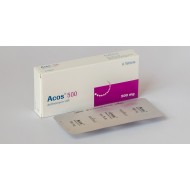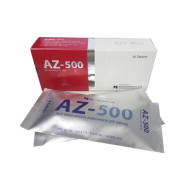
- Stock: Pre-Order
- Brand: Opsonin Pharma Limited
- Product ID: Azithromycin
🔒 100% Secure Payment | bKash | Nagad | SSLCommerz | COD
⭐ Become a FREE Member: 7% Extra Savings • Free Delivery • Refill Reminders • Priority Support
This Item is for pre order
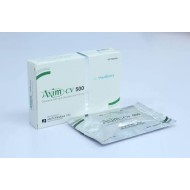
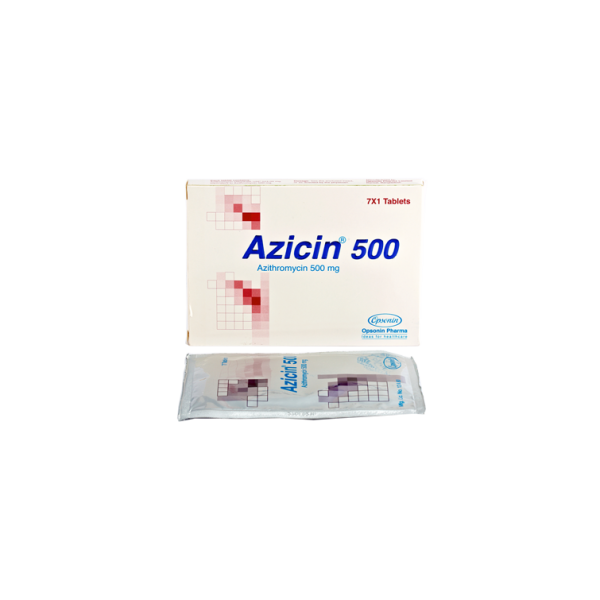
Azicin 500mg Tablet — Azithromycin Film-Coated Tablet for STI, Typhoid & Respiratory Infections
| Attribute | Details |
|---|---|
| Brand Name | Azicin |
| Generic Name | Azithromycin |
| Strength | 500 mg |
| Dosage Form | Film-Coated Tablet |
| Drug Class | Macrolide Antibiotic (Azalide) |
| Manufacturer | Opsonin Pharma Limited, Bangladesh |
| Route of Administration | Oral |
About Azicin 500mg Film-Coated Tablet
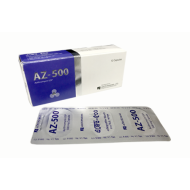
Azicin 500mg Tablet is a film-coated oral tablet containing azithromycin 500 mg, manufactured by Opsonin Pharma Limited, Bangladesh. The film-coated tablet format at 500mg strength combines the highest oral azithromycin dose in a single unit with the practical advantages of film coating: protection against the characteristic bitter taste of azithromycin; enhanced stability in Bangladesh's high-humidity environment; and, critically, the ability to be taken with or without food — an important advantage over the capsule formulation where food significantly reduces absorption rate. Azicin 500mg Film-Coated Tablet enables the complete range of standard-dose azithromycin regimens, including the 3-day course (one tablet daily for 3 days), single-dose STI therapy (two tablets simultaneously for a 1g dose), and as a component of typhoid treatment protocols, all in the most patient-friendly oral format available.
Single-Dose STI Application (1g = Two Tablets)
A key clinical application of Azicin 500mg tablets is the single-dose 1g regimen for chlamydial sexually transmitted infections. Two Azicin 500mg tablets taken simultaneously constitute the WHO-recommended single oral dose (1000mg) for uncomplicated genital Chlamydia trachomatis infection. This is an alternative to the 1g sachet formulation — both deliver the same 1g dose but in different physical forms. The tablet format for the 1g STI dose is preferred by patients who want to avoid the granule dissolution process required with sachets, or who find solid dosage forms more convenient. The two-tablet approach is also used as co-therapy with ceftriaxone IM injection for the syndromic management of urethral discharge (gonorrhoea with chlamydia co-treatment protocol), which is the standard WHO syndromic management approach for STI in resource-limited settings. Both sexual partners should receive simultaneous treatment; two sets of two Azicin 500mg tablets (four tablets total) treat both partners in a chlamydial transmission pair.
Typhoid Fever Management in Bangladesh
Enteric fever caused by Salmonella typhi (typhoid) and Salmonella paratyphi (paratyphoid) remains endemic in Bangladesh, with an estimated annual incidence substantially higher than in high-income countries. The emergence of extensively drug-resistant (XDR) typhoid with resistance to ampicillin, chloramphenicol, cotrimoxazole, and fluoroquinolones has significantly complicated treatment. Azithromycin has become a frontline oral agent for uncomplicated typhoid in Bangladesh based on clinical trial data from the South Asian region. Treatment dose: azithromycin 20 mg/kg/day (maximum 1g/day) × 5–7 days. For adults: 1g (two Azicin 500mg tablets) once daily for 5–7 days. For adolescents above 50 kg: same as adults. This regimen has shown clinical cure rates of 95%+ in Bangladesh trials. Fever typically resolves within 4–7 days of starting azithromycin. For complicated typhoid (intestinal perforation, severe disease), intravenous antibiotics and hospitalisation are required regardless of azithromycin susceptibility.
Acute Bacterial Sinusitis Treatment
Acute bacterial rhinosinusitis (ABRS) is among the most frequent indications for antibiotic prescribing in Bangladesh. While most acute sinusitis is viral and does not require antibiotics, ABRS — diagnosed by persistence of severe symptoms beyond 10 days, sudden worsening after initial improvement ("double sickening"), or fever with purulent discharge — benefits from antibiotic therapy. Amoxicillin-clavulanate is first-line for ABRS in international guidelines; azithromycin 500mg for 3 days is an appropriate alternative for penicillin-allergic patients. Azithromycin achieves high sinus mucosal concentrations — 10–50 times plasma levels — making it particularly effective in the restricted sinus compartment where high local drug concentrations are needed. Clinical trials of azithromycin 500mg for 3 days vs amoxicillin-clavulanate for 10 days for ABRS show comparable clinical cure rates at day 14–21.
Post-Antibiotic Effect and the Advantages of Short Courses
Azithromycin's extensive post-antibiotic effect (PAE) — the continued suppression of bacterial growth that persists after drug concentration falls below the minimum inhibitory concentration — is particularly pronounced and clinically meaningful. For azithromycin-susceptible organisms, the PAE is 12–48 hours in in-vitro studies, and the sustained tissue concentrations after cessation of dosing (tissue half-life 68 hours) extend this effect further. The practical consequence is that azithromycin 500mg for 3 days continues to exert antibacterial activity against susceptible pathogens for 7–10 days after the last tablet is taken. This is why patients are instructed to complete only 3 days of therapy: continued azithromycin dosing beyond the prescribed course does not increase efficacy (tissue levels remain therapeutic) but does increase the risk of side effects and antibiotic resistance selection. Patients should not "save" tablets for later use — each course should be freshly prescribed.
Frequently Asked Questions (FAQ)
Q1: Can Azicin 500mg Tablet be taken with food?
Yes — film-coated azithromycin 500mg tablets can be taken with or without food. The film coating ensures consistent absorption regardless of food intake, unlike azithromycin capsule formulations where food reduces peak plasma concentration by approximately 50%. This is a clinically important practical difference: patients who find it difficult to take medications on an empty stomach (elderly patients, those with gastric sensitivity, or those whose daily routine makes fasting impractical) can take Azicin 500mg tablets with meals without compromising treatment efficacy.
Q2: How many Azicin 500mg tablets are needed for a chlamydia treatment?
Two Azicin 500mg tablets taken simultaneously as a single oral dose (= 1000mg = 1g). This is the complete single-dose treatment for uncomplicated genital chlamydia. Both tablets are taken at the same time — not one at a time or spread through the day. Avoid unprotected sexual contact for 7 days after treatment and ensure sexual partners receive simultaneous treatment to prevent reinfection. A test-of-cure is recommended 3–5 weeks later if symptoms persist or re-exposure has occurred.
Q3: Is Azicin 500mg Tablet safe for patients with liver disease?
Azithromycin is primarily metabolised in the liver and excreted in bile. In mild-to-moderate hepatic impairment, azithromycin pharmacokinetics are not significantly altered and dose adjustment is not required. In severe hepatic impairment (Child-Pugh Class C), reduced clearance may increase systemic exposure, and azithromycin should be used with caution or avoided — doxycycline or fluoroquinolones (for indications where they are appropriate) may be safer alternatives. Azithromycin itself is a rare cause of cholestatic jaundice and hepatocellular hepatotoxicity — if jaundice, abdominal pain, or dark urine develops during treatment, the drug should be stopped and liver function assessed.
Q4: What should I do if I miss a dose of Azicin 500mg during the 3-day course?
Take the missed dose as soon as you remember on the same day. If you do not remember until the next day, take the dose for that day and continue — do not double the dose to make up for the missed one. Given azithromycin's very long tissue half-life (68 hours), a single missed dose in a 3-day course is unlikely to significantly compromise treatment efficacy. However, complete all prescribed doses — the 3-day course should ideally be taken on 3 consecutive days for consistent tissue loading. If two doses are missed, contact your prescribing physician.
Medical Disclaimer: Azicin 500mg Tablet is a prescription antibiotic. For STI treatment, professional sexual health guidance including partner notification and test-of-cure is recommended. For typhoid fever management, physician assessment is essential — complicated or drug-resistant typhoid requires specialist care. Complete the full prescribed course.