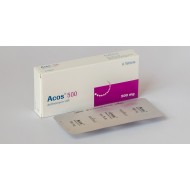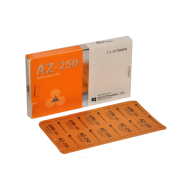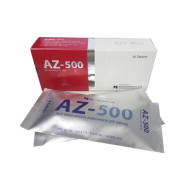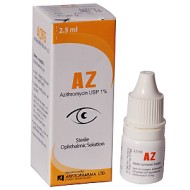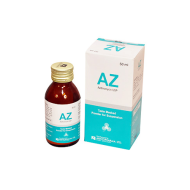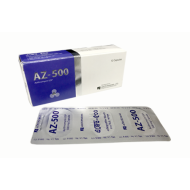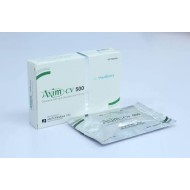

- Stock: Out Of Stock
- Brand: Astra Biopharmaceuticals Ltd.
- Product ID: Azithromycin
Available Options
🔒 100% Secure Payment | bKash | Nagad | SSLCommerz | COD
⭐ Become a FREE Member: 7% Extra Savings • Free Delivery • Refill Reminders • Priority Support
This Item is for pre order
Azithro 500 — Product Overview
| Attribute | Details |
|---|---|
| Generic Name | Azithromycin |
| Brand Name | Azithro 500 |
| Strength | 500 mg per tablet |
| Dosage Form | Film-coated Tablet |
| Manufacturer | Astra Biopharmaceuticals Ltd., Bangladesh |
| Therapeutic Class | Azalide / Macrolide Antibiotic |
| Route | Oral |
| Prescription Status | Rx (Prescription Required) |
What is Azithro 500?
Azithro 500 is a 500 mg film-coated tablet formulation of azithromycin manufactured by Astra Biopharmaceuticals Ltd. of Bangladesh. At double the dose of the 250 mg tablet, Azithro 500 enables the alternative short 3-day regimen (500 mg once daily × 3 days) that delivers an equivalent total cumulative dose of 1.5 g to the classic 5-day Z-Pack, compressed into a more patient-friendly 3-day schedule. The 3-day 500 mg regimen has demonstrated clinical equivalence to the 5-day 250 mg regimen in multiple trials for community-acquired pneumonia and acute exacerbations of chronic bronchitis. Azithro 500 is also used for Day 1 loading in the standard 5-day regimen (one 500 mg tablet on Day 1 rather than two 250 mg tablets), and for the single 1 g dose (two 500 mg tablets taken simultaneously) that is first-line therapy for uncomplicated genital chlamydial infection.
Mechanism of Action
Azithromycin exerts its antibacterial effect by binding to the 50S ribosomal subunit of susceptible bacteria, specifically to the 23S rRNA component at the peptidyl transferase loop, preventing translocation of the ribosome along the mRNA template. This halts protein synthesis and produces a bacteriostatic effect against most organisms, and a bactericidal effect at clinically achievable concentrations against Streptococcus pneumoniae. Beyond its direct antibacterial activity, azithromycin at 500 mg demonstrates pronounced immunomodulatory effects: suppression of neutrophil oxidative burst, reduction of pro-inflammatory cytokine production (TNF-α, IL-1β, IL-6, IL-8), and inhibition of NF-κB signalling — properties that may reduce the hyperinflammatory component of severe respiratory infections. The 500 mg dose reaches higher peak plasma concentrations than 250 mg, achieving broader and faster intraphagocytic loading in the early hours of treatment, which may provide clinical advantages in more severe or rapidly progressing infections.
Three-Day Regimen — Clinical Equivalence to Five-Day Z-Pack
The pivotal pharmacokinetic rationale for the 3-day 500 mg regimen lies in azithromycin's exceptional tissue half-life. After completing three 500 mg doses, azithromycin tissue concentrations remain above the MIC for susceptible respiratory pathogens for an additional 4–7 days post-last dose, producing a total effective coverage window of 7–10 days from the equivalent of just three daily tablets. Multiple randomised controlled trials have demonstrated clinical cure rates of 85–95% with 3-day × 500 mg azithromycin that are statistically non-inferior to 5-day × 250/500 mg regimens for: mild-to-moderate community-acquired pneumonia (outpatient); acute exacerbations of chronic bronchitis (ABECB); acute bacterial sinusitis. The 3-day regimen improves compliance — fewer missed doses occur over 3 days than 5 days — and reduces total antibiotic exposure by maintaining the same cumulative dose in a shorter window, theoretically reducing selection pressure for resistance.
Approved Indications and Dosing Schedules
Azithro 500 is used for: (1) Community-acquired pneumonia (mild-to-moderate, outpatient) — 500 mg once daily for 3 days (3-day regimen), or 500 mg on Day 1 followed by 250 mg on Days 2–5 (5-day regimen using Azithro 500 as the Day 1 dose); (2) Acute bacterial exacerbations of chronic bronchitis — 500 mg once daily for 3 days; (3) Acute sinusitis — 500 mg once daily for 3 days; (4) Uncomplicated genital chlamydial infection (Chlamydia trachomatis) — single dose of 1 g (two 500 mg tablets taken simultaneously), which is WHO-recommended first-line therapy; (5) Disseminated Mycobacterium avium complex (MAC) infection in HIV/AIDS or other immunocompromised patients — 500 mg daily in combination with ethambutol (treatment) or 1200 mg weekly (prophylaxis); (6) Prevention of MAC in patients with CD4 counts below 50 cells/μL — 1200 mg (two 500 mg tablets + one 200 mg tablet) once weekly.
Pharmacokinetics of the 500 mg Dose
Following a single 500 mg oral dose, peak plasma concentration (Cmax) is approximately 0.4 mg/L at 2–3 hours, roughly double that achieved with 250 mg. The volume of distribution remains extraordinarily large at 31 L/kg, reflecting deep tissue sequestration. Pulmonary tissue concentrations reach 1–5 mg/kg (approximately 100× plasma levels), alveolar macrophage concentrations exceed 1000 mg/kg (approximately 2500× plasma), and tonsillar tissue concentrations reach 4 mg/g. After a 3-day 500 mg course, tissue concentrations at Day 3 are measurably higher than after a 5-day 250 mg course at Day 5, providing more sustained post-treatment activity. Biliary excretion predominates (~50% of administered dose) with minimal renal clearance (6%), making Azithro 500 safe in CKD stages 1–3 without dose adjustment.
Diabetic Patients — Clinical Relevance
Azithro 500 is frequently appropriate for diabetic patients with more severe presentations requiring the higher-dose regimen. Clinically relevant considerations: MAC prophylaxis — type 2 diabetic patients on chronic immunosuppressive therapy (e.g., post-transplant) may require MAC prophylaxis with azithromycin 1200 mg weekly; atypical pneumonia in diabetics — diabetes impairs mucociliary clearance and cell-mediated immunity, increasing susceptibility to Legionella and Mycoplasma; azithromycin 500 mg regimen is the preferred outpatient option when atypical organisms are suspected; diabetic foot infections — azithromycin 500 mg is occasionally used as an adjunct in polymicrobial soft-tissue infections when atypical coverage is required alongside a beta-lactam; QT risk assessment — at 500 mg, QTc prolongation risk is marginally greater than at 250 mg; perform ECG before initiating 500 mg regimens in patients with pre-existing cardiac disease, diabetes with autonomic neuropathy (increased arrhythmia risk), or those on concurrent QT-prolonging antifungals or antipsychotics.
Adverse Effects
The adverse effect profile of azithromycin 500 mg is similar to 250 mg but with slightly higher incidence of gastrointestinal effects: nausea (10–17%), diarrhoea (7–12%), and abdominal pain (5–7%) are the most common complaints. Hepatic enzyme elevation occurs in approximately 1–2% of patients. Serious adverse effects include: cardiac — QTc prolongation and rare torsades de pointes, ventricular tachycardia (cardiovascular death risk increased in high-risk cardiac patients per NEJM 2012 data); hypersensitivity — urticaria, angioedema, and rare anaphylaxis; hepatotoxicity — rare cholestatic jaundice, typically reversible on discontinuation; superinfection — prolonged or repeated courses increase risk of oral or vaginal candidiasis and C. difficile colitis. Patients developing palpitations, chest pain, severe abdominal pain, or jaundice on Azithro 500 should discontinue immediately and seek medical attention.
Drug Interactions
At 500 mg, azithromycin has slightly greater potential for drug interactions due to higher systemic concentrations. Key interactions: QT-prolonging drugs (antiarrhythmics, fluoroquinolones, antipsychotics, antimalarials) — avoid concurrent use or use with ECG monitoring; Warfarin — monitor INR during and after azithromycin course; Digoxin — elevated digoxin levels reported; monitor digoxin levels; Cyclosporine — isolated reports of elevated cyclosporine levels; monitor in transplant patients; Ergotamine/dihydroergotamine — risk of acute ergotism; contraindicated; Antacids — take Azithro 500 at least 1 hour before or 2 hours after aluminium- or magnesium-containing antacids; Rifampicin — potential reduction in azithromycin efficacy through enhanced clearance.
Contraindications
Contraindicated in: known hypersensitivity to azithromycin, erythromycin, or any macrolide/ketolide; history of cholestatic jaundice or hepatic dysfunction associated with prior azithromycin use; pre-existing QT prolongation (QTc >450 ms in men, >460 ms in women); uncorrected hypokalaemia or hypomagnesaemia; concurrent use of other QT-prolonging drugs in high-risk patients. Use with caution in severe hepatic impairment (Child-Pugh Class C) and in patients with myasthenia gravis.
Storage Instructions
Store Azithro 500 tablets at or below 30°C in a dry place away from direct sunlight and moisture. Keep out of reach of children. Do not store in bathrooms. In Bangladesh's tropical climate with high ambient humidity, ensure the foil blister packs are intact until use. Dispose of any unused tablets through appropriate pharmaceutical disposal channels; do not flush down the drain or discard in household waste.
Frequently Asked Questions
Q: Is a 3-day course of Azithro 500 as effective as the 5-day Z-Pack?
A: Yes. Clinical trials have demonstrated that azithromycin 500 mg once daily for 3 days achieves clinical cure rates statistically equivalent to the 5-day regimen for community-acquired pneumonia, acute bronchitis exacerbations, and sinusitis. Both regimens deliver the same 1.5 g total dose. The 3-day schedule may even improve compliance by reducing missed doses.
Q: Can two Azithro 500 tablets (1 g) cure chlamydia in a single dose?
A: Yes. A single oral dose of 1 g azithromycin (two 500 mg tablets taken together) is WHO and national guidelines' first-line treatment for uncomplicated urogenital Chlamydia trachomatis infection. Clinical cure rates exceed 95%. Sexual partners should be simultaneously treated, and patients should abstain from sexual activity for 7 days after treatment.
Q: Should I take Azithro 500 with food?
A: Azithro 500 film-coated tablets may be taken with or without food. Food does not significantly affect the absorption of azithromycin from film-coated tablets, unlike azithromycin suspension or capsule formulations where food timing matters more. Taking with a light meal may reduce gastrointestinal discomfort in sensitive patients.
Q: I have diabetes and was prescribed Azithro 500. Should I be concerned about heart rhythm?
A: Azithromycin can slightly prolong the QT interval on ECG. In diabetic patients without pre-existing cardiac disease or autonomic neuropathy, the absolute risk from a short course is very low. However, if you take other medications that affect heart rhythm, or have a known heart condition, inform your doctor before starting Azithro 500. Report any palpitations or dizziness immediately.
Medical Disclaimer: This information is for educational and informational purposes only and does not constitute medical advice. Azithro 500 is a prescription antibiotic that must be used only under the supervision of a qualified healthcare professional. Antibiotic self-medication is harmful and promotes resistance. Always consult your physician before starting or stopping antibiotic therapy. DiabetesStore.com.bd is a licensed pharmacy retailer operating in Bangladesh.