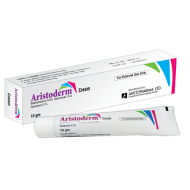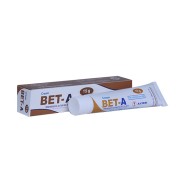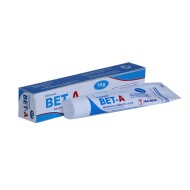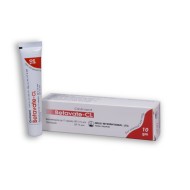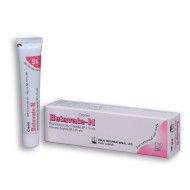
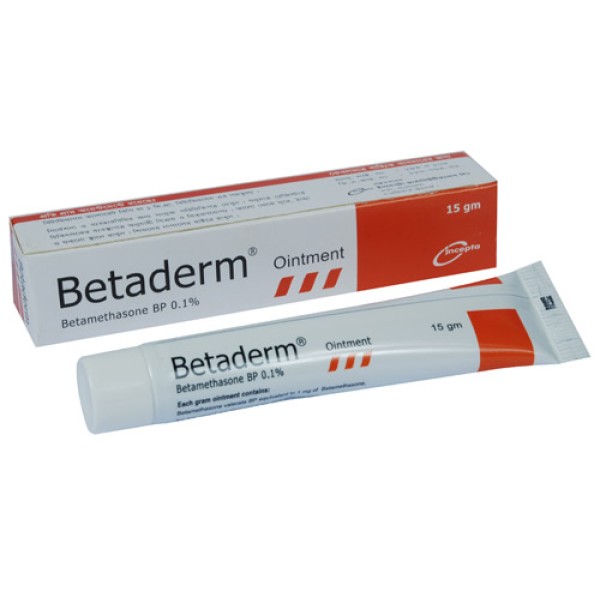
- Stock: In Stock
- Brand: Incepta Pharmaceuticals
- Product ID: Betamethasone Valerate
Available Options
🔒 100% Secure Payment | bKash | Nagad | SSLCommerz | COD
⭐ Become a FREE Member: 7% Extra Savings • Free Delivery • Refill Reminders • Priority Support
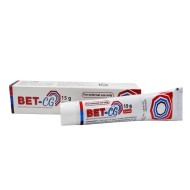
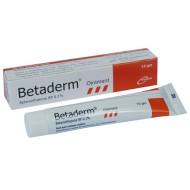
Betaderm 0.1% Ointment (Betamethasone Valerate)
Manufacturer: Incepta Pharmaceuticals Ltd.
Generic Name: Betamethasone Valerate 0.1%
Therapeutic Class: Corticosteroid (Topical) / Anti-inflammatory, Antipruritic
Presentation: 15gm ointment tube
Price: ৳35.00 per 15gm tube
Indications
Betaderm 0.1% Ointment is indicated for the relief of the inflammatory and pruritic (itching) manifestations of corticosteroid-responsive dermatoses, including:
- Eczema and atopic dermatitis
- Contact dermatitis (allergic and irritant)
- Seborrhoeic dermatitis
- Psoriasis (plaque type — excluding widespread plaque psoriasis)
- Neurodermatitis (lichen simplex chronicus)
- Discoid lupus erythematosus
- Lichen planus
- Prurigo nodularis
- Insect bite reactions and other inflammatory skin conditions
The ointment base is particularly suited for dry, scaly, or lichenified (thickened) skin lesions due to its occlusive, emollient properties.
Composition
Each gram of Betaderm Ointment contains: Betamethasone Valerate 1 mg (equivalent to 0.1% w/w) in a white soft paraffin ointment base.
Mechanism of Action
Betamethasone valerate is a potent fluorinated topical corticosteroid. It acts by binding to intracellular glucocorticoid receptors, which regulate gene transcription leading to:
- Suppression of inflammatory mediators (prostaglandins, leukotrienes, cytokines)
- Reduction of capillary permeability and vasodilation (anti-exudative effect)
- Inhibition of phospholipase A2 via lipocortin induction, reducing arachidonic acid release
- Antiproliferative effects on keratinocytes — useful in psoriasis
- Immunosuppressive effects reducing T-cell activation at the site of inflammation
The valeryl ester enhances lipophilicity and skin penetration, making betamethasone valerate significantly more potent than hydrocortisone. It is classified as a potent (Group III/Class 3) topical corticosteroid.
Dosage and Administration
Apply a thin film to the affected area(s) once or twice daily, or as directed by the physician. Gently rub in until absorbed.
Duration: Use for the shortest effective duration. For most conditions, 2–4 weeks is adequate for acute flares. Chronic conditions may require intermittent (weekend-only) application after initial control.
Occlusion: The ointment base is slightly occlusive — if greater potency is required, a non-breathable dressing may be applied over the ointment (increases systemic absorption; use with caution).
Face, groin, axillae: Avoid prolonged use on these areas; use the minimum effective quantity due to higher absorption and increased risk of skin atrophy.
Children: Use the minimum effective dose for the shortest possible duration. Nappies/diapers act as an occlusive dressing — avoid prolonged use in the nappy area.
Contraindications
- Known hypersensitivity to betamethasone, other corticosteroids, or any excipient
- Untreated bacterial, fungal, or viral skin infections (herpes simplex, varicella, tinea)
- Rosacea, perioral dermatitis, acne vulgaris
- Application to the eye or periocular skin (risk of glaucoma and cataract)
- Primary skin tuberculosis or syphilitic skin lesions
Warnings and Precautions
- Skin atrophy: Prolonged use can cause irreversible skin thinning, telangiectasia (visible blood vessels), striae (stretch marks), and easy bruising — particularly on the face, flexures, and areas under occlusion.
- HPA axis suppression: Extensive application, prolonged use, or use under occlusion can cause systemic absorption sufficient to suppress the hypothalamic-pituitary-adrenal (HPA) axis, especially in children and infants.
- Topical steroid withdrawal: Abrupt discontinuation after prolonged use may cause rebound dermatitis — taper use gradually.
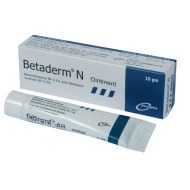
- Infections: Betaderm may mask signs of skin infection. If infection develops, appropriate antimicrobial treatment should be initiated (consider Betaderm-N for infected eczema).
- Periocular use: Avoid contact with eyes — prolonged periocular use can cause glaucoma and posterior subcapsular cataracts.
- Large areas: Avoid application to large surface areas simultaneously, especially under occlusion.
Side Effects
Local (with prolonged use): Skin atrophy, striae, telangiectasia, perioral dermatitis, acneiform eruptions, hypertrichosis, hypopigmentation, contact allergy.
Systemic (with extensive/prolonged use): HPA axis suppression, Cushing's syndrome (rare), hyperglycaemia (especially in diabetic patients), growth retardation in children.
Rare: Allergic contact dermatitis to betamethasone or excipients.
Drug Interactions
- No significant drug interactions reported with topical betamethasone at standard doses.
- Systemic corticosteroids taken concurrently with extensive topical application may increase the risk of adrenal suppression — monitor accordingly.
Use in Pregnancy and Lactation
Pregnancy: Use only if the benefit outweighs the risk. Avoid large areas, occlusion, or prolonged use during pregnancy. Topical corticosteroids have been associated with intrauterine growth restriction and low birth weight with extensive use.
Lactation: Do not apply to the breast or nipple area if breastfeeding. Small amounts may be absorbed systemically — use with caution; apply the minimum effective quantity.
Special Populations
Children: Children are more susceptible to systemic effects of topical corticosteroids due to their higher skin surface area to body weight ratio. Use the minimum effective strength for the shortest duration. Regular monitoring advised.
Diabetic patients: Monitor blood glucose — topical corticosteroids can cause transient hyperglycaemia with extensive absorption.
Storage
Store below 25°C. Do not freeze. Keep tube tightly closed. Keep out of reach of children. Do not use after the expiry date printed on the tube.
Pricing
Betaderm 0.1% Ointment 15gm: ৳35.00 per tube
Disclaimer: This product information is for reference purposes only and does not substitute professional medical advice, diagnosis, or treatment. Always consult a registered physician or qualified healthcare professional before taking any medication.