- Stock: Out Of Stock
- Brand: Beximco Pharmaceutical
- Product ID: Prednisolone
Available Options
🔒 100% Secure Payment | bKash | Nagad | SSLCommerz | COD
⭐ Become a FREE Member: 7% Extra Savings • Free Delivery • Refill Reminders • Priority Support
This Item is for pre order
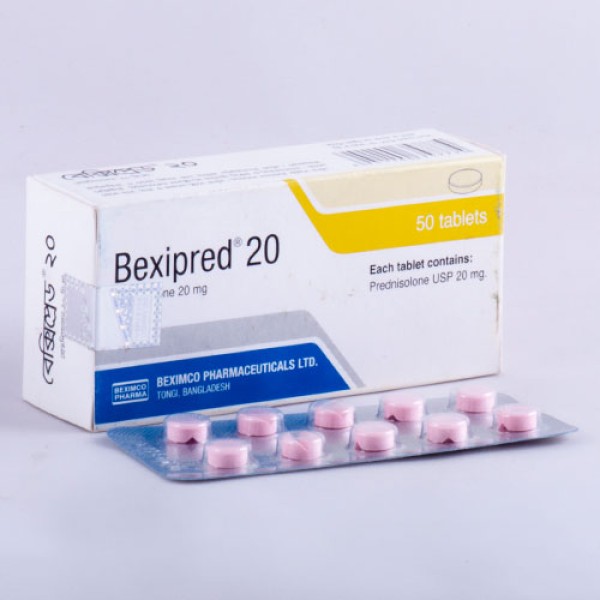
Bexipred 20mg Tablet — Prednisolone 20mg | Beximco Pharmaceuticals
| Generic Name | Prednisolone 20 mg |
| Dosage Form | Tablet |
| Drug Class | Glucocorticoid Corticosteroid (Synthetic) |
| Manufacturer | Beximco Pharmaceuticals Ltd. |
| Available Strengths | 5 mg, 10 mg, 20 mg (this), 40 mg |
| Prescription Status | Prescription Only — Rx required |
Overview
Bexipred 20mg contains Prednisolone — one of the most widely used synthetic corticosteroids globally. Prednisolone is the biologically active form of prednisone (converted in the liver) and acts as a potent glucocorticoid with moderate mineralocorticoid activity. It profoundly suppresses inflammation, modulates the immune system, and has multiple metabolic effects. It is the corticosteroid of choice for most oral systemic steroid indications due to its predictable bioavailability, favourable activity profile, and extensive clinical evidence base. As a 20mg tablet, Bexipred is suited for moderate-to-high dose therapy and for convenient tapering regimens.
Mechanism of Action
Prednisolone binds to intracellular glucocorticoid receptors, which then translocate to the nucleus and modulate gene transcription. This results in: (1) suppression of pro-inflammatory cytokines (IL-1, IL-6, TNF-α); (2) inhibition of arachidonic acid release (reducing prostaglandin and leukotriene synthesis); (3) decreased capillary permeability and oedema; (4) suppression of T-lymphocyte and eosinophil activity; (5) multiple metabolic effects including gluconeogenesis, protein catabolism, and lipolysis.
Indications
- Severe Asthma / COPD exacerbation — short courses (5–10 days) for acute flare
- Rheumatoid Arthritis — bridge therapy, disease-modifying treatment adjunct
- Systemic Lupus Erythematosus (SLE) — induction and maintenance
- Inflammatory Bowel Disease — Crohn's disease, ulcerative colitis flares
- Nephrotic Syndrome — high-dose initial treatment
- Severe Allergic Reactions — drug reactions, angioedema, severe contact dermatitis
- Autoimmune Conditions — pemphigus, myasthenia gravis, vasculitis
- Haematological Conditions — immune thrombocytopenia (ITP), haemolytic anaemia
- Organ Transplant Rejection Prevention — as part of immunosuppression regimen
- Cerebral Oedema — malignancy-associated (dexamethasone usually preferred)
Dosage & Administration
| Indication | Typical Dose | Route / Schedule |
|---|---|---|
| Acute Asthma exacerbation | 30–40 mg daily | Once daily (morning) × 5–10 days; no taper needed for short courses |
| Rheumatoid Arthritis (bridge) | 10–20 mg daily | Morning dose; taper as DMARD takes effect |
| Autoimmune disease (induction) | 1 mg/kg/day (typically 40–60 mg) | Once daily; taper over weeks to months |
| Nephrotic syndrome (adult) | 60 mg daily | Daily × 4 weeks, then alternate-day taper |
| Severe allergy / anaphylaxis | 40 mg daily | Short course 3–5 days |
| Long-term suppression | Lowest effective dose | Alternate-day dosing preferred; always morning |
Always take in the morning to mimic the natural diurnal cortisol peak and minimise sleep disruption and HPA axis suppression. Take with food to reduce gastric irritation. Never stop abruptly after prolonged use — taper gradually to allow adrenal gland recovery.
⚠️ Critical Warning for Diabetic Patients
Prednisolone significantly raises blood glucose and can unmask or worsen diabetes. This is one of the most important drug-disease interactions in clinical medicine:
- Mechanism: Prednisolone stimulates hepatic gluconeogenesis, induces insulin resistance, and impairs glucose uptake in peripheral tissues — all of which raise blood glucose, typically peaking 4–8 hours after the morning dose (afternoon glucose spikes).
- Magnitude: Blood glucose may rise by 5–15 mmol/L above baseline with moderate-to-high doses. Even low doses (10mg/day) cause significant glucose elevation in diabetics.
- Steroid-induced diabetes: Prednisolone can induce diabetes in previously non-diabetic patients — particularly those with risk factors (obesity, family history, prediabetes).
- Management: Diabetes medications often require dose escalation during steroid courses. Insulin is frequently added or intensified. Afternoon/evening blood glucose monitoring is most informative. When steroids are tapered off, hypoglycaemia risk increases if diabetes medications are not adjusted downward.
- Monitor: Check fasting and post-meal (especially post-lunch) blood glucose daily during steroid therapy. Inform your physician or diabetes team before starting prednisolone.
Side Effects (Especially with Prolonged Use)
- Metabolic: Hyperglycaemia / steroid-induced diabetes; weight gain; hyperlipidaemia; Cushingoid features (moon face, buffalo hump, central obesity)
- Musculoskeletal: Osteoporosis (long-term); proximal myopathy; avascular necrosis of femoral head
- GI: Peptic ulcer disease (especially with NSAIDs); GI bleeding; nausea
- Immunosuppression: Increased susceptibility to infections — bacterial, fungal, viral (especially TB, fungal, varicella)
- Adrenal suppression: HPA axis suppression with prolonged use — adrenal crisis risk on abrupt withdrawal
- Eye: Cataracts; glaucoma (elevated intraocular pressure)
- Skin: Striae, thinning, easy bruising, delayed wound healing
- Psychiatric: Mood disturbance, euphoria, psychosis (especially at high doses)
- Growth suppression in children with prolonged use
Contraindications
- Systemic fungal infections (not covered by antifungals)
- Live vaccines during systemic steroid therapy
- Known hypersensitivity to prednisolone
- Active untreated TB (relative; screen before starting long-term therapy)
Drug Interactions
| Drug | Interaction | Action |
|---|---|---|
| Insulin / Oral hypoglycaemics | Prednisolone raises blood glucose — diabetes medications may need dose increase | Monitor BG closely; adjust diabetes therapy |
| NSAIDs (ibuprofen, diclofenac) | Additive GI ulceration risk | Co-prescribe PPI (omeprazole) as gastroprotection |
| Warfarin | Variable effect on INR — prednisolone can increase or decrease anticoagulation | Monitor INR closely |
| Rifampicin / Phenytoin / Carbamazepine | CYP3A4 inducers reduce prednisolone effect | Higher steroid doses may be needed |
| Ketoconazole / Itraconazole | Increase prednisolone levels | Monitor for steroid toxicity |
| Diuretics (furosemide, thiazide) | Additive hypokalaemia risk | Monitor potassium; supplement if needed |
| Live Vaccines (MMR, varicella) | Immunosuppression — risk of disseminated infection from live vaccine | Avoid live vaccines during systemic steroid therapy |
Long-term Use Monitoring
- Blood glucose (fasting + postprandial) — every clinic visit
- Blood pressure — hypertension is common
- Bone density (DEXA scan) — after 3 months; prescribe calcium + vitamin D + bisphosphonate prophylactically
- Ophthalmic review — annually for cataracts and glaucoma
- Weight and BMI
- Electrolytes (potassium)
- TB screening before starting long-term therapy
Storage
Store below 25°C in a dry place, away from light and moisture. Keep out of reach of children.
FAQ
Q1: Why must prednisolone be taken in the morning?
The body naturally produces cortisol in a diurnal pattern — highest at 6–8am, lowest at midnight. Taking prednisolone in the morning replicates this natural pattern, minimising suppression of the body's own cortisol production (HPA axis). Taking steroids at night can interfere with sleep and causes greater adrenal suppression. For high-dose regimens, the full daily dose as a single morning dose is preferred over split doses.
Q2: How should prednisolone be stopped after a long course?
Prednisolone must never be stopped abruptly after courses longer than 3 weeks. Prolonged steroid use suppresses the adrenal glands — they need time to recover. Abrupt withdrawal causes adrenal insufficiency (severe fatigue, hypotension, electrolyte imbalance, potentially life-threatening). Taper slowly: typically reduce by 5–10mg every 1–2 weeks, then by 1–2.5mg/day increments once below 10mg/day. Your doctor will prescribe a personalised tapering schedule.
Q3: I am diabetic and have been prescribed prednisolone. What should I do?
Inform your diabetes team immediately. Blood glucose will likely rise significantly — typically the afternoon and evening glucose is most affected (prednisolone is morning dose, glucose peaks 4–8 hours later). You may need: increased doses of your current oral diabetes medication; addition of insulin; or if already on insulin, an increase in daytime doses. Monitor blood glucose at least 4 times daily (fasting, post-breakfast, post-lunch, post-dinner) during steroid therapy. When the steroid is tapered off, diabetes doses must be reduced to avoid hypoglycaemia.
Q4: Should I take something to protect my stomach while on prednisolone?
Yes — if you are taking prednisolone for more than a few days, especially at high doses or in combination with NSAIDs, a proton pump inhibitor (omeprazole, pantoprazole) should be co-prescribed as gastroprotection. Corticosteroids alone have modest GI risk, but the combination of steroids + NSAIDs dramatically increases the risk of peptic ulcers and GI bleeding. For long-term steroid use, also take calcium and vitamin D supplements to protect bone density.
Medical Disclaimer: Educational information only. Prednisolone is a prescription medication requiring careful medical supervision. Diabetic patients must closely monitor blood glucose during and after steroid therapy. Never stop prednisolone abruptly after prolonged use.