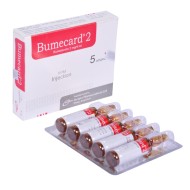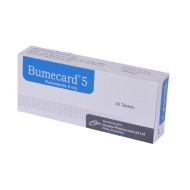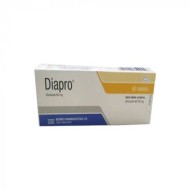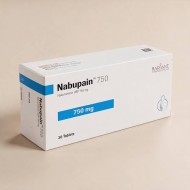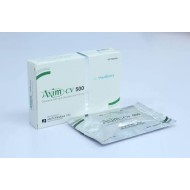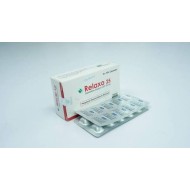
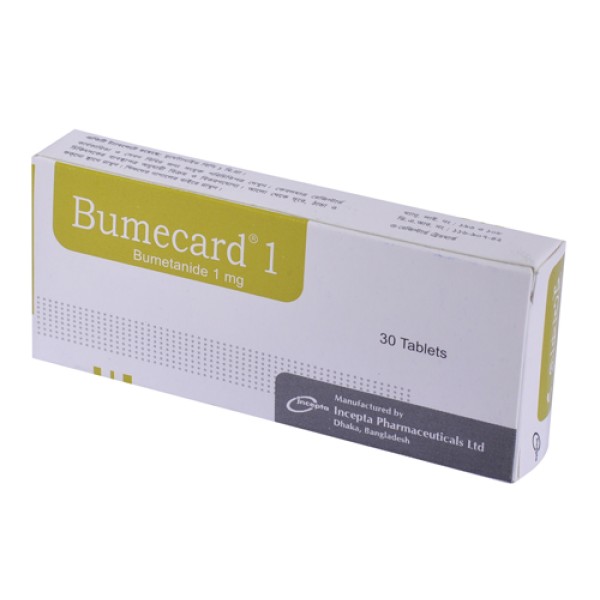
- Stock: Out Of Stock
- Brand: Incepta Pharmaceuticals
- Product ID: Bumetanide
Available Options
🔒 100% Secure Payment | bKash | Nagad | SSLCommerz | COD
⭐ Become a FREE Member: 7% Extra Savings • Free Delivery • Refill Reminders • Priority Support
This Item is for pre order
| Generic Name | Bumetanide |
| Brand Name | Bumecard |
| Manufacturer | Incepta Pharmaceuticals Ltd. |
| Dosage Form | Tablet |
| Strength | 1 mg |
| Pack Size | 3 x 10's |
| Drug Class | Loop Diuretics |
| Prescription Required | Yes |
| Onset of Action | Rapid (within 30-60 minutes orally) |
| Peak Effect | 1-2 hours |
| Duration of Action | Short duration (approx. 4-6 hours) |
What is Bumecard?
Bumecard contains Bumetanide, a potent loop diuretic with a rapid onset and short duration of action. It is used to treat fluid retention (edema) associated with congestive heart failure, liver disease, and kidney disease, including nephrotic syndrome. 1 mg of Bumetanide has a diuretic potency roughly equivalent to 40 mg of furosemide.
Indications
Bumecard is indicated for the treatment of edema associated with congestive heart failure, hepatic disease, and renal disease, including the nephrotic syndrome.
Pharmacology
Bumetanide is a loop diuretic that acts primarily at the ascending limb of the loop of Henle, inhibiting sodium and chloride reabsorption. It may also have an additional action in the proximal tubule, evidenced by phosphaturia during diuresis, though this is not related to carbonic anhydrase inhibition. Bumetanide does not appear to have a noticeable effect on the distal tubule.
Dosage & Administration
Oral: 1 mg in the morning, repeated after 6-8 hours if necessary. In severe cases, 5 mg daily, increased by 5 mg every 12-24 hours according to response. Elderly patients: 500 micrograms daily may be sufficient.
By IV Injection: 1-2 mg, repeated after 20 minutes if necessary.
By IV Infusion: 2-5 mg over 30-60 minutes.
By IM Injection: 1 mg initially, then adjusted according to response.
Safety and effectiveness in paediatric patients below 18 years have not been established.
Interaction
Should generally not be combined with lithium (reduces renal clearance, raising toxicity risk). Should not be administered with probenecid. Concurrent therapy with indomethacin is not recommended. May potentiate the effect of antihypertensive drugs, requiring dose adjustment. No significant interaction observed with digoxin or warfarin in human studies.
Contraindications
Loop diuretics should be avoided in severe hypokalaemia, severe hyponatraemia, anuria, and comatose or precomatose states associated with liver cirrhosis, as well as in renal failure.
Side Effects
Muscle cramps, dizziness, hypotension, headache, nausea. Less commonly: ECG changes, musculoskeletal pain, abdominal pain, renal failure, and thrombocytopenia.
Pregnancy & Lactation
Pregnancy Category C. There are no adequate and well-controlled studies in pregnant women. It is not known whether this drug is excreted in human milk.
Precautions & Warnings
Serum potassium should be measured periodically, with potassium supplements or potassium-sparing diuretics added if necessary. Overdosage can lead to acute profound water loss, electrolyte depletion, dehydration, and circulatory collapse with possible vascular thrombosis and embolism; treatment involves careful fluid and electrolyte replacement with monitoring.
Therapeutic Class
Loop diuretics.
Storage Conditions
Keep below 30°C temperature, away from light and moisture. Keep out of the reach of children.