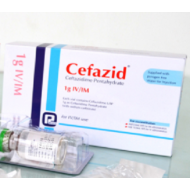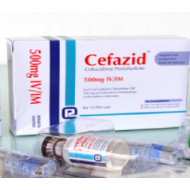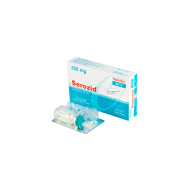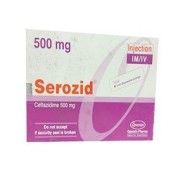
- Stock: Out Of Stock
- Brand: Renata
- Product ID: Ceftazidime Pentahydrate
🔒 100% Secure Payment | bKash | Nagad | SSLCommerz | COD
⭐ Become a FREE Member: 7% Extra Savings • Free Delivery • Refill Reminders • Priority Support
This Item is for pre order
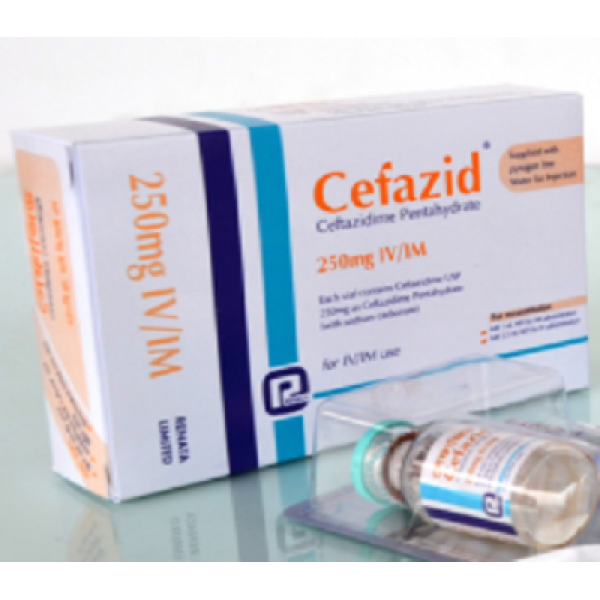
Cefazid IM/IV Injection — Ceftazidime Pentahydrate
| Generic Name | Ceftazidime Pentahydrate |
|---|---|
| Strength | 250 mg/vial |
| Dosage Form | Injection |
| Manufacturer | Renata Limited |
| Therapeutic Class | Third generation cephalosporins |
Indications
Cefazid Injection is indicated for the treatment of patients with infections caused by susceptible strains of the designated organisms in the following diseases:Lower Respiratory Tract Infections, including pneumonia, caused by Pseudomonas aeruginosa and ... Read moreCefazid Injection is indicated for the treatment of patients with infections caused by susceptible strains of the designated organisms in the following diseases:Lower Respiratory Tract Infections, including pneumonia, caused by Pseudomonas aeruginosa and other Pseudomonas spp., Haemophilus influenzae, including ampicillin-resistant strains; Klebsiella spp.; Enterobacter spp.; Proteus mirabilis; Escherichia coli; Serratia spp.; Citrobacter spp.; Streptococcus pneumoniae; and Staphylococcus aureus (methicillin susceptible strains).Skin and Skin Structure Infections caused by Pseudomonas aeruginosa; Klebsiella spp.; Escherichia coli; Proteus spp., including Proteus mirabilis and indole-positive Proteus, Enterobacter spp.; Serratia spp.; Staphylococcus aureus (methicillin susceptible strains); and Streptococcus pyogenes (group A beta-hemolytic streptococci).Urinary Tract Infections, both complicated and uncomplicated, caused by Pseudomonas aeruginosa; Enterobacter spp.; Proteus spp., including Proteus mirabilis and indole-positive Proteus, Klebsiella spp.; and Escherichia coli.Bacterial Septicemia caused by Pseudomonas aeruginosa, Klebsiella spp., Haemophilus influenzae, Escherichia coli, Serratia spp., Streptococcus pneumoniae and Staphylococcus aureus (methicillin susceptible strains).Bone and Joint Infections caused by Pseudomonas aeruginosa, Klebsiella spp., Enterobacter spp., and Staphylococcus aureus (methicillin susceptible strains).Gynecologic Infections, including endometritis, pelvic cellulitis, and other infections of the female genital tract caused by Escherichia coli.Intraabdominal Infections, including peritonitis caused by Escherichia coli, Klebsiella spp., and Staphylococcus aureus (methicillin susceptible strains) and polymicrobial infections caused by aerobic and anaerobic organisms and Bacteroides spp.Central Nervous System Infections, including meningitis, caused by Haemophilus influenzae and Neisseria meningitidis, Pseudomonas aeruginosa and Streptococcus pneumoniae.
Mechanism of Action
Ceftazidime is a semisynthetic, broad-spectrum, beta-lactam antibiotic for parenteral administration. Ceftazidime is bactericidal in action exerting its effect by inhibition of enzymes responsible for cell-wall synthesis. A wide range of gram-negative organisms is susceptible to ceftazidime in vitro, including strains resistant to gentamicin and other aminoglycosides. In addition, ceftazidime has been shown to be active against gram-positive organisms. It is highly stable to most clinically important beta-lactamases, plasmid or chromosomal, which are produced by both gram-negative and gram-positive organisms and, consequently, is active against many strains resistant to ampicillin and other cephalosporins.
Contraindications
Ceftazidime is contraindicated in patients who have shown hypersensitivity to Ceftazidime or the cephalosporin group of antibiotics.
Side Effects
The most common side-effects are local reactions following IV injection and allergic and gastrointestinal reactions. Hypersensitivity reactions are pruritus, rash, and fever. Angioedema and anaphylaxis have been reported very rarely. Gastrointestinal symptoms are diarrhea, nausea, vomiting, and abdominal pain. Central nervous system reactions included headache, dizziness, and paresthesia.
Pregnancy and Lactation
Pregnancy: No adequate and well-controlled studies in pregnant women have been conducted with Ceftazidime. Because animal reproduction studies are not always predictive of human response this drug should be used during pregnancy only if clearly needed.Lactation: Ceftazidime is excreted in human milk in low concentrations. Because many drugs are excreted in human milk and because the safety of the component of the injections in nursing infants has not been established, a decision should be made whether to discontinue nursing or to discontinue the drug, taking into account the importance of the drug to the mother.
Precautions and Warnings
The total daily dosage should be reduced when Cefazid is administered to patients with renal insufficiency. Cefazid should be prescribed with caution in individuals with a history of gastrointestinal disease, particularly colitis.
Use in Special Populations
Impaired Renal Function: Cefazid is excreted by the kidneys, almost exclusively by glomerular filtration. Therefore, in patients with impaired renal function (glomerular filtration rate <50 mL/min), it is recommended that the dosage of ceftazidime be reduced to compensate for its slower excretion. In patients with suspected renal insufficiency, an initial loading dose of 1 gram of Cefazid may be given. An estimate of GFR should be made to determine the appropriate maintenance dosage.Dosage in peritoneal dialysis: Cefazid may also be used in peritoneal dialysis and continuous ambulatory peritoneal dialysis (CAPD). As well as using Cefazid intravenously, it can be incorporated into the dialysis fluid (usually 125 to 250 mg for 2L of dialysis fluid).Impaired Hepatic Function: No adjustment in dosage is required for patients with hepatic dysfunction.
Overdose
Cefazid overdosage has occurred in patients with renal failure. Reactions have included seizure activity, encephalopathy, asterixis, neuromuscular excitability, and coma. Patients who receive an acute overdosage should be carefully observed and given supportive treatment.
Storage
Store below 25°C, protected from light and moisture. Reconstituted solutions are stable for up to 24 h if stored between 2°-8°C.
Medical Disclaimer: This information is provided for educational purposes only and is not intended as medical advice. Always consult a qualified healthcare professional before starting, changing, or stopping any medication.