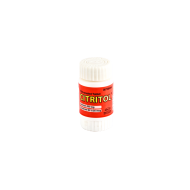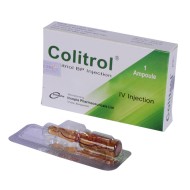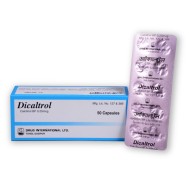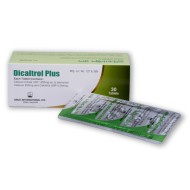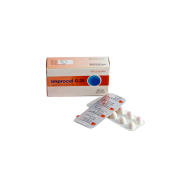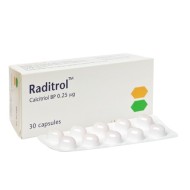
- Stock: Out Of Stock
- Brand: Incepta Pharmaceuticals
- Product ID: Calcitriol
🔒 100% Secure Payment | bKash | Nagad | SSLCommerz | COD
⭐ Become a FREE Member: 7% Extra Savings • Free Delivery • Refill Reminders • Priority Support
This Item is for pre order
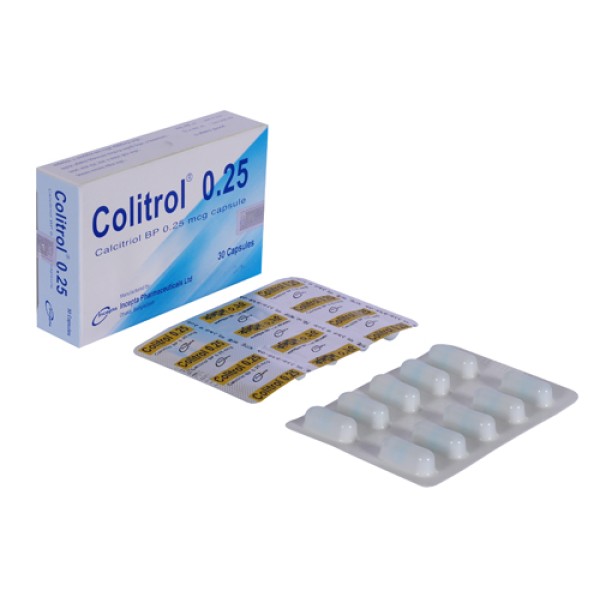
Colitrol 0.25mcg Capsule — Calcitriol 0.25mcg (Active Vitamin D3) | Beximco Pharmaceuticals
| Generic Name | Calcitriol 0.25 micrograms (mcg) per capsule |
| Chemical Name | 1α,25-Dihydroxycholecalciferol (1,25-(OH)₂D₃) — Biologically Active Form of Vitamin D3 |
| Dosage Form | Soft Gelatin Capsule |
| Manufacturer | Beximco Pharmaceuticals Ltd. |
| Therapeutic Class | Vitamin D Analogue — Active Vitamin D3 |
| Available Strengths | 0.25 mcg (this), 0.5 mcg |
Overview
Colitrol 0.25mcg contains Calcitriol — the biologically active form of Vitamin D3. Unlike regular Vitamin D supplements (cholecalciferol/D3 or ergocalciferol/D2) which must be converted in the liver and kidneys, calcitriol is the final hormonal form — 1α,25-dihydroxyvitamin D3 — that directly activates Vitamin D receptors throughout the body without requiring renal or hepatic conversion. This is critical for patients with chronic kidney disease (CKD) whose kidneys cannot perform the final hydroxylation step to activate vitamin D. Calcitriol regulates calcium and phosphate homeostasis, promotes intestinal calcium absorption, and is essential for bone mineralisation, parathyroid hormone regulation, and immune function.
Why Calcitriol (Not Regular Vitamin D) in CKD?
| Feature | Regular Vitamin D3 (Cholecalciferol) | Calcitriol (Colitrol) |
|---|---|---|
| Form | Inactive — requires liver + kidney activation | Active — ready to use immediately |
| Renal conversion needed? | Yes (1α-hydroxylation in kidney) | No — already activated |
| Useful in CKD Stage 3–5? | Limited (impaired renal activation) | Yes — bypasses non-functional kidney |
| Onset of action | Days to weeks | Rapid (hours) |
| Monitoring needed | Less frequent | Regular calcium/phosphate monitoring essential |
Indications
- Chronic Kidney Disease (CKD) Stage 3–5 — prevention and treatment of secondary hyperparathyroidism and renal osteodystrophy
- Dialysis patients (haemodialysis / peritoneal dialysis) — metabolic bone disease, elevated PTH
- Hypoparathyroidism — post-surgical or idiopathic; calcitriol is the treatment of choice
- Pseudohypoparathyroidism — resistance to PTH action
- Osteoporosis — adjunct to calcium supplementation, particularly in patients with malabsorption
- Vitamin D-dependent rickets / Osteomalacia — types requiring active vitamin D
- Post-menopausal osteoporosis — adjunct therapy with calcium
Dosage & Administration
| Indication | Starting Dose | Maintenance | Notes |
|---|---|---|---|
| CKD (pre-dialysis) | 0.25 mcg once daily | 0.25–0.5 mcg/day | Titrate based on PTH, Ca²⁺, PO₄ |
| Dialysis patients | 0.25 mcg once daily or alternate days | 0.5–1.0 mcg/day | Monitor calcium and phosphate twice weekly initially |
| Hypoparathyroidism | 0.25 mcg once daily | 0.5–2.0 mcg/day | Higher doses may be needed; strict monitoring |
| Osteoporosis / Post-menopausal | 0.25 mcg once or twice daily | 0.25–0.5 mcg/day | With adequate calcium intake |
Can be taken with or without food. Do not crush or chew capsules. Dose must be individualised based on serum calcium, phosphate, and PTH monitoring.
Special Note for Diabetic Patients
Calcitriol is particularly relevant in diabetic patients for several reasons: (1) Diabetic nephropathy: Diabetic CKD is the most common cause of end-stage renal disease in Bangladesh and globally — as renal function declines (CKD Stages 3–5), the kidney loses ability to activate vitamin D, making calcitriol supplementation necessary to prevent secondary hyperparathyroidism and renal osteodystrophy; (2) Vitamin D and insulin resistance: Emerging evidence links calcitriol (active vitamin D) to improved insulin sensitivity and beta-cell function — calcitriol supplementation may have metabolic benefits in diabetics with vitamin D deficiency; (3) Calcium monitoring: Diabetes medications do not interact directly with calcitriol, but diabetics on CKD diets must carefully monitor calcium and phosphate intake alongside calcitriol therapy. No blood glucose effect from calcitriol itself.
Monitoring Requirements
- Serum calcium — check before starting, weekly initially, then monthly. Target: normal range (2.1–2.6 mmol/L)
- Serum phosphate — keep <1.78 mmol/L in CKD; elevated phosphate necessitates phosphate binders
- Parathyroid hormone (PTH) — quarterly in CKD; calcitriol suppresses PTH
- Serum creatinine / eGFR — ongoing renal function monitoring in CKD
- 24-hour urine calcium — in hypoparathyroidism, keep below 7.5 mmol/24h to avoid hypercalciuria
Side Effects
- Hypercalcaemia (most important): Fatigue, nausea, vomiting, constipation, polyuria, confusion — reduce or stop calcitriol; ensure adequate hydration
- Hypercalciuria: Kidney stones risk with prolonged use
- Hyperphosphataemia: In CKD, may worsen vascular calcification — manage with phosphate binders
- Metastatic calcification: With high doses and elevated phosphate — soft tissue and vascular calcification
Contraindications
- Hypercalcaemia (any cause)
- Vitamin D toxicity
- Hypersensitivity to calcitriol or other vitamin D analogues
- Metastatic calcification
Drug Interactions
| Drug | Interaction | Action |
|---|---|---|
| Thiazide diuretics | Increased hypercalcaemia risk | Monitor calcium closely |
| Calcium supplements | Additive hypercalcaemia risk | Reduce calcium supplement dose; monitor |
| Digoxin | Hypercalcaemia increases digoxin toxicity | Monitor digoxin and calcium levels |
| Cholestyramine / Colestipol | Reduce calcitriol absorption | Take calcitriol at least 2h apart |
| Corticosteroids | Antagonise calcitriol's calcium effects | May need higher calcitriol dose |
| Phosphate binders | Used together to manage CKD mineral metabolism | Continue as prescribed; monitor PO₄ |
Storage
Store below 25°C, away from light and moisture. Protect soft gel capsules from excessive heat. Keep out of reach of children.
FAQ
Q1: What is the difference between regular Vitamin D3 and Calcitriol (Colitrol)?
Regular Vitamin D3 (cholecalciferol) is an inactive precursor that must be converted by the liver (to 25-hydroxyvitamin D) and then by the kidneys (to calcitriol/1,25-dihydroxyvitamin D3) to become biologically active. In chronic kidney disease, the kidney cannot perform this final activation. Calcitriol is the final active form — it works immediately without requiring kidney activation. This is why patients with CKD need calcitriol (Colitrol) rather than standard Vitamin D supplements.
Q2: How will I know if my Colitrol dose is causing too much calcium?
Symptoms of hypercalcaemia include: persistent fatigue, loss of appetite, nausea or vomiting, constipation, excessive thirst (polydipsia) and urination (polyuria), confusion, or muscle weakness. If any of these occur, stop Colitrol and contact your physician immediately for a blood calcium test. This is why regular calcium monitoring is essential during calcitriol therapy.
Q3: Can Colitrol be taken with calcium supplements?
Yes, in many conditions (hypoparathyroidism, osteoporosis) calcitriol is prescribed alongside calcium supplements — calcitriol enhances intestinal calcium absorption, and combined supplementation maintains normal serum calcium. However, the combined use increases hypercalcaemia risk. Monitor serum calcium regularly, and do not take extra calcium beyond what your doctor has prescribed.
Q4: Is Colitrol safe for dialysis patients?
Yes — calcitriol is a cornerstone of treatment for dialysis patients to suppress secondary hyperparathyroidism and prevent renal osteodystrophy. It is often given as an oral capsule (Colitrol 0.25–0.5 mcg daily or alternate days) or as an IV injection (Colitrol IV) directly during dialysis sessions. Regular monitoring of calcium, phosphate, and PTH is essential to prevent over-suppression of PTH and hypercalcaemia.
Medical Disclaimer: Educational information only. Calcitriol therapy must be prescribed and monitored by a physician. Regular serum calcium and phosphate monitoring is mandatory. Prescription required.