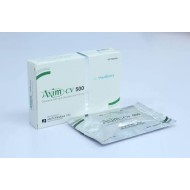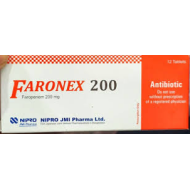
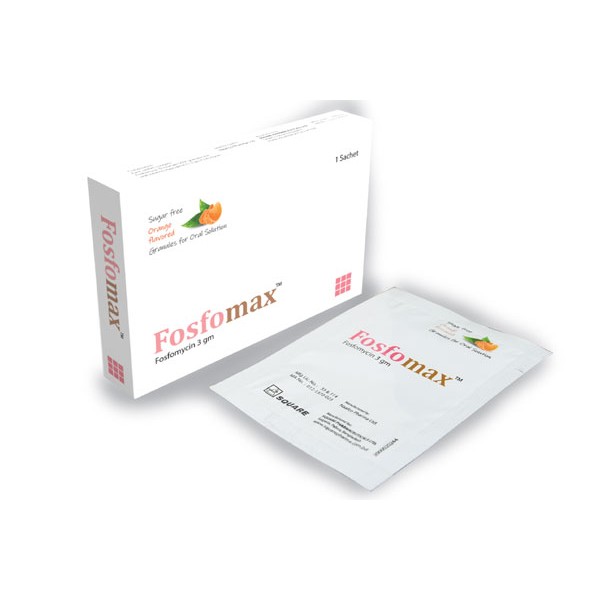
- Stock: In Stock
- Brand: Square Pharmaceuticals
- Product ID: Fosfomycin
🔒 100% Secure Payment | bKash | Nagad | SSLCommerz | COD
⭐ Become a FREE Member: 7% Extra Savings • Free Delivery • Refill Reminders • Priority Support
| Generic Name | Fosfomycin Trometamol |
|---|---|
| Strength | 3 gm |
| Dosage Form | Oral Powder (Sachet) |
| Manufacturer | Square Pharmaceuticals PLC |
| Therapeutic Class | Intracellular Antibiotic |
| Pack Size | 3 gm sachet |
Overview
Fosfomax (Fosfomycin Trometamol) is a broad-spectrum bactericidal antibiotic indicated for the treatment of uncomplicated urinary tract infections (acute cystitis) in women aged 18 years and older caused by susceptible strains of Escherichia coli and Enterococcus faecalis. Fosfomycin works by irreversibly inhibiting the enzyme enolpyruvyl transferase, blocking an early step in bacterial cell wall synthesis. Its unique single-dose regimen improves patient compliance and reduces the risk of antibiotic resistance.
Dosage and Administration
The recommended dose for acute cystitis in women 18 years and older is one sachet of Fosfomax taken as a single dose, with or without food. To prepare: pour 100 ml of purified water into a glass, add the full contents of one sachet, stir to dissolve completely, and drink the mixture immediately after preparation. This medication should not be used in children. Repeated daily doses do not improve clinical outcomes and increase the risk of adverse events.
Interaction
Metoclopramide (and other drugs that increase gastrointestinal motility) reduces the serum concentration and urinary excretion of fosfomycin by accelerating its transit through the gut. Avoid co-administration where possible.
Contraindications
Fosfomax is contraindicated in patients with known hypersensitivity to fosfomycin trometamol or any component of the formulation. It is also contraindicated in patients with severe renal insufficiency and in those undergoing haemodialysis, as adequate urinary drug concentrations cannot be achieved.
Side Effects
The most frequently reported adverse effects (occurring in more than 1% of patients) include diarrhoea (10.4%), headache (10.3%), vaginitis (7.6%), nausea (5.2%), rhinitis (4.5%), back pain (3.0%), dysmenorrhoea (2.6%), pharyngitis (2.5%), dizziness (2.3%), abdominal pain (2.2%), dyspepsia (1.8%), and rash (1.4%). Less common reactions include constipation, dry mouth, dysuria, fever, flatulence, haematuria, insomnia, myalgia, and vomiting.
Pregnancy and Lactation
Fosfomycin is classified as Pregnancy Category B. Animal studies have not demonstrated fetal harm, but adequate well-controlled studies in pregnant women are lacking. This drug should not be used during pregnancy unless the potential benefit clearly outweighs the risk. A decision should be made whether to discontinue breastfeeding or to discontinue the drug, taking into account the importance of the drug to the mother.
Precautions and Warnings
Clostridium difficile-associated diarrhoea (CDAD) has been reported with use of nearly all antibacterial agents including fosfomycin. If CDAD is suspected or confirmed, ongoing antibiotic use not directed against C. difficile should be discontinued. Use only as directed — single-dose therapy is sufficient; repeated daily dosing does not improve outcomes and increases adverse effects.
Storage Conditions
Keep out of reach of children. Store in a dry place below 25°C, protected from light and moisture.
Frequently Asked Questions
Q: Can Fosfomax be used to treat UTIs in men or children?
A: No. Fosfomax is indicated only for uncomplicated urinary tract infections (acute cystitis) in women aged 18 years and older. It is not approved for use in men, children, or for complicated urinary tract infections.
Q: Why is only a single dose prescribed?
A: Clinical trials have shown that a single sachet of fosfomycin is as effective as multiple-day therapy for uncomplicated acute cystitis. Repeated daily doses did not improve clinical success rates but did increase the incidence of side effects. A single dose also improves patient compliance.