- Stock: Out Of Stock
- Brand: Square Pharmaceuticals
- Product ID: Norepinephrine
🔒 100% Secure Payment | bKash | Nagad | SSLCommerz | COD
⭐ Become a FREE Member: 7% Extra Savings • Free Delivery • Refill Reminders • Priority Support
This Item is for pre order
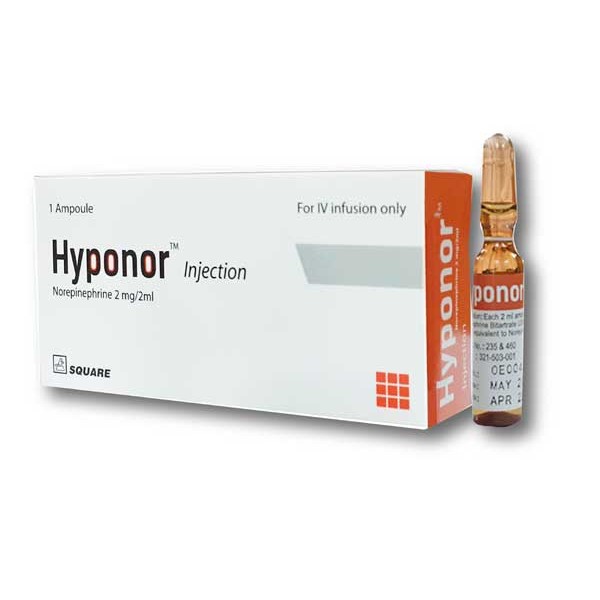
| Generic Name | Norepinephrine Tartrate |
|---|---|
| Strength | 2 mg/2 ml |
| Dosage Form | IV Infusion |
| Manufacturer | Square Pharmaceuticals PLC |
| Therapeutic Class | Alpha and Beta-adrenergic agonist |
| Pack Size | 2 ml ampoule |
Overview
Hyponor IV Infusion contains Norepinephrine Tartrate 2 mg/2 ml, a potent direct-acting sympathomimetic agent that stimulates both β1- and α-adrenergic receptors. Its predominant α-agonist effects cause peripheral vasoconstriction, raising both systolic and diastolic blood pressure; β1 stimulation strengthens and maintains cardiac contractility during resuscitation. Hyponor is indicated for blood pressure control in acute hypotensive states (including post-pheochromocytomectomy, sympathectomy, poliomyelitis, spinal anaesthesia, myocardial infarction, septicaemia, blood transfusion reactions, and drug reactions) and as an adjunct in cardiac arrest with profound hypotension. It must be administered by IV infusion under strict clinical supervision.
Dosage and Administration
Dilution: Dilute in 5% Dextrose Injection or 5% Dextrose with Sodium Chloride Injection only. Do not dilute in saline alone. Add one ampoule (2 mg/2 ml) to 500 ml diluent to yield 4 mcg/ml.
Acute hypotension — initial dose: 2–3 ml per minute (8–12 mcg of base) via IV infusion; adjust rate to maintain systolic BP at 80–100 mmHg (in previously hypertensive patients, raise no higher than 40 mmHg below pre-existing systolic). Average maintenance: 0.5–1 ml/minute (2–4 mcg of base).
Cardiac arrest adjunct: Administer by IV infusion as above to maintain systemic blood pressure once effective heartbeat and ventilation have been established.
Administer into a large vein (preferably antecubital). Monitor BP every 2 minutes during initiation, then every 5 minutes. Taper gradually; never withdraw abruptly. Discard solution if pinkish, darker than slightly yellow, or if precipitate is present.
Interaction
Cyclopropane and halothane anaesthetics sensitise the myocardium to catecholamines — concurrent use with Hyponor is generally contraindicated due to risk of ventricular tachycardia or fibrillation. Hyponor should be used with extreme caution in patients receiving MAO inhibitors (MAOIs) or tricyclic/imipramine-type antidepressants, as severe and prolonged hypertension may result. Similar arrhythmia risk applies in patients with profound hypoxia or hypercarbia.
Contraindications
Hyponor should not be used in patients hypotensive from blood volume deficits (except as an emergency measure until volume replacement is completed), in patients with mesenteric or peripheral vascular thrombosis (risk of extending ischaemia), or during cyclopropane or halothane anaesthesia. Do not administer into leg veins in elderly patients or those with occlusive vascular disease.
Side Effects
Cardiovascular: bradycardia (reflex), arrhythmias, severe peripheral vasoconstriction, plasma volume depletion. Local: extravasation necrosis at infusion site; blanching along infused vein; gangrene of extremities (rare). Nervous system: anxiety, transient headache. Respiratory: respiratory difficulty. Overdose causes severe hypertension, violent headache, photophobia, retrosternal pain, pallor, intense sweating, and vomiting. Antidote for extravasation: infiltrate area with 5–10 mg phentolamine in 10–15 ml saline as soon as possible.
Pregnancy and Lactation
Pregnancy Category C. Animal reproduction studies have not been conducted. It is unknown whether Norepinephrine causes foetal harm. Use only if clearly needed. It is not known whether Norepinephrine is excreted in human milk; caution is required in breastfeeding women.
Precautions and Warnings
Monitor blood pressure continuously during infusion. Never leave the patient unattended. Headache may signal hypertensive overdose. Correct blood volume depletion before initiating vasopressor therapy. Monitor infusion site constantly for free flow and extravasation. Avoid leg veins in elderly or vascularly compromised patients. Reduce dose gradually on discontinuation. Safety in children has not been established; use cautiously in elderly patients starting at low doses. Store below 30°C, protected from light.
Storage Conditions
Store at a temperature not exceeding 30°C in a dry place. Protect from light. Keep out of the reach of children. For hospital/clinical use only.
Frequently Asked Questions
Q: What is Hyponor IV Infusion used for?
Hyponor (Norepinephrine) is a potent vasopressor used in hospital settings to raise blood pressure in patients with severe acute hypotension (shock) caused by conditions such as septicaemia, myocardial infarction, spinal anaesthesia, or drug reactions. It is also used as an adjunct during cardiac arrest to maintain blood pressure once cardiac and respiratory function has been restored.
Q: How should Hyponor be diluted before administration?
Hyponor must be diluted in 5% Dextrose Injection or 5% Dextrose with Sodium Chloride — never in sodium chloride solution alone, as this may cause significant loss of potency. The solution must not be used if it appears pinkish, darker than slightly yellow, or if it contains a precipitate. Whole blood or plasma must be administered separately, not mixed with Hyponor.