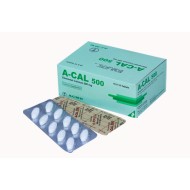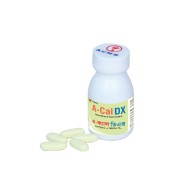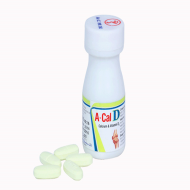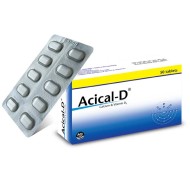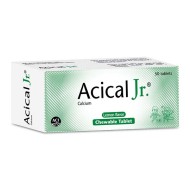
- Stock: Out Of Stock
- Brand: ACI Pharmaceuticals
- Product ID: Calcium Carbonate
🔒 100% Secure Payment | bKash | Nagad | SSLCommerz | COD
⭐ Become a FREE Member: 7% Extra Savings • Free Delivery • Refill Reminders • Priority Support
This Item is for pre order
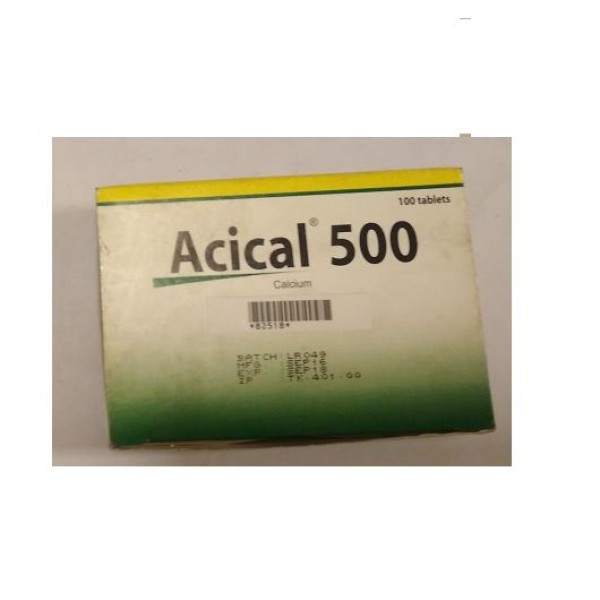
Acical 500 Tab — Calcium Carbonate 500 mg
| Product Overview | |
|---|---|
| Brand Name | Acical 500 |
| Generic Name | Calcium Carbonate BP 500 mg (equivalent to 200 mg elemental calcium) |
| Manufacturer | ACI Pharmaceuticals Ltd., Bangladesh |
| Drug Class | Calcium Supplement / Mineral Supplement / Antacid |
| Dosage Form | Tablet |
| Elemental Calcium | 200 mg elemental calcium per tablet (40% from calcium carbonate) |
| Daily Calcium Requirement | Adults: 1000–1200 mg/day; Pregnant/lactating: 1200–1500 mg/day; Children: 500–1300 mg/day |
| Storage | Store below 30°C in a dry place, away from sunlight. Keep out of reach of children. |
| Pregnancy & Lactation | Safe and recommended during pregnancy and lactation under medical supervision |
1. Indications & Uses
Acical 500 (Calcium Carbonate 500 mg) is indicated for the prevention and treatment of calcium deficiency (hypocalcaemia) and its related conditions. It is widely prescribed as dietary calcium supplementation in Bangladesh where dietary calcium intake is frequently inadequate, particularly in women, the elderly, and patients with chronic illnesses.
Primary indications include: calcium supplementation during pregnancy and lactation; prevention and treatment of osteoporosis; hypocalcaemia due to hypoparathyroidism, malabsorption, or chronic renal disease; adjunctive therapy in postmenopausal bone loss; calcium supplementation in patients with diabetes mellitus (who have increased bone fragility and fracture risk); antacid use for mild gastric acidity relief; and prevention of calcium deficiency in patients on long-term corticosteroids, proton pump inhibitors, or anticonvulsants.
Relevance in Diabetes: Type 2 diabetic patients have a 1.4–2.0× increased fracture risk due to impaired bone quality. Adequate calcium intake is critical for bone maintenance. Calcium carbonate also modestly lowers fasting blood glucose by reducing intestinal calcium-dependent glucose uptake. Regular calcium supplementation is recommended for all diabetic patients at risk of osteoporosis.
2. Mechanism of Action
Calcium carbonate dissociates in the acidic environment of the stomach to release calcium ions (Ca²⁺) and carbonate (CO₃²⁻). The calcium ions are absorbed in the duodenum and upper jejunum via active transport (transcellular pathway, regulated by vitamin D) and passive diffusion. As an antacid, carbonate neutralises gastric acid (HCl + CaCO₃ → CaCl₂ + CO₂ + H₂O), providing rapid symptomatic relief from heartburn and dyspepsia. In the body, calcium serves as a structural component of bones and teeth (99% of body calcium), and is essential for neuromuscular transmission, cardiac conduction, blood coagulation (cofactor for multiple clotting factors), cell signalling, and enzyme activation.
3. Dosage & Administration
Calcium supplementation (adults): 1–2 tablets 2–3 times daily with meals, providing 400–1200 mg elemental calcium per day. Take with food to maximise absorption — gastric acid produced during meals enhances calcium carbonate dissolution. Do not take >500 mg elemental calcium at one time as absorption efficiency declines with higher single doses.
Osteoporosis prevention/treatment: 1000–1200 mg elemental calcium daily (5–6 tablets), ideally in divided doses, combined with vitamin D supplementation.
Antacid use: 1–2 tablets as needed for heartburn or acid indigestion. Do not use as antacid for more than 2 weeks without medical advice.
Pregnancy & lactation: 1200–1500 mg elemental calcium daily (6–8 tablets) as directed by obstetrician.
Children (6–12 years): 1 tablet 2–3 times daily as directed by paediatrician.
Diabetic patients: 1000 mg elemental calcium daily (5 tablets) with meals. Regular monitoring of serum calcium is recommended for long-term users.
4. Side Effects
Acical 500 is generally well tolerated at recommended doses. Common side effects: constipation (most frequent — manage with adequate hydration and dietary fibre); flatulence and belching from CO₂ release; nausea. Less common: hypercalcaemia with prolonged excessive use (symptoms: nausea, vomiting, weakness, confusion, polyuria, nephrolithiasis — kidney stones); milk-alkali syndrome with very high doses alongside dairy and alkaline antacids; rebound acid hypersecretion with antacid use. Reduce dose if constipation persists or consult a physician.
5. Contraindications
Contraindicated in: hypercalcaemia (elevated serum calcium from any cause); hypercalciuria; nephrolithiasis (calcium kidney stones); severe renal failure; conditions associated with vitamin D toxicity; digoxin toxicity (hypercalcaemia potentiates digoxin). Use with caution in patients with sarcoidosis, immobilisation, or other conditions predisposing to hypercalcaemia.
6. Warnings & Precautions
Do not exceed 2500 mg elemental calcium per day from all sources (diet + supplements). Calcium carbonate requires adequate gastric acid for absorption — patients with achlorhydria or on proton pump inhibitors should consider calcium citrate instead, which does not require acid for dissolution. Take 2–4 hours apart from thyroid medications, antibiotics (quinolones, tetracyclines), bisphosphonates, and iron supplements as calcium reduces their absorption. Monitor serum calcium in patients with renal disease. Patients taking thiazide diuretics have reduced urinary calcium excretion — monitor for hypercalcaemia. Long-term antacid use should be medically supervised.
7. Drug Interactions
Calcium reduces absorption of: quinolone antibiotics (ciprofloxacin, levofloxacin), tetracyclines, bisphosphonates (alendronate), levothyroxine, iron supplements, and zinc supplements — separate administration by at least 2–4 hours. Thiazide diuretics reduce renal calcium excretion, potentially causing hypercalcaemia. Loop diuretics increase calcium excretion. Corticosteroids reduce calcium absorption from the gut. Calcium may reduce the renal clearance of digoxin — monitor digoxin levels. High-dose calcium can impair absorption of magnesium supplements.
8. Pharmacokinetics
Calcium carbonate requires an acid environment for dissolution. Absorption: approximately 20–35% of ingested calcium is absorbed in the duodenum and proximal jejunum; active transport via TRPV6 channels is regulated by vitamin D (calcitriol). Peak serum calcium: 1–2 hours post-dose. Distribution: 99% in bones and teeth; <1% in plasma (ionised and protein-bound). Excretion: primarily renal (filtered and partially reabsorbed) with faecal excretion of unabsorbed calcium. Calcium absorption is enhanced by vitamin D, lactose, acidic pH, and adequate gastric acid; impaired by oxalates, phytates, high phosphate, vitamin D deficiency, and achlorhydria.
9. Storage & Handling
Store below 30°C in a dry place. Protect from moisture and sunlight. Keep in original packaging to prevent hygroscopic degradation. Keep out of reach of children. Check expiry date before use.
10. Overdose
Acute overdose is uncommon. Symptoms of hypercalcaemia: nausea, vomiting, constipation, polyuria, muscle weakness, confusion, lethargy. Severe hypercalcaemia: cardiac arrhythmias, coma. Discontinue calcium; give IV normal saline and furosemide under medical supervision. Seek emergency care immediately if overdose is suspected.
11. Missed Dose
Take the missed dose as soon as remembered, unless it is nearly time for the next scheduled dose — in that case skip the missed dose and resume normal schedule. Do not double the dose. Consistency of use is important for long-term calcium supplementation and bone health benefits.
12. Clinical Evidence
Multiple Cochrane reviews and meta-analyses confirm calcium supplementation reduces fracture risk. The RECORD trial showed calcium + vitamin D reduced hip fractures by 20% in elderly patients. In Bangladesh, a study by BIRDEM (Bangladesh Institute of Research and Rehabilitation in Diabetes) found that 70% of Type 2 diabetic patients had inadequate dietary calcium intake, highlighting the importance of supplementation. The NIH Osteoporosis Foundation recommends 1000–1200 mg/day elemental calcium for adults over 50. Calcium carbonate is the most widely studied and most cost-effective calcium salt worldwide.
13. Patient Counselling Points
• Always take Acical 500 with a full meal — gastric acid improves absorption.
• Take in divided doses (no more than 500 mg elemental calcium at one time).
• Stay well hydrated to prevent constipation.
• Do not take within 2 hours of thyroid medication, antibiotics, or iron supplements.
• Maintain dietary calcium sources (dairy, leafy greens, fish) alongside supplements.
• Take vitamin D alongside calcium for optimal bone health benefits.
• Diabetic patients: calcium supplementation supports bone health; check serum calcium annually.
Frequently Asked Questions (FAQ)
Q1. Should diabetic patients take calcium supplements?
Yes. Type 2 diabetic patients have increased fracture risk due to impaired bone quality, despite normal or elevated bone density in some cases. Adequate calcium intake (1000–1200 mg/day elemental calcium) is essential for bone maintenance in diabetics. Some research also suggests a modest benefit of calcium supplementation on glycaemic control. Acical 500 taken with meals is an effective, affordable option.
Q2. What is the difference between calcium carbonate and calcium citrate?
Calcium carbonate (Acical 500) contains 40% elemental calcium (highest of all calcium salts) and is most cost-effective. It requires stomach acid for dissolution and should be taken with food. Calcium citrate (21% elemental calcium) doesn't require acid and can be taken on an empty stomach — preferred in patients with achlorhydria or on PPIs. For most people, calcium carbonate with meals is the first-choice supplement.
Q3. Can Acical 500 be taken during pregnancy?
Yes. Calcium supplementation is strongly recommended during pregnancy (particularly the second and third trimesters) to support foetal bone development and reduce the mother's risk of bone density loss. The recommended dose is 1200–1500 mg elemental calcium daily (6–8 Acical 500 tablets). Always take under obstetric supervision. Calcium supplementation in pregnancy also reduces the risk of pre-eclampsia.
Q4. Does Acical 500 help with heartburn and acidity?
Yes. Calcium carbonate is a fast-acting antacid that neutralises stomach acid within 1–2 minutes, relieving heartburn, acid indigestion, and sour stomach. However, it should not replace prescription medications for GERD or peptic ulcer disease, and antacid use should not exceed 2 weeks without medical evaluation.
⚕ Medical Disclaimer: The information provided is for educational purposes only. Calcium supplementation should be supervised by a healthcare professional in patients with kidney disease, hypercalcaemia, or cardiac conditions. This content does not replace professional medical advice. Always consult your physician or pharmacist.