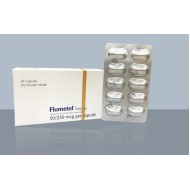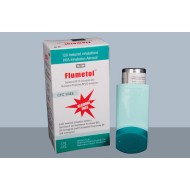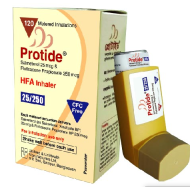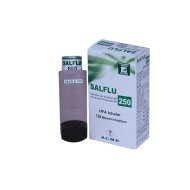

- Stock: Out Of Stock
- Brand: Acme Laboratories Limited
- Product ID: Salmeterol Xinafoate
🔒 100% Secure Payment | bKash | Nagad | SSLCommerz | COD
⭐ Become a FREE Member: 7% Extra Savings • Free Delivery • Refill Reminders • Priority Support
This Item is for pre order
Axinat 120 Metered Dose Inhaler (Salmeterol 25 mcg/puff) — Clinical Overview
| Brand Name | Axinat 120 Metered Inhaler |
|---|---|
| Generic Name | Salmeterol Xinafoate |
| Manufacturer | ACI Limited, Bangladesh |
| Strength | 25 mcg Salmeterol per actuation |
| Dosage Form | Pressurised Metered Dose Inhaler (pMDI) |
| Pack Size | 120 metered doses per inhaler |
| Drug Class | Long-Acting Beta-2 Agonist (LABA) |
| Prescription Status | Prescription Only Medicine (POM) |
What is Axinat 120 Metered Inhaler?
Axinat 120 is a pressurised metered dose inhaler (pMDI) manufactured by ACI Limited, Bangladesh, containing salmeterol xinafoate 25 mcg per actuation. Salmeterol is a long-acting beta-2 adrenergic agonist (LABA) bronchodilator that relaxes and widens the airways of the lungs, improving airflow and reducing bronchospasm over an extended period (up to 12 hours per dose).
Salmeterol is used in the management of asthma and chronic obstructive pulmonary disease (COPD). In asthma, salmeterol must always be combined with an inhaled corticosteroid (ICS) — it should never be used as the sole controller therapy due to the risk of severe asthma exacerbations. For combination therapy, see Axinat-F (Salmeterol + Fluticasone).
Mechanism of Action
Salmeterol selectively binds to beta-2 adrenergic receptors on bronchial smooth muscle cells. Its long lipophilic side chain anchors it within the cell membrane near the receptor, enabling prolonged receptor stimulation. This produces:
- Bronchodilation: Smooth muscle relaxation opens narrowed airways — onset within 10–20 minutes, duration up to 12 hours
- Reduced mast cell mediator release: Decreases release of histamine, prostaglandins, and leukotrienes that trigger bronchoconstriction
- Increased mucociliary clearance: Improves mucus transport from the airways
- Reduced microvascular leakage: Decreases airway oedema
Unlike short-acting beta-2 agonists (SABAs) such as salbutamol, salmeterol is not a rescue bronchodilator — it acts too slowly and too persistently for emergency bronchospasm. It is a maintenance bronchodilator only.
Indications
- Asthma (add-on therapy): Step 3+ asthma where ICS alone is insufficient — ALWAYS used with an ICS, never as monotherapy
- COPD (moderate to severe): Regular twice-daily bronchodilation to improve FEV1, exercise tolerance, and dyspnoea in COPD patients
- Exercise-induced bronchoconstriction: A single dose taken 30 minutes before exercise can prevent exercise-triggered bronchospasm (in addition to regular use)
Dosage and Administration
- Asthma (adults and children ≥4 years): 2 puffs (50 mcg) twice daily — morning and evening, 12 hours apart
- COPD: 2 puffs (50 mcg) twice daily
- Exercise-induced bronchoconstriction: 2 puffs (50 mcg) 30 minutes before exercise
Inhaler technique: Shake well before each use. Exhale fully, place mouthpiece between lips, begin slow steady inhalation, press canister once, continue inhaling slowly, hold breath for 10 seconds. Rinse mouth with water after each use if used with ICS (to reduce oral candidiasis risk).
Each inhaler contains 120 doses. At twice-daily use (2 puffs each time), one inhaler lasts approximately 30 days.
Diabetes and Respiratory Disease — Special Relevance
Respiratory conditions are significantly more common in people with diabetes, and LABA therapy has specific implications for glucose management:
- Beta-2 agonists and blood glucose: Salmeterol stimulates beta-2 receptors in muscle and liver in addition to lungs, increasing glycogenolysis and gluconeogenesis. At inhaled doses (25–50 mcg), systemic absorption is minimal and clinically significant hyperglycaemia is uncommon, but patients with brittle glycaemia should monitor more closely, particularly when starting therapy.
- COPD and diabetes co-morbidity: Patients with both COPD and Type 2 diabetes are common — shared risk factors include smoking, systemic inflammation, and steroid use. Salmeterol is well-tolerated in this group with no significant pharmacokinetic interactions with metformin, DPP-4 inhibitors, SGLT-2 inhibitors, or insulin.
- Systemic steroid avoidance: Effective LABA therapy reduces the frequency of COPD exacerbations requiring systemic corticosteroids — which are a major cause of acute hyperglycaemia and prolonged glucose dysregulation in diabetics.
- Hypokalaemia risk: High-dose beta-2 agonists can lower potassium levels — a consideration in patients on insulin (which also lowers potassium). At standard inhaled doses, clinically significant hypokalaemia is rare.
Important Safety Information — Asthma
LABAs must not be used as monotherapy in asthma. Multiple randomised trials and post-marketing safety data have shown that salmeterol monotherapy (without ICS) is associated with an increased risk of life-threatening asthma attacks and asthma-related deaths. In asthma:
- Always prescribe and use alongside an inhaled corticosteroid (ICS)
- Consider switching to a fixed-dose ICS/LABA combination inhaler (such as Axinat-F)
- Never use as a rescue inhaler — carry a separate SABA (e.g., salbutamol) for acute symptoms
Side Effects
- Common: Tremor, palpitations, headache, muscle cramps
- Uncommon: Tachycardia, arrhythmias, hypokalaemia, mild hyperglycaemia
- Rare: Paradoxical bronchospasm (discontinue immediately), hypersensitivity reactions
Contraindications
- Asthma monotherapy (without ICS) — absolute contraindication
- Known hypersensitivity to salmeterol or any excipient
- Acute bronchospasm or severe asthma attack (not appropriate as rescue therapy)
Frequently Asked Questions (FAQ)
Can Axinat MDI (Salmeterol) be used alone for asthma?
No — salmeterol (Axinat) must NEVER be used alone as the sole treatment for asthma. It must always be used alongside an inhaled corticosteroid (ICS). Using a LABA without ICS in asthma increases the risk of severe asthma attacks and asthma-related death. If you need a combined ICS+LABA inhaler, consider Axinat-F (Salmeterol + Fluticasone).
How is Axinat MDI different from a salbutamol inhaler?
Salbutamol is a short-acting beta-2 agonist (SABA) used for rescue relief — it works within 5 minutes but lasts only 4–6 hours. Axinat (Salmeterol) is a long-acting beta-2 agonist (LABA) used for maintenance — it takes 10–20 minutes to start but lasts 12 hours. Axinat is taken regularly twice daily for prevention; it cannot be used as a rescue inhaler.
Does salmeterol affect blood glucose levels in diabetic patients?
At standard inhaled doses, salmeterol rarely causes clinically significant hyperglycaemia. However, beta-2 agonists can increase blood glucose by stimulating glycogenolysis. Diabetic patients should monitor blood glucose more closely when starting Axinat MDI and report persistent glucose changes to their doctor. There are no significant pharmacokinetic drug interactions between salmeterol and metformin, insulin, or other antidiabetics.
How many doses does the Axinat 120 inhaler provide?
The Axinat 120 Metered Inhaler contains 120 doses (120 puffs) at 25 mcg salmeterol per puff. At the standard adult dose of 2 puffs twice daily (4 puffs/day), one inhaler provides a 30-day supply. The inhaler includes a dose counter — replace when the counter reads zero.