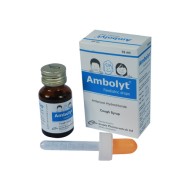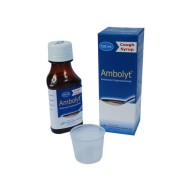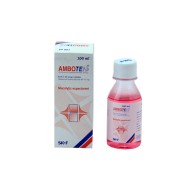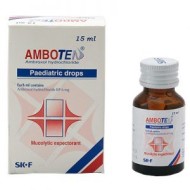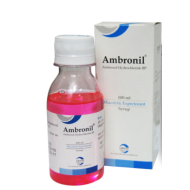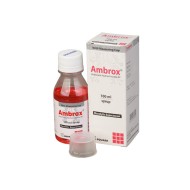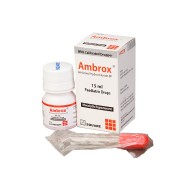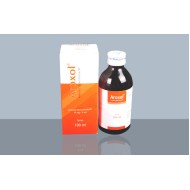
- Stock: In Stock
- Brand: Beximco Pharmaceutical
- Product ID: Ambroxol syrup
🔒 100% Secure Payment | bKash | Nagad | SSLCommerz | COD
⭐ Become a FREE Member: 7% Extra Savings • Free Delivery • Refill Reminders • Priority Support
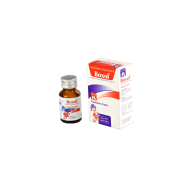
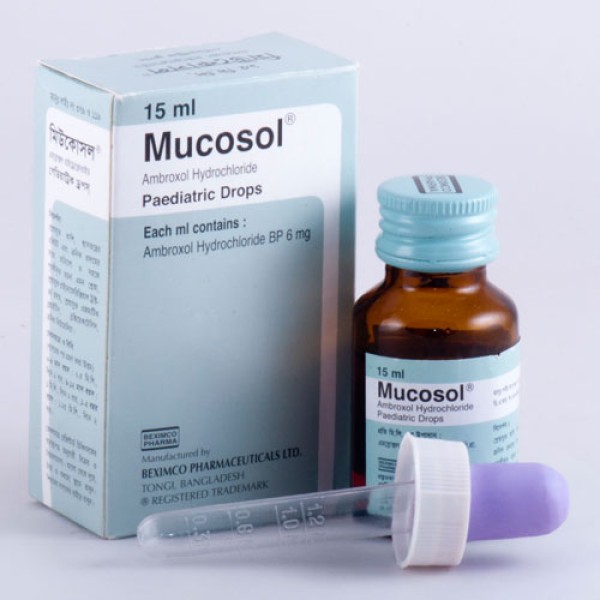
Mucosol Syrup — Ambroxol Hydrochloride Mucolytic Expectorant | Beximco Pharmaceuticals
| Generic Name | Ambroxol Hydrochloride |
| Concentration | 15 mg per 5 ml (standard syrup concentration) |
| Dosage Form | Oral Syrup |
| Drug Class | Mucolytic / Secretolytic Expectorant |
| Manufacturer | Beximco Pharmaceuticals Ltd. |
| Prescription Status | OTC — available without prescription for standard indications |
Overview
Mucosol Syrup contains Ambroxol — one of the most widely used mucolytic agents globally. Ambroxol is an active metabolite of bromhexine and is significantly more potent. It works by stimulating the secretion of serous (watery) bronchial fluid while reducing the viscosity of mucus — making thick, sticky phlegm thinner and easier to cough up. Unlike traditional expectorants that simply irritate the gastric mucosa to stimulate cough (e.g., guaifenesin), ambroxol has a direct secretolytic effect on the bronchial glands and also stimulates surfactant production in the lungs, improving respiratory function. It is effective for any condition where thick mucus impairs airway clearance: productive cough, bronchitis, COPD, asthma with mucus hypersecretion, and post-operative pulmonary care.
Mechanism of Action
- Secretolysis: Depolymerises mucopolysaccharide fibres in bronchial secretions → reduces mucus viscosity and elasticity → easier expectoration
- Serous secretion stimulation: Stimulates serous gland cells to increase watery bronchial fluid secretion → "washes" and dilutes thick mucus
- Surfactant stimulation: Increases synthesis and release of pulmonary surfactant by type II pneumocytes → improves alveolar stability and mucociliary clearance
- Ciliary function: Enhances ciliary beat frequency → faster mucus transport up the airways
Indications
- Productive Cough — cough with thick, difficult-to-expectorate phlegm
- Acute Bronchitis — viral or bacterial, with mucus hypersecretion
- Chronic Bronchitis — COPD with mucus plugging
- Bronchiectasis — chronic mucus overproduction and retention
- Asthma with Mucus — adjunct to bronchodilators when mucus plugging is a feature
- Pneumonia (convalescence) — facilitating sputum clearance during recovery
- Post-operative Pulmonary Care — facilitating secretion clearance after chest/abdominal surgery
- Infant Respiratory Distress Syndrome (IRDS) — ambroxol is used IV in neonates in some centres (specialist only)
Dosage & Administration
| Age Group | Dose | Frequency | Duration |
|---|---|---|---|
| Adults & children >12 years | 10 ml (30 mg) | Three times daily (TDS) for 3 days, then BD | Until productive cough resolves |
| Children 6–12 years | 5 ml (15 mg) | Two to three times daily | 5–7 days |
| Children 2–6 years | 2.5 ml (7.5 mg) | Three times daily | 5 days |
| Children under 2 years | 2.5 ml (7.5 mg) | Twice daily | Under physician supervision only |
Take after meals to reduce GI side effects. Drink plenty of water (at least 6–8 glasses daily) during treatment — adequate hydration is essential for ambroxol to effectively thin secretions. Without sufficient fluid intake, ambroxol cannot optimally reduce mucus viscosity.
Special Note for Diabetic Patients
Ambroxol is safe for diabetic patients with the following notes: (1) Sugar content: Mucosol Syrup may contain sucrose — diabetics should check the label for sugar content per dose. Sugar-free ambroxol formulations are available and should be requested where significant glucose management is required; (2) No glucose effect: Ambroxol has no glycaemic effect whatsoever; (3) No diabetes drug interactions: No pharmacokinetic interactions with metformin, insulin, sulfonylureas, DPP-4 inhibitors, SGLT-2 inhibitors, or GLP-1 agonists; (4) COPD and diabetes: Diabetic patients with COPD benefit particularly from mucolytic therapy — mucus clearance reduces exacerbation frequency and duration; (5) Productive cough in diabetics: Diabetic patients have higher susceptibility to respiratory infections — efficient sputum clearance with ambroxol supports recovery from bronchitis and pneumonia.
Side Effects
- GI (most common): Nausea, vomiting, dyspepsia — take after meals; mild and transient
- Skin: Rash, urticaria — rare; usually mild
- Severe skin reactions: Very rare cases of Stevens-Johnson Syndrome/TEN reported — stop immediately if severe rash develops
- Oral numbness: Ambroxol has mild local anaesthetic properties — transient tongue/throat numbness occasionally reported
Drug Interactions
- Antibiotics (amoxicillin, clarithromycin, cefuroxime): Ambroxol may enhance antibiotic penetration into pulmonary tissue — a potentially beneficial interaction when treating respiratory infections
- Antitussives (codeine, dextromethorphan): Do not combine ambroxol (mucolytic) with cough suppressants — suppressing the cough reflex while loosening mucus can cause mucus accumulation and aspiration risk
- No significant interactions with common cardiac, antihypertensive, or diabetes medications
Storage
Store below 25°C in a dry place, away from direct sunlight. Keep bottle tightly closed. Keep out of reach of children. Use within stated expiry date.
FAQ
Q1: What is the difference between ambroxol (Mucosol) and guaifenesin-based cough syrups?
Guaifenesin is an expectorant that works by irritating the gastric mucosa to trigger a reflex increase in bronchial secretions — its evidence base is modest. Ambroxol is a true mucolytic secretolytic — it directly reduces the viscosity of existing mucus (by depolymerising mucopolysaccharide chains) AND stimulates serous secretion AND enhances ciliary function AND increases surfactant. Ambroxol has superior clinical evidence for productive cough relief compared to guaifenesin.
Q2: Should I drink more water while taking Mucosol Syrup?
Yes — this is essential. Ambroxol requires adequate fluid to effectively thin mucus. Think of it this way: ambroxol changes the chemical structure of mucus to make it less viscous, but the mucus still needs fluid to become adequately diluted for expectoration. Drink at least 6–8 glasses of water daily during ambroxol therapy. Avoid dehydration, which would counteract the mucolytic effect.
Q3: Can I take Mucosol Syrup with my antibiotic for chest infection?
Yes — and in fact, the combination is clinically synergistic. Ambroxol enhances antibiotic penetration into bronchial secretions and lung tissue, increasing the effective antibiotic concentration at the site of infection. This is a well-documented pharmacological interaction that makes the combination more effective than the antibiotic alone for treating bacterial bronchitis or pneumonia. Do not combine with codeine-containing cough suppressants simultaneously.
Q4: My child's doctor prescribed Mucosol for a dry cough. Is this correct?
Ambroxol is specifically for productive cough with sputum. For dry, tickly, or irritative cough (without phlegm), ambroxol is not the right medication — a cough suppressant (dextromethorphan, honey-lemon-based syrups) would be more appropriate. If your child has a dry cough and ambroxol was prescribed, clarify with the physician whether the diagnosis is correct and the cough type.
Medical Disclaimer: Educational information only. Do not combine with cough suppressants. Diabetic patients should check sugar content of syrup formulation. Seek medical attention if cough persists beyond 2 weeks or is accompanied by blood, fever over 38.5°C, or breathlessness.