
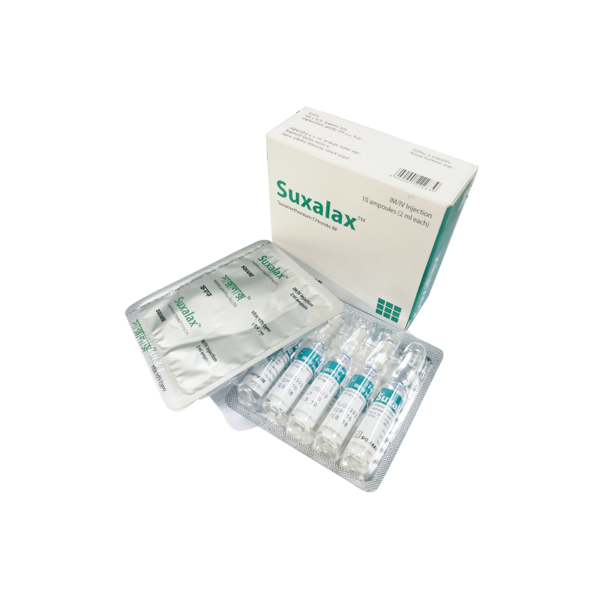
- Stock: Out Of Stock
- Brand: Square Pharmaceuticals
- Product ID: Suxamethonium Chloride
🔒 100% Secure Payment | bKash | Nagad | SSLCommerz | COD
⭐ Become a FREE Member: 7% Extra Savings • Free Delivery • Refill Reminders • Priority Support
This Item is for pre order
Suxalax 100 mg/2 ml inj
Interaction
Certain drugs or chemicals are known to reduce normal plasma cholinesterase activity and may therefore prolong the neuromuscular blocking effects of Suxamethonium. These include: trimetaphan; specific anticholinesterase agents: neostigmine, pyridostigmine, physostigmine; cytotoxic compounds: cyclophosphamide, mechlorethamine, triethylene-melamine; psychiatric drugs: promazine and chlorpromazine, anesthetic agents and drugs: ketamine, morphine and morphine antagonists, pethidine, pancuronium.
Pharmacology
Suxamethonium is a muscle relaxant. It acts as a depolarizing neuromuscular blocker by imitating the action of acetylcholine at the neuromuscular junction. Suxamethonium acts on muscle type nicotinic receptors. Binding of Suxamethonium to the nicotinic acetylcholine receptor results in opening of the receptor’s nicotinic sodium channel; sodium moves into the cell, a disorganized depolarization of the motor-end plate occurs and calcium is released from the sarcoplasmic reticulum. This results in fasciculation. In the normal muscle, following depolarization, acetylcholine is rapidly hydrolyzed by acetylcholinesterase and the muscle cell is able to ‘reset’ ready for the next signal. But Suxamethonium is degraded not by acetylcholinesterase, rather by butyrylcholinesterase, a plasma cholinesterase. This hydrolysis by butyrylcholinesterase is much slower than that of acetylcholine by acetylcholinesterase. Thus Suxamethonium has a longer duration of effect than acetylcholine and it does not allow the muscle cell to ‘reset’ and keeps the ‘new’ resting membrane potential below threshold. When acetylcholine binds to an already depolarized receptor it cannot cause further depolarization. Calcium is removed from the muscle cell cytosol independent of repolarization. As the calcium is taken up by the sarcoplasmic reticulum, the muscle relaxes. This explains muscle flaccidity rather than tetany following fasciculation.
Contraindications
Suxamethonium has no effect on the level of consciousness and should not be administered to a patient who is notfullyanesthetized. Suxamethonium should not be administered to patients known to be hypersensitive to the drug. Suxamethonium is contraindicated in patients known to have an inherited atypical plasma cholinesterase activity. An acute transient rise in serum potassium often occurs following the administration of Suxamethonium in normal individuals (usually 0.5 mmol/Litre). But in certain pathological states it may cause excessive increase in serum potassium leading to serious cardiac arrhythmias and cardiac arrest. For this reason, use of Suxamethonium is contraindicated in patients recovering from major trauma, patients recovering from severe burns, patients with neurological deficits involving acute major muscle wasting and patients with pre-existing hyperkalemia. Suxamethonium causes a slight transient rise in intra-ocular pressure, and should therefore not be used in the presence of open eye injuries. The injection is contraindicated in new-born infants, especially in immature neonates.
Side Effects
Cardiovascular: bradycardia, tachycardia, hypertension, hypotension, arrhythmias.
Respiratory: bronchospasm, prolonged respiratory depression and apnea.
Musculoskeletal: muscle fasciculation, post-operative muscle pains, myoglobinemia.














