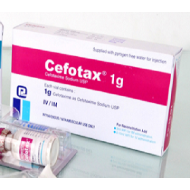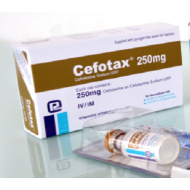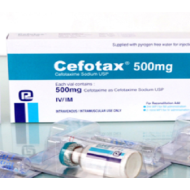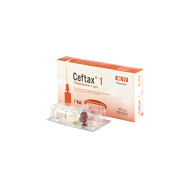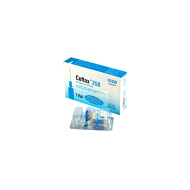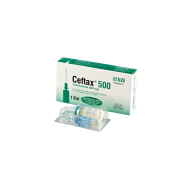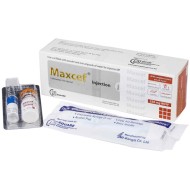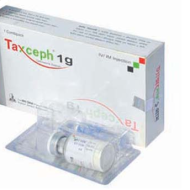
- Stock: Out Of Stock
- Brand: Acme Laboratories Limited
- Product ID: Cefotaxime
🔒 100% Secure Payment | bKash | Nagad | SSLCommerz | COD
⭐ Become a FREE Member: 7% Extra Savings • Free Delivery • Refill Reminders • Priority Support
This Item is for pre order
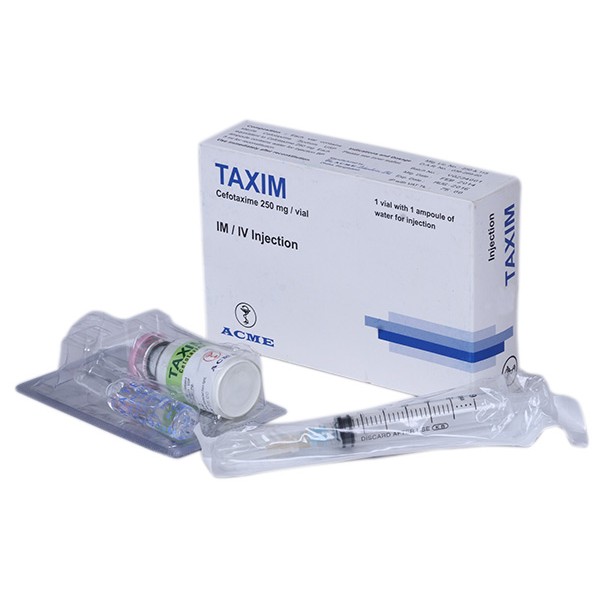
Taxim 250 mg
Interaction
Increased nephrotoxicity has been reported following concomitant administration of cephalosporins and aminoglycoside antibiotics.
Pregnancy & Breastfeeding use
Taxim is pregnancy category B drug. Although animal studies have not shown any adverse effect on the developing fetus, the safety of Taxim in human pregnancy has not been established. So, Taxim should not be administered during pregnancy especially during the first trimester, without carefully weighing the expected benefits against the possible risks. As Taxim is excreted in human milk, either breast feeding or treatment of the mother should be stopped.
Contraindication
Taxim is contraindicated in patients who have shown hypersensitivity to cefotaxime or the cephalosporin group of antibiotics.
Special Warning
Dosage in renal impairment: Because of extra-renal elimination, it is only necessary to reduce the dosage of Taxim in severe renal failure (GFR<5 ml/min = serum creatinine approximately 751 micromol/litre). After an initial loading dose of 1 gm, daily dose should be halved without change in the frequency of dosing. In all other patients, dosage may require further adjustment according to the course of infection and the general condition of the patient.
Uses
• Cefotime is used for the treatment of patients with serious infections caused by susceptible strains of the designated microorganisms in the diseases listed below.
• Lower respiratory tract infections, including pneumonia, acute or chronic bronchitis, bronchiectasis, lung abscess and post-operative chest infections.
- Urinary tract infections, including acute and chronic pyelonephritis, cystitis and asymptomatic bacteriuria.
- Obstetric & gynecological infections, including pelvic inflammatory disease.
- Septicemia / Bacteremia
- Skin and soft tissue infections, such as - cellulitis, wound infections.
- Intra-abdominal infections including peritonitis.
- Bone and joint infections, e.g. osteomyelitis, septic arthritis.
- Central nervous system infections, e.g. meningitis.
- Uncomplicated gonorrhea, particularly when penicillin has failed or is unsuitable.
- Surgical prophylaxis: The administration of Taxim prophylactically may reduce the incidence of certain post-operative infections in patients undergoing surgical procedures that are classified as contaminated or potentially contaminated or in clean operation where infection would have serious effects.
Dosage
Taxim dosage
Adults:
The recommended dosage for mild to moderate infections is 1 gm every 12 hourly. However, dosage may be varied according to the severity of infection, sensitivity of causative organisms and condition of the patient. In severe infections dosage may be increased up to 12 gm daily given in 3 or 4 divided doses. For infections caused by sensitive Pseudomonas spp. daily doses of greater than 6 gm will usually be required.
Children:
The usual dosage range is 100-150 mg/kg/day in 2 to 4 divided doses. However, in very severe infections doses of up to 200 mg/kg/day may be required.
Neonates:
The recommended dosage is 50 mg/kg/day in 2 to 4 divided doses. In severe infections 150-200 mg/kg/day in divided doses have been given.
Gonorrhoea:
A single injection of 1 gm may be administered intramuscularly or intravenously.
Surgical Prophylaxis:
Immediately prior to surgery, a single dose of 1 gm is suitable for most of the procedures. For procedures longer than 4 hours a dose of 2 gm is recommended.
Renal impairment:
Because of extra-renal elimination, it is only necessary to reduce the dosage of Taxim in severe renal failure (GFR<5 ml/min = serum creatinine approximately 751 micromol/litre). After an initial loading dose of 1 gm, daily dose should be halved without change in the frequency of dosing.
Direction for reconstitution
For reconstitution purpose add water for injection BP as per the following chart:
Route 250 mg 500 mg 1 gm
IM 2 ml 2 ml 3 ml
IV 2-5 ml 2-10 ml 4-10 ml
Intravenous infusion
Taxim may be administered by intravenous infusion. 1-2 grams are dissolved in 40-100 ml of water for injection BP or 0.9% Sodium Chloride injection BP or 5% Dextrose injection BP. The prepared infusion should be administered over 20-60 minutes.
Intermittent IV: Add 10 ml of sterile water for inj to a vial containing 0.5 g, 1 g or 2 g to provide a soln containing approx 50 mg, 95 mg, or 180 mg per ml, respectively.
Intermittent or continuous IV infusion: Add 50 ml or 100 ml of NaCl 0.9% inj or dextrose 5% inj to an infusion bottle containing 1 g or 2 g. Alternatively, reconstituted soln may be further diluted with 50-1,000 ml of a compatible soln. IM: Add 2 ml, 3 ml or 5 ml of sterile or bacteriostatic water for inj to a vial containing 0.5 g, 1 g or 2 g to provide a soln containing approx 230 mg, 300 mg or 330 mg per ml, respectively.
Side Effects
Adverse reactions to Taxim have occurred relatively infrequently and have generally been mild and transient. Effects reported include candidiasis, rashes, fever, transient rises in liver transaminase and/or alkaline phosphatase and diarrhoea. As with all cephalosporins, pseudomembranous colitis may rarely occur during treatment. If this occurs, the drug should be stopped and specific treatment instituted. As with other cephalosporins, changes in renal function have been rarely observed with high doses of Taxim. Administration of high doses of cephalosporins particularly in patients with renal insufficiency may result in encephalopathy. Hypersensitivity reactions have been reported, these include skin rashes, drug fever and very rarely anaphylaxis.
Precaution
Taxim should be prescribed with caution in patients with a history of colitis. Because high and prolonged antibiotic concentrations can occur from usual doses in patients with transient or persistent reduction of urinary output because of renal insufficiency, the total daily dosage should be reduced when Taxim is administered to such patients. Continued dosage should be determined by degree of renal impairment, severity of infection, and susceptibility of the causative organisms.
Acute Overdose
Most cases of Taxim Sodium overdosage have shown no over toxicity. The most frequent reactions were elevations of BUN and creatinine. Patients who receive an acute overdosage should be carefully observed and given supportive treatment.