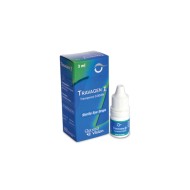
- Stock: In Stock
- Brand: Incepta Pharmaceuticals
- Product ID: Travoprost
🔒 100% Secure Payment | bKash | Nagad | SSLCommerz | COD
⭐ Become a FREE Member: 7% Extra Savings • Free Delivery • Refill Reminders • Priority Support
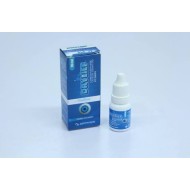
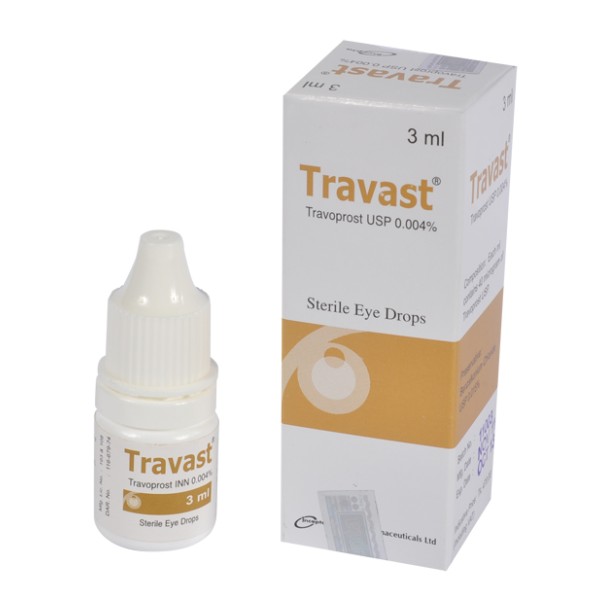
Travast 0.004% Eye Drop (Travoprost)
Manufacturer: Incepta Pharmaceuticals Ltd.
Generic Name: Travoprost 0.004% w/v
Therapeutic Class: Prostaglandin Analogue / Antiglaucoma Agent / Ocular Hypotensive
Presentation: 3ml sterile ophthalmic solution
Price: ৳470.00 per 3ml bottle
Indications
Travast 0.004% Eye Drop is indicated for reduction of elevated intraocular pressure (IOP) in:
- Open-angle glaucoma (primary open-angle glaucoma — POAG)
- Ocular hypertension (elevated IOP without optic nerve damage)
- Patients inadequately controlled on other IOP-lowering agents (as monotherapy or adjunctive therapy)
Reduction of IOP slows or prevents glaucomatous optic nerve damage and visual field loss — the primary goal in glaucoma management.
Composition
Each ml of Travast Eye Drop contains: Travoprost 0.04mg (0.004% w/v) in a buffered sterile ophthalmic solution. Contains: polyquaternium-1 (POLYQUAD) as preservative, mannitol, propylene glycol, sodium chloride, zinc chloride, purified water; pH adjusted with hydrochloric acid and/or sodium hydroxide.
Mechanism of Action
Travoprost is a selective full agonist of the FP (prostaglandin F2α) receptor. As a synthetic prostaglandin F2α analogue, it reduces IOP by:
- Increasing uveoscleral outflow: The primary mechanism — travoprost relaxes ciliary muscle and extracellular matrix, increasing the non-conventional (uveoscleral) drainage pathway for aqueous humour. This accounts for ~60–80% of the IOP reduction.
- Increasing trabecular outflow: Secondary mechanism — also increases flow through the conventional trabecular meshwork pathway.
Travoprost is a prodrug — the isopropyl ester is hydrolysed by corneal esterases to the active free acid (travoprost acid) upon penetration. IOP reduction is sustained for 24 hours with once-daily dosing, making it the most convenient prostaglandin analogue regimen.
IOP-lowering efficacy: Reduces IOP by approximately 25–35% from baseline — among the most potent IOP-reducing agents available.
Dosage and Administration
Dose: One drop in the affected eye(s) once daily in the evening.
Rationale for evening dosing: Clinical studies demonstrate superior IOP reduction with evening administration — travoprost effectively lowers the diurnal and nocturnal IOP peak that occurs in the early morning hours.
Administration technique:
- Tilt the head back, pull down the lower eyelid to form a pocket
- Instil one drop into the conjunctival sac
- Apply gentle finger pressure to the inner corner of the eye (nasolacrimal occlusion) for 1–2 minutes after instillation — this reduces systemic absorption and potential side effects
- If using more than one eye drop, wait at least 5 minutes between drops
- Remove contact lenses before instillation; wait at least 15 minutes before reinserting
Contraindications
- Known hypersensitivity to travoprost, benzalkonium chloride, or any component of the formulation
- Pregnancy (category C — may cause foetal harm; avoid unless benefit clearly outweighs risk)
Warnings and Precautions
- Iris colour change (permanent): Travoprost may increase pigmentation of the iris (darkening of the iris colour) in patients with mixed-colour (hazel, blue-brown, green-brown) eyes. This change is permanent and results from increased melanin content in iris melanocytes. It is more pronounced in patients with mixed irides.
- Periorbital and eyelid skin darkening: Pigmentation of the eyelid skin may occur — usually reversible upon discontinuation.
- Eyelash changes: Prostaglandin analogues cause hypertrichosis (increased length, thickness, and number of eyelashes) and may cause misdirected or doubled eyelashes (distichiasis). Eyelash changes are reversible.
- Macular oedema: Has been reported in aphakic patients and pseudophakic patients with torn posterior lens capsule — use with caution in these patients.
- Uveitis/iritis: Use with caution in patients with active intraocular inflammation.
- Contact lenses: Contains POLYQUAD preservative which is less toxic than benzalkonium chloride, but lenses should still be removed before instillation and reinserted 15 minutes later.
- Unilateral treatment: If treating only one eye, the iris colour change and eyelash changes will result in asymmetry between the two eyes — counsel patients accordingly.
Side Effects
Very common (≥1/10) — ocular: Conjunctival hyperaemia (redness — usually mild and transient), increased iris pigmentation, eyelash/vellus hair changes (increased length, thickness, darkness).
Common — ocular: Ocular pruritus (itching), eye discomfort/burning, eye pain, foreign body sensation, eyelid erythema and oedema, periorbital skin darkening, dry eye, blurred vision (transient after instillation).
Uncommon — ocular: Iritis/uveitis, macular oedema, punctate keratitis.
Systemic (rare with nasolacrimal occlusion): Headache, rhinitis, bradycardia (from systemic absorption of prostaglandin); exacerbation of asthma (rare).
Drug Interactions
- Other IOP-lowering agents: Travoprost can be combined with beta-blockers (timolol), carbonic anhydrase inhibitors (dorzolamide, brinzolamide), or alpha-2 agonists (brimonidine) for additive IOP reduction. Allow 5 minutes between drops.
- Other prostaglandin analogues (latanoprost, bimatoprost, tafluprost): Do not combine — antagonistic or no additive effect, and increased side effects.
- Systemic NSAIDs: May attenuate the IOP-lowering effect of travoprost — monitor IOP if NSAIDs are commenced.
Use in Pregnancy and Lactation
Pregnancy: Travoprost is a prostaglandin analogue; prostaglandins can cause uterine contractions and may affect foetal development. Contraindicated during pregnancy unless benefits clearly outweigh risks — consult an ophthalmologist and obstetrician.
Lactation: It is unknown whether travoprost or its metabolites are excreted in breast milk. Avoid use during breastfeeding or use with caution with nasolacrimal occlusion to minimise systemic absorption.
Special Populations
Diabetic patients: Patients with diabetes mellitus have an increased risk of developing open-angle glaucoma. Travast is an appropriate and highly effective choice for IOP reduction in diabetic patients with glaucoma. Routine ophthalmological monitoring is essential as part of diabetes care.
Elderly: No dose adjustment required. Efficacy and safety profile are similar in elderly patients.
Paediatrics: Limited data in children — use under specialist supervision only.
Storage
Store between 2°C and 25°C before opening. After opening, store below 25°C and use within 6 weeks. Keep the bottle tightly closed. Keep out of reach of children. Do not use after the expiry date printed on the bottle.
Pricing
Travast 0.004% Eye Drop 3ml: ৳470.00 per bottle
Disclaimer: This product information is for reference purposes only and does not substitute professional medical advice, diagnosis, or treatment. Always consult a registered physician or qualified healthcare professional before taking any medication.