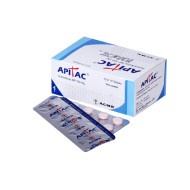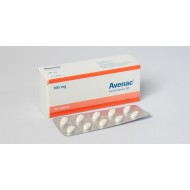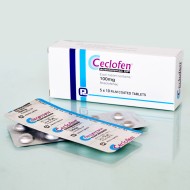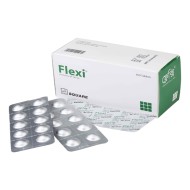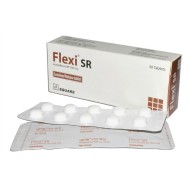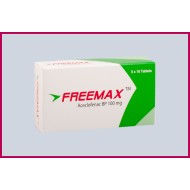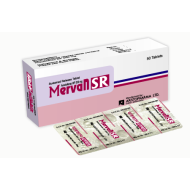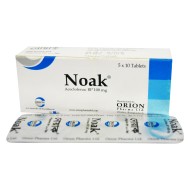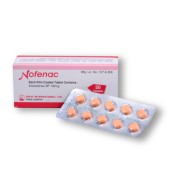
- Stock: In Stock
- Brand: Beximco Pharmaceutical
- Product ID: Aceclofenac
🔒 100% Secure Payment | bKash | Nagad | SSLCommerz | COD
⭐ Become a FREE Member: 7% Extra Savings • Free Delivery • Refill Reminders • Priority Support
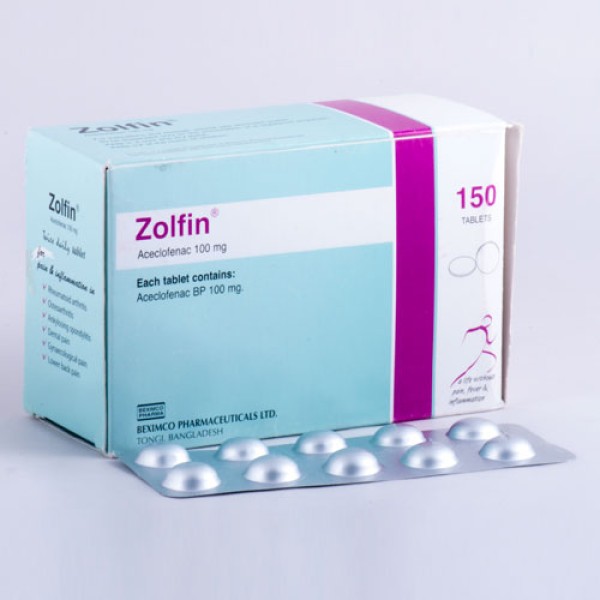
Zolfin 100mg Tablet — Aceclofenac 100mg | Beximco Pharmaceuticals
| Generic Name | Aceclofenac 100 mg |
| Dosage Form | Film-coated Tablet |
| Pack Size | 10 tablets per strip |
| Manufacturer | Beximco Pharmaceuticals Ltd. |
| Therapeutic Class | Non-Steroidal Anti-Inflammatory Drug (NSAID) — Phenylacetic Acid Derivative |
| Availability | In Stock — Available Online |
Overview
Zolfin 100mg contains Aceclofenac — a next-generation NSAID of the phenylacetic acid class, structurally related to diclofenac but with a superior safety and tolerability profile. Aceclofenac is a potent inhibitor of both COX-1 and COX-2 enzymes, reducing prostaglandin synthesis to relieve pain and inflammation. Compared to older NSAIDs (diclofenac, naproxen, ibuprofen), aceclofenac demonstrates greater cartilage-protective properties (stimulates proteoglycan synthesis) and causes significantly fewer gastrointestinal side effects — making it a preferred NSAID for long-term musculoskeletal conditions. It is one of the most prescribed NSAIDs globally for arthritis management.
Pharmacology
Aceclofenac inhibits prostaglandin synthesis by blocking both COX-1 and COX-2 isoenzymes, with relative COX-2 selectivity providing analgesic, anti-inflammatory, and antipyretic effects. A key distinction from classic NSAIDs: aceclofenac also stimulates glycosaminoglycan and proteoglycan synthesis in articular chondrocytes, potentially slowing cartilage breakdown in osteoarthritis — a disease-modifying property not shared by most NSAIDs. Peak plasma concentration is reached in 1–3 hours; half-life ~4 hours; primarily metabolised in the liver and excreted renally.
Indications
- Osteoarthritis — knee, hip, hand joint pain and stiffness; long-term management
- Rheumatoid Arthritis — active disease symptom control (adjunct to DMARDs)
- Ankylosing Spondylitis — spinal inflammatory arthritis
- Acute Musculoskeletal Pain — low back pain, neck pain, sprains, strains
- Post-operative Pain — dental surgery, minor surgical procedures
- Dysmenorrhoea — painful menstruation
- Soft Tissue Injuries — tendinitis, bursitis, sports injuries
Dosage & Administration
| Indication | Dose | Frequency | Notes |
|---|---|---|---|
| Osteoarthritis / RA | 100 mg (1 tablet) | Twice daily (BD) | Standard maintenance dose |
| Ankylosing Spondylitis | 100 mg | Twice daily | Long-term use with monitoring |
| Acute Pain / Back Pain | 100 mg | Twice daily | Short course (5–14 days) |
| Dysmenorrhoea | 100 mg | Twice daily | Start at onset of pain; 2–3 days |
| Elderly patients | 100 mg | Once daily (OD) initially | Increase to BD only if tolerated |
Always take with food or milk to protect the stomach. Take at the same times each day. Use the lowest effective dose for the shortest duration necessary.
Special Note for Diabetic Patients
Diabetic patients frequently use NSAIDs for arthritis and musculoskeletal pain, which is significantly more prevalent in diabetes. Critical considerations for diabetic patients taking Zolfin (Aceclofenac):
- Renal monitoring: Diabetics are at higher baseline risk of renal impairment (diabetic nephropathy). NSAIDs reduce renal prostaglandin synthesis, causing sodium and water retention and potentially worsening renal function — monitor creatinine/eGFR before and during use.
- Cardiovascular risk: Diabetes already increases CV risk; long-term NSAIDs add incremental risk of hypertension and cardiovascular events. Use the shortest effective course.
- Drug interaction with sulfonylureas: NSAIDs may potentiate hypoglycaemic effects of sulfonylureas (glibenclamide, glimepiride) by displacing them from protein binding — monitor blood glucose more frequently.
- Diabetic foot wounds: NSAIDs should be used with caution in patients with diabetic foot — reduced prostaglandin-mediated vasodilation may impair wound healing.
- No direct glucose effect: Aceclofenac itself does not raise or lower blood glucose.
Contraindications
- Active peptic ulcer disease or GI bleeding
- Severe renal impairment (eGFR <30 ml/min)
- Severe hepatic impairment
- Severe heart failure
- History of NSAID-induced asthma, urticaria, or allergic reaction
- Aspirin hypersensitivity (cross-reactivity)
- Third trimester of pregnancy
- Children under 18 (not established)
Drug Interactions
| Drug | Interaction | Management |
|---|---|---|
| Sulfonylureas (glibenclamide, glimepiride) | Enhanced hypoglycaemia — protein binding displacement | Monitor BG closely; dose adjustment may be needed |
| Warfarin / Anticoagulants | Increased bleeding risk | Monitor INR; avoid combination if possible |
| ACE Inhibitors / ARBs | Reduced antihypertensive efficacy; renal function worsening | Monitor BP and creatinine |
| Methotrexate | Increased MTX toxicity — reduced renal clearance | Avoid; or monitor closely with dose adjustment |
| Diuretics | Reduced diuretic efficacy; risk of acute kidney injury | Monitor renal function and electrolytes |
| Other NSAIDs / Aspirin | Additive GI and renal toxicity | Avoid combination |
| Lithium | Increased lithium levels | Monitor lithium levels |
Side Effects
- GI (most common): Nausea, dyspepsia, epigastric discomfort — significantly less than diclofenac or naproxen; take with food
- Cardiovascular: Fluid retention, oedema, hypertension (especially with long-term use)
- Renal: Renal impairment — particularly with pre-existing renal disease, dehydration, or elderly patients
- Hepatic: Elevated liver enzymes — monitor LFTs in long-term use
- Skin: Rash, pruritus
- Rare: GI ulceration/bleeding; serious cardiovascular events with prolonged high-dose use
Storage
Store below 30°C in a dry place, away from direct sunlight. Keep out of reach of children.
FAQ
Q1: How does Zolfin (Aceclofenac) compare to diclofenac for arthritis?
Aceclofenac and diclofenac are structurally related NSAIDs with similar analgesic and anti-inflammatory efficacy. The key advantages of aceclofenac are: (1) fewer GI side effects due to greater COX-2 selectivity; (2) cartilage-protective properties (stimulates proteoglycan synthesis) not seen with diclofenac; (3) better overall tolerability in head-to-head trials. Many rheumatologists now prefer aceclofenac over diclofenac for long-term arthritis management.
Q2: Can Zolfin be taken long-term for osteoarthritis?
Aceclofenac is used long-term for osteoarthritis and rheumatoid arthritis, but with regular monitoring: renal function (creatinine, eGFR), liver enzymes (LFTs), blood pressure, and GI symptoms. Use the lowest effective dose. Consider co-prescribing a proton pump inhibitor (omeprazole, pantoprazole) to protect the stomach in patients at GI risk (elderly, H. pylori positive, prior peptic ulcer).
Q3: Can I take Zolfin for a toothache or post-dental pain?
Yes — Zolfin 100mg BD is an effective option for dental pain. For acute toothache, NSAIDs are often more effective than paracetamol alone. Take with food to avoid stomach irritation. A short course (2–3 days) for dental pain is appropriate. For severe dental pain, combination with paracetamol (alternating or concurrent) provides additive analgesia.
Q4: Is Zolfin safe during pregnancy?
No — aceclofenac, like all NSAIDs, should be avoided in the third trimester due to risk of premature ductus arteriosus closure and foetal renal impairment. Use in the first and second trimesters should only be under physician guidance with clear clinical necessity. Paracetamol is the preferred analgesic during pregnancy.
Medical Disclaimer: Educational information only. Prescription required. NSAIDs should be used at the lowest effective dose for the shortest duration. Regular monitoring is essential during long-term use.