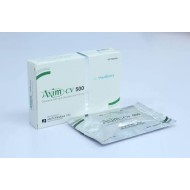
- Stock: Out Of Stock
- Brand: Aristopharma
- Product ID: Erythromycin
Available Options
🔒 100% Secure Payment | bKash | Nagad | SSLCommerz | COD
⭐ Become a FREE Member: 7% Extra Savings • Free Delivery • Refill Reminders • Priority Support
This Item is for pre order
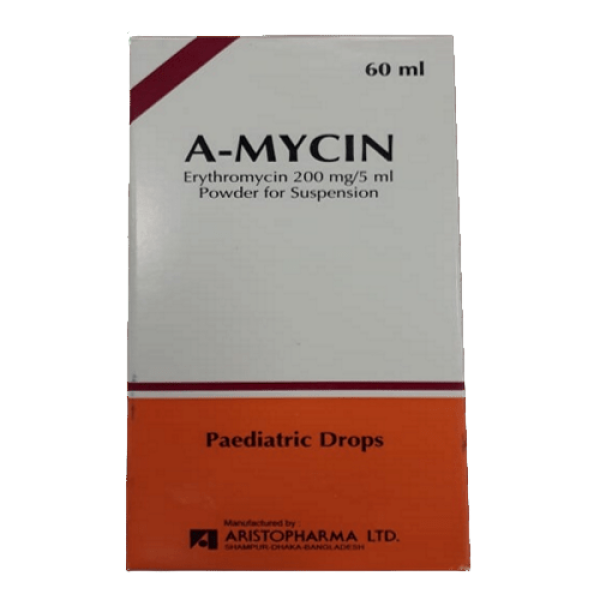
A-Mycin Pediatric Suspension 60ml — Erythromycin 125mg/5ml | Beximco Pharmaceuticals
| Generic Name | Erythromycin 125mg per 5ml (Pediatric Suspension) |
| Drug Class | Macrolide Antibiotic |
| Manufacturer | Beximco Pharmaceuticals Ltd. |
| Route | Oral (Suspension) |
| Pack Size | 60ml Bottle |
| Prescription Status | Prescription Required |
Overview
A-Mycin Pediatric Suspension contains Erythromycin at 125mg per 5ml — a lower-strength formulation specifically designed for infants and young children. The 125mg/5ml concentration allows precise weight-based dosing for the smallest patients. Erythromycin is a macrolide antibiotic effective against Gram-positive bacteria, atypical pathogens (Mycoplasma, Chlamydia), and selected Gram-negative organisms. It is particularly valuable as a penicillin-allergy alternative in children and for treating atypical pneumonia in paediatric patients.
Mechanism of Action
Erythromycin binds to the 50S ribosomal subunit (23S rRNA), blocking translocation and inhibiting bacterial protein synthesis (bacteriostatic). At the 125mg/5ml pediatric concentration, it provides effective bacterial suppression while allowing flexible dosing from infancy through early childhood based on body weight.
Indications in Paediatrics
- Upper respiratory tract infections — pharyngitis, tonsillitis, otitis media (in penicillin-allergic children)
- Lower respiratory tract infections — atypical pneumonia (Mycoplasma pneumoniae), Chlamydia pneumoniae
- Whooping cough (Bordetella pertussis) — treatment and post-exposure prophylaxis in contacts
- Skin and soft tissue infections (mild) in penicillin-allergic children
- Chlamydial conjunctivitis in neonates (specialist use)
- Campylobacter gastroenteritis in children
Pediatric Dosage
| Age / Weight | Dose of Erythromycin | Volume (125mg/5ml) | Frequency |
|---|---|---|---|
| Up to 2 years (under 8kg) | 125mg | 5ml | Every 6 hours |
| 2–8 years (8–25kg) | 125–250mg | 5–10ml | Every 6 hours |
| General weight-based | 30–50mg/kg/day | Divided doses | Every 6–8 hours |
| Pertussis prophylaxis | 40mg/kg/day (max 2g/day) | Divided every 6h | 14 days |
Shake well before each dose. Use the provided measuring syringe for accurate paediatric dosing. Refrigerate after reconstitution and use within 14 days. Can be given with a small amount of food if stomach upset occurs.
Important Paediatric Notes
- Hypertrophic pyloric stenosis (HPS): Erythromycin use in neonates (under 2 weeks) has been associated with infantile hypertrophic pyloric stenosis — a serious condition causing vomiting and requiring surgery. Use only when clearly indicated in neonates; inform parents of this risk
- Accurate weight-based dosing: Always dose by body weight — do not estimate. Use a proper medicine syringe, not a kitchen spoon, for accurate measurement
- Drug interactions in children with other conditions: If the child is on any cardiac medications or anticonvulsants, inform the physician before prescribing erythromycin
Side Effects
| System | Side Effect | Severity |
|---|---|---|
| GI | Nausea, vomiting, abdominal pain, diarrhoea — very common in children | Common — Mild to Moderate |
| Cardiac | QT prolongation (rare at standard paediatric doses) | Rare — monitor in cardiac conditions |
| GI (neonates) | Hypertrophic pyloric stenosis (neonates under 2 weeks) | Rare — Serious |
| Hypersensitivity | Rash, urticaria | Uncommon |
| Hepatic | Elevated liver enzymes (rare in children) | Rare |
Drug Interactions
| Drug | Interaction |
|---|---|
| Anticonvulsants (carbamazepine, phenytoin) | Erythromycin may increase levels — monitor for toxicity and seizure control |
| Theophylline | Erythromycin increases theophylline levels — risk of theophylline toxicity (nausea, arrhythmia) |
| QT-prolonging drugs | Additive QT prolongation — avoid concurrent use |
| Warfarin | Increased anticoagulant effect — monitor INR if applicable |
Contraindications
- Known hypersensitivity to erythromycin or macrolides
- Neonates under 2 weeks (unless no alternative — risk of pyloric stenosis)
- Concomitant QT-prolonging drugs
- Hepatic impairment (use with caution — reduce dose)
Storage
Before reconstitution: Store below 25°C. After reconstitution: Refrigerate (2–8°C) and use within 14 days. Shake well before every dose. Keep out of reach of children.
Frequently Asked Questions
Q: What is the difference between A-Mycin Pediatric (125mg/5ml) and A-Mycin DS (250mg/5ml)?
A: A-Mycin Pediatric provides 125mg erythromycin per 5ml — intended for infants and young children needing lower doses. A-Mycin DS (Double Strength) provides 250mg/5ml — for older children and adults requiring higher doses in smaller volumes.
Q: My child vomits after taking A-Mycin — what should I do?
A: GI upset is the most common side effect of erythromycin in children. Give the dose with a small amount of milk or food to reduce nausea. If vomiting occurs within 30 minutes of the dose, a repeat dose may be given. Consult your physician if vomiting persists or is severe.
Q: How long before my child's infection improves?
A: Clinical improvement should be seen within 48–72 hours for bacterial infections. Complete the full prescribed course even if the child seems better — stopping early risks relapse and antibiotic resistance.
Medical Disclaimer: A-Mycin Pediatric Suspension (Erythromycin 125mg/5ml) is a prescription-only antibiotic. Use with extreme caution in neonates under 2 weeks (pyloric stenosis risk). Refrigerate after reconstitution; use within 14 days. Shake well before each dose. Dose by body weight using a measuring syringe. This information is for educational purposes only. Always follow your physician's instructions.