- Stock: Out Of Stock
- Brand: ACI Pharmaceuticals
- Product ID: Levocetirizine Dihydrochloride
🔒 100% Secure Payment | bKash | Nagad | SSLCommerz | COD
⭐ Become a FREE Member: 7% Extra Savings • Free Delivery • Refill Reminders • Priority Support
This Item is for pre order
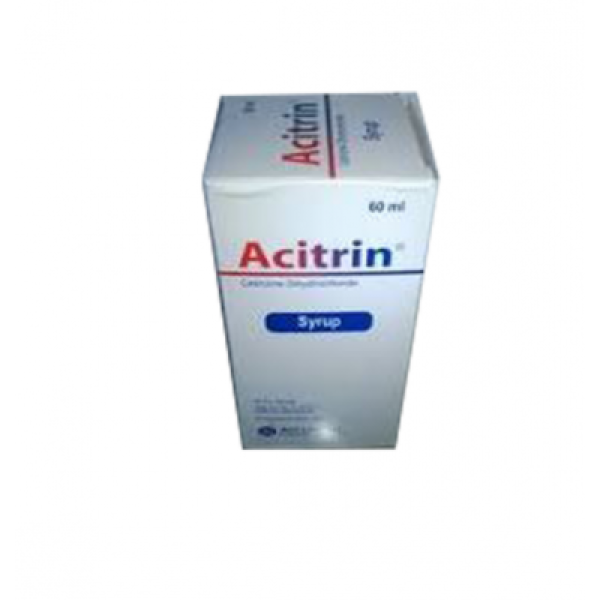
Acitrin-L Oral Solution — Levocetirizine 2.5mg/5ml Antihistamine Syrup (60ml)
| Product Overview | |
|---|---|
| Brand Name | Acitrin-L® Oral Solution |
| Generic Name | Levocetirizine Dihydrochloride 2.5 mg per 5 ml |
| Manufacturer | ACI Pharmaceuticals Ltd., Bangladesh |
| Drug Class | Third-Generation Antihistamine (R-enantiomer of Cetirizine) |
| Dosage Form | Oral Solution (Syrup) |
| Pack Size | 60 ml bottle |
| Strength | 2.5 mg levocetirizine per 5 ml (1 teaspoonful) |
| Prescription Status | Prescription Required (Rx) |
| Storage | Below 30°C, dry place, protected from light. Keep tightly closed. |
1. Indications
Acitrin-L® Oral Solution (Levocetirizine 2.5mg/5ml) is the liquid formulation of levocetirizine — a third-generation antihistamine for children and adults who prefer oral solution over tablets. Indicated for: seasonal allergic rhinitis (sneezing, rhinorrhoea, nasal and ocular pruritus, tearing due to seasonal pollen); perennial allergic rhinitis (year-round dust mite, mould, pet dander allergy); chronic idiopathic urticaria (CIU) — once-daily suppression of recurrent hives and pruritus; atopic dermatitis (pruritus relief); allergic conjunctivitis; and drug-induced or food-related urticarial reactions.
At 2.5mg/5ml, 2 teaspoonfuls (10ml) provide the full 5mg adult dose — equivalent to one Acitrin-L® Tablet. The 60ml bottle provides approximately 6 days of adult dosing or 12 days of children's dosing.
2. Mechanism of Action
Levocetirizine is the active R-enantiomer of cetirizine with ~2× higher H1 receptor affinity (Ki 3.2 nM vs 6 nM for cetirizine). Selective peripheral H1 receptor antagonism blocks histamine-mediated vasodilation, vascular permeability, mucus hypersecretion, and pruritic nerve stimulation. Negligible CNS penetration accounts for its minimal sedation profile compared to first-generation antihistamines. No anticholinergic, antidopaminergic, or antiserotonergic activity at therapeutic doses. No effect on cardiac ion channels (safe cardiac profile).
3. Dosage & Administration
Adults and children ≥12 years: 2 teaspoonfuls (10ml = 5mg) once daily in the evening. Children 6–11 years: 2 teaspoonfuls (10ml = 5mg) once daily. Children 2–5 years: 1 teaspoonful (5ml = 2.5mg) once daily. Children 6 months–2 years: ½ teaspoonful (2.5ml = 1.25mg) once daily (under physician supervision).
Renal impairment: CrCl 50–79 ml/min: 5mg once daily. CrCl 30–49 ml/min: 5mg every other day. CrCl 10–29 ml/min: 5mg twice weekly. CrCl <10 ml/min: Contraindicated.
Use a calibrated measuring spoon. Shake well before use. May be taken with or without food.
4. Side Effects
Mild somnolence (~6% — less than chlorpheniramine). Headache, fatigue, dry mouth. GI: nausea, abdominal pain (uncommon). Children: paradoxical excitability possible. No anticholinergic effects (no dry eyes, urinary retention, or constipation at standard doses). No blood glucose effects.
5. Contraindications
Hypersensitivity to levocetirizine, cetirizine, hydroxyzine, or piperazine derivatives. Severe renal impairment (CrCl <10 ml/min) / dialysis patients. Infants under 6 months.
6. Warnings & Precautions
Mandatory dose interval adjustment in renal impairment. Avoid alcohol — CNS additive. Caution driving. Diabetic patients with nephropathy: check renal function before starting and adjust dosing schedule. For children under 2 years: physician supervision only. Use calibrated spoon — household teaspoons vary in volume.
7. Drug Interactions
No clinically significant interactions with common diabetes medications (metformin, insulin, sulfonylureas, SGLT-2 inhibitors, DPP-4 inhibitors, GLP-1 agonists). Additive CNS depression with sedatives/alcohol. Ritonavir: increased levocetirizine exposure (dose reduce). No CYP450 inhibition.
8. Pharmacokinetics
Oral bioavailability ~100%. Tmax ~0.9h. Protein binding 90%. Half-life 7–10h (shorter in young children ~6h). Renal elimination >85% unchanged. Volume of distribution 0.4 L/kg. Systemic exposure from oral solution equivalent to tablet. Onset: ~1h; duration: 24h (once-daily dosing).
9. Storage
Store below 30°C in a cool dry place, away from light. Keep tightly closed. Shake well before measuring. Check expiry — do not use beyond printed date.
10. Course Duration
Seasonal rhinitis: use throughout the symptomatic season. Chronic urticaria: daily long-term as prescribed. Acute urticaria: 3–7 days. Do not skip doses for chronic conditions — consistent once-daily H1 blockade produces the best outcome for urticaria.
11. Overdose
Adults: somnolence. Children: agitation or sedation. No antidote. Not dialyzable. Supportive management. Seek medical advice immediately for suspected overdose in children.
12. Clinical Evidence
Levocetirizine oral solution approved by EMA and supported by paediatric clinical trials. In children with perennial allergic rhinitis and chronic urticaria, levocetirizine 2.5mg/day (2–5 years) showed significantly superior symptom control vs placebo with a safety profile equivalent to placebo (PEDIATRIC trials, EMA approval data). Bangladesh paediatric allergy specialists increasingly prefer levocetirizine for children with moderate-to-severe allergic rhinitis due to its enhanced potency at lower doses.
13. Patient Counselling
Shake well before use. Use calibrated measuring spoon — not household teaspoon. Give at a consistent time each day (evening preferred). Suitable from 6 months of age under physician supervision. Diabetic patients: confirm sugar content with pharmacist if on restricted-sugar diet. Report persistent drowsiness, urinary changes, or irregular heartbeat. Adjust dose if renal function is significantly impaired.
Frequently Asked Questions (FAQ)
Q1. What is the correct dose of Acitrin-L Oral Solution for a 4-year-old?
For children aged 2–5 years, the recommended dose of levocetirizine is 2.5mg once daily — which equals 1 teaspoonful (5ml) of Acitrin-L® Oral Solution (2.5mg/5ml). Give once daily in the evening. For younger children (6 months to 2 years), the dose is 1.25mg once daily (½ teaspoonful = 2.5ml) under physician supervision. Always use a calibrated measuring spoon or oral syringe to ensure accuracy — household teaspoons typically deliver 3–7ml and are not reliable for dosing.
Q2. How does Acitrin-L Oral Solution compare to Acitrin Syrup for children?
Both are levocetirizine (Acitrin-L) vs cetirizine (Acitrin) in liquid form. The key differences: Acitrin-L contains levocetirizine 2.5mg/5ml — twice as potent per mg as cetirizine, so 5ml = 2.5mg levocetirizine = equivalent antihistamine effect to 10ml of Acitrin Syrup (5mg cetirizine). For adults, 2 teaspoons of Acitrin-L gives the full 5mg levocetirizine dose. For children aged 2–5, 1 teaspoon of either Acitrin Syrup (5mg cetirizine) or Acitrin-L solution (2.5mg levocetirizine) provides an appropriate dose. Levocetirizine may have marginally fewer sedation-related effects in some children.
Q3. Can Acitrin-L Oral Solution be given to infants under 1 year?
With physician supervision, levocetirizine may be used in infants from 6 months of age (1.25mg = 2.5ml once daily). The safety and efficacy of levocetirizine in infants under 6 months has not been established — it should not be used in neonates or infants under 6 months without specialist input. For infants 6–12 months, prescribing is based on clinical judgement given the significant allergy burden in atopic infants, particularly those with severe atopic eczema.
Q4. Does Acitrin-L Oral Solution contain sugar — is it safe for diabetic patients?
Cetirizine and levocetirizine themselves have no effect on blood glucose. However, oral syrups and solutions often contain sucrose or other sweeteners as excipients to improve palatability. Diabetic patients should check the ACI product label or consult their pharmacist to confirm whether Acitrin-L Oral Solution contains added sugar. If the formulation contains significant sucrose, the Acitrin-L Tablet (sugar-free solid form) may be preferred for adult diabetic patients. The total sugar exposure from a 5–10ml syrup dose is typically small and unlikely to significantly affect blood glucose in a well-controlled diabetic patient.
⚕ Medical Disclaimer: Acitrin-L® Oral Solution is a prescription antihistamine. Dose adjustment mandatory in renal impairment. Contraindicated in CrCl <10 ml/min. Information sourced from ACI Pharmaceuticals Ltd. official prescribing data. Educational purposes only.