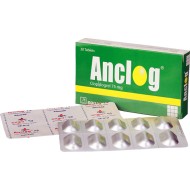
- Stock: Out Of Stock
- Brand: ACI Pharmaceuticals
- Product ID: Ticagrelor
🔒 100% Secure Payment | bKash | Nagad | SSLCommerz | COD
⭐ Become a FREE Member: 7% Extra Savings • Free Delivery • Refill Reminders • Priority Support
This Item is for pre order
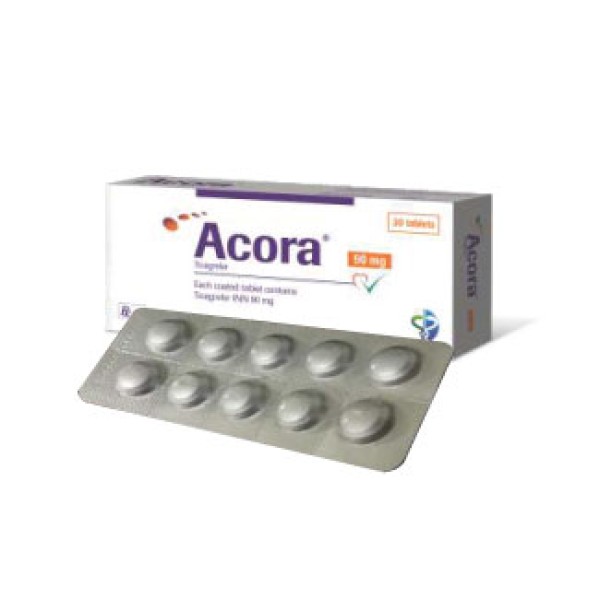
Acora 90 mg Tablet (Ticagrelor) – ACI Limited
| Brand Name | Acora 90 mg Tablet |
|---|---|
| Generic Name | Ticagrelor |
| Strength | 90 mg |
| Dosage Form | Tablet (film-coated) |
| Manufacturer | ACI Limited, Bangladesh |
| Drug Class | P2Y12 Receptor Antagonist / Antiplatelet Agent |
| Pack Size | Per Tablet |
| Prescription Required | Yes (Rx) |
| Storage | Store below 30°C, away from moisture and light |
1. About Acora (Ticagrelor)
Acora 90 mg Tablet is a brand of Ticagrelor manufactured by ACI Limited, one of Bangladesh's leading pharmaceutical companies. Ticagrelor belongs to the class of P2Y12 adenosine diphosphate (ADP) receptor antagonists — a newer generation of antiplatelet agents that provide more potent and consistent platelet inhibition compared to older agents like clopidogrel.
Unlike thienopyridines (clopidogrel, prasugrel), ticagrelor is a direct-acting, reversible P2Y12 inhibitor that does not require hepatic metabolic activation. This means it works uniformly in all patients regardless of CYP2C19 genotype, providing predictable antiplatelet effects. Acora 90 mg is primarily indicated as dual antiplatelet therapy (DAPT) in combination with low-dose aspirin for the prevention of atherothrombotic events in patients with acute coronary syndrome (ACS) or a history of myocardial infarction.
2. Mechanism of Action
Ticagrelor (Acora) inhibits the P2Y12 ADP receptor on the platelet surface in a direct and reversible manner. ADP normally binds to P2Y12 receptors to activate platelets, trigger shape change, enhance degranulation, and stimulate fibrinogen receptor (GPIIb/IIIa) expression — all steps leading to platelet aggregation and thrombus formation.
By selectively and reversibly blocking P2Y12, ticagrelor prevents ADP-induced platelet activation. Additionally, ticagrelor inhibits the reuptake of adenosine into red blood cells by blocking the equilibrative nucleoside transporter 1 (ENT1), which increases plasma adenosine concentrations. This augmented adenosine signaling may contribute to some of ticagrelor's effects including its ability to increase coronary blood flow. The net result is powerful, fast-onset platelet inhibition that reduces the risk of arterial thrombosis.
3. Indications and Clinical Uses
Acora 90 mg Tablet (Ticagrelor) is prescribed for the following conditions:
- Acute Coronary Syndrome (ACS): Including unstable angina (UA), non-ST-elevation myocardial infarction (NSTEMI), and ST-elevation myocardial infarction (STEMI) — whether managed medically or with percutaneous coronary intervention (PCI)
- Secondary Prevention Post-MI: In patients with a history of myocardial infarction (at least 1 year ago) who are at high risk of atherothrombotic events
- Prevention of Stent Thrombosis: After coronary artery stent placement (bare metal or drug-eluting stents)
- Atherosclerotic Cardiovascular Disease (ASCVD) with High-Risk Features: Diabetes mellitus, chronic kidney disease, multi-vessel CAD, or recurrent MI may warrant extended antiplatelet therapy
Ticagrelor is always used in combination with low-dose aspirin (75–100 mg/day) as part of dual antiplatelet therapy (DAPT).
4. Dosage and Administration
For Acute Coronary Syndrome (ACS):
- Loading dose: 180 mg (two 90 mg tablets) as a single oral dose
- Maintenance dose: 90 mg twice daily (morning and evening)
- Duration: Up to 12 months for ACS; patients who received coronary stenting should follow cardiologist guidance on duration
For Secondary Prevention (post-MI, high-risk):
- Dose: 60 mg twice daily (a lower 60 mg strength is used for long-term secondary prevention — Acora 90 mg is used for the ACS/acute phase)
Administration: Tablets should be swallowed whole with water, with or without food. If the patient cannot swallow, the tablet may be crushed and mixed with water. Avoid missing doses — take the missed dose as soon as remembered unless it is close to the next scheduled dose.
Aspirin co-therapy: Do not exceed 100 mg aspirin daily, as higher doses reduce ticagrelor efficacy.
5. Contraindications
Acora (Ticagrelor) must NOT be used in the following situations:
- Active pathological bleeding (e.g., peptic ulcer, intracranial hemorrhage)
- History of intracranial hemorrhage (any prior episode)
- Severe hepatic impairment (Child-Pugh class C) — risk of increased exposure and bleeding
- Hypersensitivity to ticagrelor or any excipient
- Strong CYP3A4 inhibitors concomitantly (e.g., ketoconazole, clarithromycin, ritonavir) — these markedly increase ticagrelor plasma levels
- Strong CYP3A4 inducers concomitantly (e.g., rifampin, phenytoin, carbamazepine, phenobarbital) — these markedly decrease ticagrelor efficacy
6. Warnings and Precautions
Bleeding Risk: Ticagrelor increases the risk of bleeding. Use with caution in patients at high bleeding risk (recent surgery, trauma, or invasive procedures). If urgent surgery is required, ticagrelor should ideally be stopped 5 days before the procedure.
Dyspnea: Approximately 14% of patients develop dyspnea (shortness of breath) during ticagrelor therapy. This is usually mild to moderate, often resolves spontaneously, and is not associated with cardiac or pulmonary pathology. Patients should be counseled about this effect and instructed to report severe or persistent dyspnea.
Bradycardia: Ticagrelor may cause ventricular pauses (≥3 seconds) — caution in patients with sick sinus syndrome, AV block, or bradycardia-inducing conditions. Holter monitoring was used in PLATO trial; most pauses were asymptomatic.
Aspirin Dose: Concomitant aspirin dose should not exceed 100 mg/day. Higher doses reduce ticagrelor's net clinical benefit.
Uric Acid: Ticagrelor increases serum uric acid — use with caution in patients with a history of gout or hyperuricemia.
Serum Creatinine: Serum creatinine may increase during ticagrelor therapy — monitor renal function as clinically indicated.
Pregnancy and Lactation: Ticagrelor is not recommended during pregnancy (potential fetal harm) or breastfeeding. Use only if benefit outweighs risk, under specialist supervision.
7. Side Effects and Adverse Reactions
Very Common (≥10%):
- Dyspnea (shortness of breath) — approximately 14% of patients
- Bleeding (any site) — including minor and major
Common (1–10%):
- Dizziness, headache
- Gastrointestinal disturbances: nausea, diarrhea, constipation
- Minor bleeding: epistaxis (nosebleed), bruising, subcutaneous bleeding
- Hypotension
- Elevated serum creatinine and uric acid
Serious (requiring prompt medical attention):
- Major bleeding: intracranial hemorrhage, gastrointestinal bleeding, fatal bleeding
- Significant dyspnea requiring dose interruption
- Severe bradycardia or ventricular pauses
- Hypersensitivity reactions (rare): rash, angioedema
Report any unusual bleeding, persistent shortness of breath, or chest discomfort to your healthcare provider immediately.
8. Drug Interactions
Strong CYP3A4 Inhibitors (avoid — significantly increase ticagrelor levels): Ketoconazole, itraconazole, voriconazole, clarithromycin, nefazodone, ritonavir, saquinavir, nelfinavir, indinavir, atazanavir, telithromycin
Strong CYP3A4 Inducers (avoid — significantly reduce ticagrelor efficacy): Rifampin (rifampicin), dexamethasone, phenytoin, carbamazepine, phenobarbital, St. John's Wort
Aspirin: Do not exceed 100 mg/day — higher doses antagonize ticagrelor's benefit
Other Antiplatelet/Anticoagulant Agents: Warfarin, heparin, oral anticoagulants, NSAIDs, SSRIs — increased bleeding risk; use with caution
Digoxin: Ticagrelor inhibits P-gp, increasing digoxin exposure — monitor digoxin levels
Simvastatin/Lovastatin: Ticagrelor inhibits CYP3A4 metabolism — avoid doses of simvastatin or lovastatin exceeding 40 mg/day
Cyclosporine: May increase ticagrelor plasma concentrations; monitor
Opioids: Reduce and delay the absorption of ticagrelor — consider parenteral antiplatelet agents in opioid-treated ACS patients
9. Pharmacokinetics
Absorption: Ticagrelor is rapidly absorbed after oral administration with median Tmax approximately 1.5 hours. Absolute oral bioavailability is approximately 36%. Food does not significantly affect Cmax or AUC. An active metabolite (AR-C124910XX) is formed with similar potency and contributes to antiplatelet effects.
Distribution: Volume of distribution approximately 88 L. Plasma protein binding >99% for both ticagrelor and its active metabolite.
Metabolism: Primarily metabolized by CYP3A4/5 to its active metabolite AR-C124910XX. Both parent compound and active metabolite are P-gp substrates and inhibitors.
Elimination: Primarily via feces (~58%); renal excretion is minimal (<26%). Half-life approximately 7 hours for ticagrelor and 8.5 hours for active metabolite — justifying twice-daily dosing.
Platelet Recovery: Because ticagrelor is reversible and has a fixed half-life, platelet function recovers within 3–5 days of discontinuation — faster than clopidogrel's 5–7 days.
10. Advantages Over Clopidogrel
Acora (Ticagrelor) demonstrated superiority over clopidogrel in the landmark PLATO trial (PLATelet inhibition and patient Outcomes), which enrolled 18,624 patients with ACS:
- Reduced CV death/MI/stroke by 16% relative risk reduction (9.8% vs 11.7%, p<0.001)
- Reduced CV mortality by 21% (4.0% vs 5.1%)
- No hepatic activation required — consistent effect regardless of CYP2C19 polymorphisms (poor metabolizers on clopidogrel respond poorly; ticagrelor bypasses this)
- Faster onset — >50% platelet inhibition within 30 minutes vs 2–6 hours for clopidogrel
- Reversible binding — platelet function recovers faster after discontinuation, reducing surgical bleeding risk
- More potent — IPA (inhibition of platelet aggregation) >90% at steady state vs ~50% for clopidogrel
11. Use in Special Populations
Elderly (≥75 years): Use with caution — higher bleeding risk. No dose adjustment specifically required, but clinical benefit-risk must be weighed carefully.
Renal Impairment: No dose adjustment needed; ticagrelor is not renally cleared. However, monitor renal function during therapy as serum creatinine may rise.
Hepatic Impairment: Mild impairment — no dose adjustment required. Moderate impairment — use with caution. Severe impairment (Child-Pugh C) — contraindicated.
Diabetes Mellitus: Ticagrelor is particularly beneficial in diabetic ACS patients. The THEMIS trial showed benefit of ticagrelor (60 mg) in diabetic patients with stable CAD, particularly those with prior PCI.
Pediatric Use: Not established; not recommended in children.
Pregnancy: Category D equivalent — avoid unless life-threatening indication and no alternative.
12. Evidence-Based Clinical Guidelines
Ticagrelor (the active ingredient in Acora) is endorsed by major international cardiology guidelines:
- ACC/AHA 2022 Guidelines for Chest Pain: Ticagrelor preferred over clopidogrel for ACS patients undergoing PCI or managed conservatively (Class I, LOE B-R)
- ESC 2023 ACS Guidelines: Ticagrelor 180 mg loading → 90 mg twice daily recommended as first-line DAPT in all ACS presentations
- WHO Essential Medicines: Ticagrelor listed as an essential medicine for cardiovascular conditions
- PLATO Trial Evidence: Ticagrelor significantly reduced CV death, MI, and stroke vs clopidogrel without significantly increasing major bleeding
- PEGASUS-TIMI 54: Supports extended use (60 mg BD) in patients with stable MI history (1–3 years prior)
13. How to Store and Handle Acora Tablets
- Store at room temperature below 30°C
- Keep in a dry place away from direct sunlight and moisture
- Keep away from children and pets
- Do not use after the expiry date printed on the pack
- Do not crush and store — consume immediately if crushing is necessary
- Do not transfer to a different container; keep in original blister packaging
Frequently Asked Questions (FAQ)
Q1: What is Acora 90 mg Tablet used for?
Acora 90 mg Tablet contains Ticagrelor, a powerful antiplatelet medicine used to prevent blood clots in patients with acute coronary syndrome (heart attack or unstable angina) or those who have had a heart attack in the past. It works by preventing platelets from sticking together and forming dangerous clots in blood vessels. It is always taken alongside low-dose aspirin as dual antiplatelet therapy (DAPT).
Q2: How is Acora (Ticagrelor) different from clopidogrel?
Acora (Ticagrelor) offers several advantages over clopidogrel: (1) It does not need liver activation, so it works consistently in all patients including those with CYP2C19 gene variants who respond poorly to clopidogrel; (2) It has a faster onset — significant platelet inhibition within 30 minutes; (3) It provides more potent platelet inhibition (>90% IPA vs ~50%); and (4) It has shown superior reduction in cardiovascular death, heart attack, and stroke in the landmark PLATO clinical trial. The downside is a higher rate of dyspnea (shortness of breath) and slightly higher non-CABG bleeding.
Q3: Can Acora be taken with aspirin?
Yes — in fact, Acora must be taken with low-dose aspirin (75–100 mg/day) for full efficacy. This combination is called dual antiplatelet therapy (DAPT) and is the standard of care for ACS and post-PCI patients. However, the aspirin dose must not exceed 100 mg/day, as higher doses paradoxically reduce ticagrelor's effectiveness. Do not take any other antiplatelet or anticoagulant medications without consulting your cardiologist.
Q4: What should I do if I miss a dose of Acora?
If you miss a dose of Acora 90 mg, take it as soon as you remember — as long as it is not close to the time for your next scheduled dose (within 4 hours). If it is close to the next dose, skip the missed dose and continue with your regular dosing schedule. Never take two doses at the same time to make up for a missed dose. Consistency is critical — irregular use of antiplatelet therapy significantly increases the risk of stent thrombosis or heart attack. If you frequently forget doses, set a reminder alarm.