- Stock: In Stock
- Brand: Square Pharmaceuticals
- Product ID: Losartan Potassium
🔒 100% Secure Payment | bKash | Nagad | SSLCommerz | COD
⭐ Become a FREE Member: 7% Extra Savings • Free Delivery • Refill Reminders • Priority Support
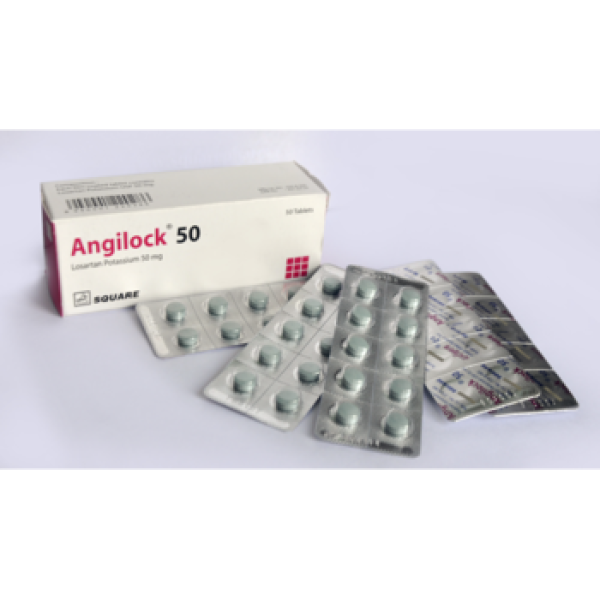
Angilock 50 mg Tablet
| Generic Name | Losartan Potassium |
| Strength | 50 mg |
| Dosage Form | Tablet |
| Manufacturer | Square Pharmaceuticals PLC |
| Therapeutic Class | Angiotensin-II Receptor Blocker (ARB) |
| Pack Size | 5 x 10's (Strip) |
Overview
Angilock 50 mg Tablet is a brand of Losartan Potassium manufactured by Square Pharmaceuticals PLC. Losartan Potassium is the first non-peptide orally active angiotensin II receptor blocker. It binds to the AT1 receptor found in many tissues (vascular smooth muscle, adrenal gland, kidneys and heart) and reduces several important biological actions, including vasoconstriction and the release of aldosterone responsible for hypertension.
Indications
Hypertension: Angilock tablet is indicated for the treatment of hypertension. It may be used alone or in combination with other antihypertensive agents (e.g. thiazide diuretics).
Renal Protection in Type-2 Diabetic Patients with Proteinuria: Angilock tablet is indicated to delay the progression of renal disease in hypertensive type-2 diabetics with proteinuria, defined as urinary albumin to creatinine ratio >300 mg/g.
Pharmacology
Losartan Potassium reduces vasoconstriction and the release of aldosterone by blocking the AT1 receptor, leading to a reduction in blood pressure without the dry cough commonly associated with ACE inhibitors.
Dosage and Administration
The usual starting and maintenance dose is 50 mg once daily for most patients. If the antihypertensive effect using 50 mg once daily is inadequate, 25 mg twice daily is recommended prior to increasing the dose. For patients with intravascular volume-depletion (e.g. those treated with high-dose diuretics), a starting dose of 25 mg once daily should be considered. Losartan Potassium can be administered once or twice daily. The total daily dose ranges from 25 mg to 100 mg.
| Population | Recommended Dose |
|---|---|
| Patients up to 75 years | No initial dosage adjustment necessary |
| Patients over 75 years | Lower starting dose of 25 mg once daily recommended |
| Intravascular volume depletion / high-dose diuretics | Starting dose of 25 mg once daily |
| Moderate-to-severe renal impairment / dialysis | Lower starting dose of 25 mg once daily |
| Hepatic impairment | Lower dose should be considered |
Interaction
Rifampicin and fluconazole reduce levels of the active metabolite of losartan. Concomitant use with hydrochlorothiazide may potentiate the antihypertensive effect. Concomitant use of potassium-sparing diuretics (e.g. spironolactone, triamterene, amiloride), potassium supplements, or potassium-containing salt substitutes may increase serum potassium. The antihypertensive effect may be attenuated by indomethacin and other NSAIDs. Concurrent use of an ACE inhibitor, angiotensin receptor antagonist, anti-inflammatory drug and a thiazide diuretic increases the risk of renal impairment.
Contraindications
Losartan Potassium is contraindicated in pregnant women and in patients hypersensitive to any component of this product. It should not be co-administered with aliskiren in patients with diabetes.
Side Effects
Side effects are generally mild and transient. The most common are dizziness, diarrhea, nasal congestion, cough, and upper respiratory infection. Other effects include fatigue, oedema, abdominal pain, chest pain, nausea, headache, and pharyngitis.
Pregnancy and Lactation
Pregnancy Category D. Risk to the fetus increases if administered during the second or third trimester. It is not known whether losartan is excreted in human milk; because of the potential for adverse effects on the nursing infant, a decision should be made whether to discontinue nursing or discontinue the drug.
Precautions and Warnings
Use during the second and third trimesters of pregnancy reduces fetal renal function and increases fetal/neonatal morbidity and mortality. Symptomatic hypotension may occur in volume-depleted patients (e.g. those on high-dose diuretics). Plasma concentration is significantly increased in cirrhotic patients. Changes in renal function, including renal failure, have been reported in renally impaired patients.
Use in Special Populations
Renal impairment: No initial dosage adjustment necessary in mild renal impairment (creatinine clearance 20-50 mL/min). A lower starting dose of 25 mg once daily is recommended for moderate-to-severe impairment (creatinine clearance <20 mL/min) or dialysis patients.
Hepatic impairment: A lower dose should be considered for patients with a history of hepatic impairment. May be administered with or without food, and with other antihypertensive agents.
Storage Conditions
Keep in a dry place away from light and heat. Keep out of the reach of children.
Frequently Asked Questions
What is Angilock 50 mg Tablet used for?
It is used to treat hypertension and to delay progression of kidney disease in hypertensive type-2 diabetic patients with proteinuria.
How should Angilock 50 mg Tablet be taken?
It is usually taken once daily as advised by a registered physician, with or without food, with the dose individualized based on blood pressure response.
Disclaimer: This information is for educational purposes only and is not a substitute for professional medical advice. Always consult a registered physician before starting, stopping, or changing any medication.