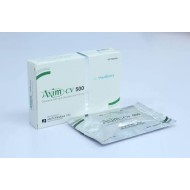

- Stock: Out Of Stock
- Brand: ACI Pharmaceuticals
- Product ID: Amoxicillin + Clavulanic Acid
🔒 100% Secure Payment | bKash | Nagad | SSLCommerz | COD
⭐ Become a FREE Member: 7% Extra Savings • Free Delivery • Refill Reminders • Priority Support
This Item is for pre order
Avloclav 600mg Vial – Co-amoxiclav IV (Amoxicillin 500mg + Clavulanate 100mg)
| Brand Name | Avloclav 600mg Vial |
|---|---|
| Generic Name | Amoxicillin 500mg + Clavulanic Acid 100mg (Co-amoxiclav 600mg) |
| Strength | Amoxicillin 500mg + Clavulanic Acid 100mg per vial |
| Dosage Form | Powder for Injection / IV Infusion |
| Manufacturer | ACI Limited, Bangladesh |
| Drug Class | Beta-Lactam Antibiotic + Beta-Lactamase Inhibitor (IV Co-amoxiclav) |
| Administration | Intravenous (IV bolus or short infusion) |
| Prescription Required | Yes (Hospital Rx / Specialist) |
| Storage | Dry powder: below 25°C. Reconstituted: use within 20 minutes (IV bolus) or 4 hours (infusion in compatible diluent). Protect from light. |
1. About Avloclav 600mg IV Vial
Avloclav 600mg Vial is the intravenous formulation of Co-amoxiclav (Amoxicillin 500mg + Clavulanic Acid 100mg), manufactured by ACI Limited, Bangladesh. Each vial contains 600mg total (500mg amoxicillin + 100mg clavulanate) for IV bolus injection or short infusion. The IV route achieves immediate 100% bioavailability — plasma concentrations are achieved within minutes, compared to 1–2 hours for oral formulations. This formulation is indicated in hospital settings for infections requiring IV therapy before step-down to oral co-amoxiclav.
2. Clinical Indications
- Moderate-to-severe community-acquired pneumonia (IV initiation before oral step-down)
- Hospital-acquired infections (lower RTI, UTI) — within spectrum of activity
- Severe intra-abdominal infections — biliary infections, peritonitis secondary prophylaxis (combination therapy)
- Severe diabetic foot infections (DFI Grade 3–4) requiring IV hospitalisation
- Severe skin and soft tissue infections — necrotising fasciitis combination, severe cellulitis unresponsive to oral
- Peri-operative prophylaxis — biliary, colorectal, gynaecological procedures (typically single dose)
- Sepsis empirical therapy (as part of combination regimen in appropriate settings)
3. Dosage
Standard adult dose: One vial (1.2g formulation is more commonly used for full dose) — the 600mg vial provides a lower dose option. Refer to the 1.2g vial product for full adult dosing. For paediatric IV dosing: 30mg/kg co-amoxiclav TDS to QDS (using combined weight). Reconstitute with 10ml Water for Injection. Administer by IV bolus over 3–4 minutes, or further dilute in 50–100ml 0.9% NaCl and infuse over 30 minutes. Use immediately after reconstitution — stability is limited. Compatibility: 0.9% NaCl, Hartmann's, sterile water. Do NOT mix with aminoglycosides (precipitation/inactivation).
4. Co-amoxiclav IV in Diabetic Foot Infection
For moderate-to-severe DFI (IDSA Grade 3, infected wound with systemic signs, or Grade 4 requiring hospitalisation), IV co-amoxiclav provides the broad-spectrum polymicrobial coverage required: gram-positive cocci (S. aureus, streptococci), gram-negative rods (E. coli, Klebsiella, Proteus), and anaerobes. IV co-amoxiclav is typically combined with metronidazole for deeper infections with suspected significant anaerobic component. Key clinical considerations: (1) Start IV antibiotics promptly in hospital — do not delay pending cultures; (2) Take deep tissue cultures (not swabs) for microbiological guidance before antibiotics if possible; (3) Plan step-down to oral co-amoxiclav 875+125mg BD as soon as patient is systemically stable, afebrile, and tolerating oral intake (typically 48–72 hours); (4) Total antibiotic duration: 14–21 days for moderate-severe DFI (combined IV + oral). Blood glucose optimisation (BG 6–10 mmol/L) is critical — hyperglycaemia impairs neutrophil function and may negate antibiotic efficacy.
5. Contraindications and Cautions
- Penicillin hypersensitivity (immediate or accelerated) — use carbapenem or appropriate alternative
- Previous cholestatic hepatitis with amoxicillin-clavulanate
- Infectious mononucleosis
- eGFR <10 mL/min: reduce dose and extend intervals
- Do not mix with aminoglycosides or metronidazole in same IV line
6. IV-to-Oral Step-Down (IVOST)
Intravenous-to-oral step-down (IVOST) is a core antimicrobial stewardship principle. Patients on IV co-amoxiclav can transition to oral co-amoxiclav 875+125mg BD once: (1) Temperature <37.5°C for >24 hours; (2) White cell count normalising; (3) CRP declining; (4) Tolerating oral intake; (5) No indication requiring IV-only (e.g., infective endocarditis, meningitis). Step-down reduces: IV line infection risk, hospital costs, nursing workload, and immobility risk. Oral co-amoxiclav achieves 70–90% bioavailability — clinical equivalence with IV has been demonstrated in multiple studies for most common infections.
Frequently Asked Questions (FAQ)
Q1: What infections is Avloclav 600mg IV vial used for?
Avloclav 600mg IV vial is used in hospitalised patients requiring IV antibiotics for: moderate-to-severe pneumonia, complicated urinary tract infections, intra-abdominal infections, severe diabetic foot infections, severe skin infections, and as peri-operative prophylaxis. It provides broad-spectrum coverage against gram-positive and gram-negative bacteria including beta-lactamase producers, making it suitable for polymicrobial infections. IV administration ensures immediate 100% bioavailability, making it preferable over oral routes in severely ill patients or those who cannot tolerate oral medication.
Q2: How is Avloclav IV vial reconstituted and administered?
Reconstitute by adding 10ml Water for Injection to the vial and shaking until dissolved (solution may be slightly yellow — this is normal). Administer either: IV bolus — inject over 3–4 minutes directly into a vein or IV cannula; or Short infusion — dilute further into 50–100ml 0.9% NaCl or Hartmann's solution and infuse over 30 minutes. Use immediately after reconstitution (within 20 minutes for bolus, 4 hours for infusion). Never mix with aminoglycosides (gentamicin, amikacin) — chemical inactivation occurs. Separate IV lines or flush with saline between drugs.
Q3: When can a patient switch from IV Avloclav to oral tablets?
IV-to-oral step-down should be considered when the patient meets all of: fever resolved (>24h afebrile), inflammatory markers (CRP/WBC) declining, tolerating oral food/water, no requirement for IV-specific therapy. This typically occurs at 48–72 hours for many infections. Oral co-amoxiclav 875+125mg BD provides equivalent efficacy to IV for most soft-tissue, respiratory, and urinary infections. Early step-down is recommended by antimicrobial stewardship guidelines to reduce IV line complications, costs, and length of stay.
Q4: Is Avloclav IV effective against MRSA?
No — Co-amoxiclav (including IV formulations) has no activity against MRSA (Methicillin-Resistant Staphylococcus aureus). MRSA resistance is intrinsic (altered penicillin-binding protein PBP2a) — clavulanate does not overcome this mechanism. If MRSA is suspected or confirmed (severe healthcare-associated infection, known MRSA colonisation, persistent skin/wound infection not responding to co-amoxiclav), an MRSA-active agent is required: vancomycin IV (hospital setting), linezolid (hospital/community), daptomycin, or teicoplanin. For community-acquired infections in Bangladesh where MRSA prevalence is moderate, empirical co-amoxiclav remains appropriate for most skin and soft tissue infections, with de-escalation if MRSA confirmed by culture.