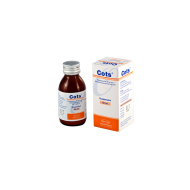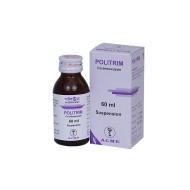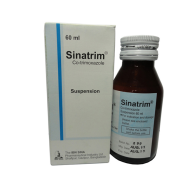

- Stock: Out Of Stock
- Brand: ACI Pharmaceuticals
- Product ID: Cotrimoxazole [Sulphamethoxazole + Trimethoprim]
Available Options
🔒 100% Secure Payment | bKash | Nagad | SSLCommerz | COD
⭐ Become a FREE Member: 7% Extra Savings • Free Delivery • Refill Reminders • Priority Support
This Item is for pre order
Product Overview
| Brand Name | Avlotrin 60 ml Suspension |
|---|---|
| Generic Name | Co-trimoxazole (Trimethoprim 40 mg + Sulfamethoxazole 200 mg per 5 ml) |
| Manufacturer | ACI Limited, Bangladesh |
| Strength | Trimethoprim 40 mg + Sulfamethoxazole 200 mg per 5 ml |
| Pack Size | 60 ml bottle |
| Dosage Form | Oral Suspension |
| Therapeutic Class | Antibacterial — Sulfonamide + Diaminopyrimidine Combination |
| MRP (Bangladesh) | ৳22.21 per 60 ml bottle |
| Prescription Status | Prescription required |
What Is Avlotrin Suspension?
Avlotrin 60 ml Suspension is a liquid oral formulation of co-trimoxazole manufactured by ACI Limited, Bangladesh, containing Trimethoprim 40 mg and Sulfamethoxazole 200 mg per 5 ml dose. The oral suspension form is designed primarily for paediatric patients — particularly infants and young children who cannot swallow tablets — as well as for adults who have difficulty with solid oral formulations. Co-trimoxazole is a synergistic fixed-dose combination antibiotic that simultaneously blocks two sequential enzymes in the bacterial folate biosynthesis pathway, achieving bactericidal activity against a broad range of Gram-positive and Gram-negative organisms. The 5 ml dose of this suspension provides the equivalent of one standard-strength co-trimoxazole tablet, allowing straightforward dose scaling based on body weight. The suspension form also allows for more precise weight-based dosing in children compared to tablet formulations.
Mechanism of Action
Co-trimoxazole exerts its antibacterial effect via dual sequential inhibition of bacterial folate biosynthesis. Sulfamethoxazole, the sulfonamide component present at 200 mg per 5 ml, competitively inhibits dihydropteroate synthase (DHPS), blocking the incorporation of para-aminobenzoic acid (PABA) into dihydrofolic acid — the first committed step in de novo folate synthesis. Trimethoprim (40 mg per 5 ml) then acts downstream, inhibiting dihydrofolate reductase (DHFR) and blocking the conversion of dihydrofolate to tetrahydrofolate — the active folate cofactor essential for purine and thymidine biosynthesis and hence DNA replication. The combination achieves sequential blockade of the same metabolic pathway, producing synergistic bactericidal activity that neither agent achieves alone at these concentrations. The fixed 5:1 ratio of sulfamethoxazole to trimethoprim in this suspension mirrors the optimal plasma ratio for synergy established in pharmacokinetic studies. Human cells are unaffected because they obtain folate from dietary sources and lack the DHPS enzyme targeted by sulfamethoxazole.
Indications: When Is Avlotrin Suspension Prescribed?
Avlotrin Suspension is indicated for children and adults requiring oral co-trimoxazole therapy where a liquid formulation is preferred. Primary indications include: urinary tract infections (UTIs) in paediatric patients, where it provides a measurable, weight-based dose more accurately than tablets; acute otitis media (middle ear infections) in children caused by susceptible Haemophilus influenzae or Streptococcus pneumoniae; community-acquired respiratory tract infections in children without atypical pathogen risk; and acute infectious diarrhoea caused by susceptible Shigella species (bacillary dysentery). Critically, co-trimoxazole suspension is the preferred vehicle for Pneumocystis jirovecii pneumonia (PCP) prophylaxis in HIV-exposed infants from 4–6 weeks of age — a WHO-recommended intervention in resource-limited settings including Bangladesh. It may also be used for traveller's diarrhoea and cyclosporiasis. For adults with swallowing difficulties or gastric tubes, the suspension form enables co-trimoxazole administration where tablets are impractical.
Dosage, Preparation, and Administration
Dosing of co-trimoxazole suspension is weight-based for children, calculated at 6–12 mg/kg/day of the trimethoprim component given in two equally divided doses, typically every 12 hours. Using the suspension strength of 40 mg trimethoprim per 5 ml: a child weighing 10 kg would receive 5 ml (1 teaspoonful) twice daily for most standard infections. For infants from 6 weeks to 5 months: 2.5 ml twice daily. For children 6 months to 5 years: 2.5–5 ml twice daily depending on weight. For children 6–12 years: 5–10 ml twice daily. For PCP prophylaxis in HIV-exposed infants, the dose is approximately 5 mg/kg/day of trimethoprim (2.5–5 ml once daily or three times weekly) starting from 4–6 weeks. Before each use, the bottle should be shaken well to ensure uniform suspension. The measured dose should be taken with or after food to reduce gastrointestinal intolerance, followed by adequate fluid. Store the reconstituted or opened bottle appropriately. Adult dosing: 10 ml (equivalent to one DS tablet) twice daily for most infections. Doses should not exceed 21 days without reassessment.
Drug Interactions and Special Populations
Co-trimoxazole suspension shares the same drug interaction profile as the tablet formulation. Trimethoprim inhibits renal tubular secretion of creatinine via OCT2 transporters, causing a predictable 10–20% rise in serum creatinine without true GFR reduction — important context when monitoring renal function. In patients on warfarin, co-trimoxazole strongly inhibits CYP2C9-mediated warfarin metabolism, significantly increasing INR and bleeding risk; close monitoring is mandatory. Combined use with ACE inhibitors, ARBs, or potassium-sparing diuretics — common in adult patients with diabetes, hypertension, or heart failure — can precipitate dangerous hyperkalaemia through trimethoprim's amiloride-like blockade of ENaC sodium channels in the distal nephron. In diabetic patients on sulfonylureas, co-trimoxazole may enhance hypoglycaemia through protein-binding displacement and CYP2C9 inhibition. For paediatric patients receiving concurrent folate-depleting medications (e.g., methotrexate, phenytoin), co-trimoxazole should be used with caution given the additive risk of folate-deficiency haematotoxicity.
Contraindications and Precautions
Avlotrin Suspension is contraindicated in neonates under 4–6 weeks of age due to the risk of kernicterus from sulphonamide-mediated displacement of bilirubin from plasma albumin. It is contraindicated in patients with known hypersensitivity to sulfonamides, trimethoprim, or any excipient of the suspension formulation. Children with G6PD deficiency are at risk of haemolytic anaemia. The suspension should not be used in patients with severe renal impairment (CrCl below 15 mL/min) without specialist guidance, severe hepatic failure, or megaloblastic anaemia due to folate deficiency. During pregnancy — especially the first trimester (folate antagonism risk) and at term (neonatal bilirubin risk) — co-trimoxazole should be avoided unless strictly indicated. Prolonged use in malnourished children with poor dietary folate intake requires monitoring for haematological adverse effects. Caregivers should be instructed on proper measurement technique using the provided measuring device and should not substitute household spoons.
Adverse Effects and Safety Monitoring
Gastrointestinal adverse effects — nausea, vomiting, anorexia, and diarrhoea — are the most frequent complaints and are reduced by administration with food. Skin reactions are the most clinically significant concern: while mild urticarial rash is common, sulfonamide-containing drugs can rarely cause severe cutaneous adverse reactions including Stevens-Johnson syndrome (SJS) and toxic epidermal necrolysis (TEN), which require immediate discontinuation and emergency management. Parents and caregivers must be explicitly counselled to stop the suspension immediately and seek medical attention if any skin rash, blistering, peeling, or mucosal lesions develop. Haematological effects including thrombocytopenia, leucopenia, and megaloblastic anaemia may occur with prolonged courses, particularly in children with nutritional folate deficiency; blood count monitoring is advisable for treatment courses exceeding two weeks. Hyperkalaemia (in patients with renal compromise or concurrent potassium-sparing medications) and pseudohypercreatininaemia (without true GFR reduction) are additional effects requiring clinical awareness.
Antibiotic Stewardship: Resistance and Responsible Use
Co-trimoxazole resistance among common pathogens in Bangladesh has increased substantially. Uropathogenic Escherichia coli resistance rates exceeding 60% have been documented in community-acquired UTIs in South Asia, driven by plasmid-mediated sul and dfrA resistance genes. For shigellosis, local susceptibility testing is essential before empirical use. However, co-trimoxazole retains first-line status for Pneumocystis jirovecii PCP (where in vitro testing is not feasible) and for several specific indications where susceptibility is predictable. Caregivers should be strongly instructed to complete the full prescribed course of the suspension even if the child appears well after a few days — premature discontinuation allows surviving bacteria to cause relapse and promotes resistance acquisition. The suspension should never be given to a child without a valid prescription and should not be shared between siblings or household members. Any remaining suspension after the treatment course should be discarded appropriately.
Storage Instructions
Avlotrin 60 ml Suspension should be stored at room temperature below 30°C, away from direct sunlight, heat sources, and moisture. Keep out of reach of children. Do not refrigerate unless specifically instructed on the pack labelling. Shake the bottle well before each use to ensure uniform drug distribution throughout the suspension. Once opened, use within the period stated on the packaging. Do not use the product after the printed expiry date. Dispense with a calibrated oral dosing syringe or measuring cup to ensure accurate dose measurement. As a prescription-only antibiotic, Avlotrin Suspension requires a valid prescription from a registered physician before dispensing.
Frequently Asked Questions (FAQ)
Q1: What is Avlotrin Suspension used for?
A: Avlotrin 60 ml Suspension is a liquid antibiotic used primarily for children with urinary tract infections, ear infections (otitis media), respiratory infections, bacillary dysentery, and for Pneumocystis jirovecii PCP prophylaxis in HIV-exposed infants — all as prescribed by a physician.
Q2: How do I measure the correct dose for my child?
A: Always use the measuring syringe or cup provided with the bottle. Shake the bottle well before each use. The dose depends on your child's weight — your doctor will prescribe the exact volume. Never use a household teaspoon as it is not calibrated for accurate antibiotic dosing.
Q3: What should I do if my child gets a rash while taking Avlotrin Suspension?
A: Stop the suspension immediately and contact your doctor or bring your child to a health facility. Sulfonamide drugs can rarely cause serious skin reactions including Stevens-Johnson syndrome. Any new rash, blistering, mouth sores, or eye redness during treatment should be treated as a medical emergency until evaluated by a healthcare professional.
Q4: Can I give this suspension to my newborn baby?
A: No. Co-trimoxazole suspension is contraindicated in neonates under 4–6 weeks of age due to the risk of kernicterus. For HIV-exposed infants, PCP prophylaxis with co-trimoxazole begins at 4–6 weeks of age under physician supervision as per WHO and national guidelines.
Medical Disclaimer: This information is provided for educational purposes only and does not constitute medical advice. Paediatric antibiotic therapy requires assessment and prescription by a qualified healthcare professional. Always consult a licensed physician or pharmacist before administering any medication to a child or adult. DiabetesStore.com.bd does not assume liability for clinical decisions made based on this content.