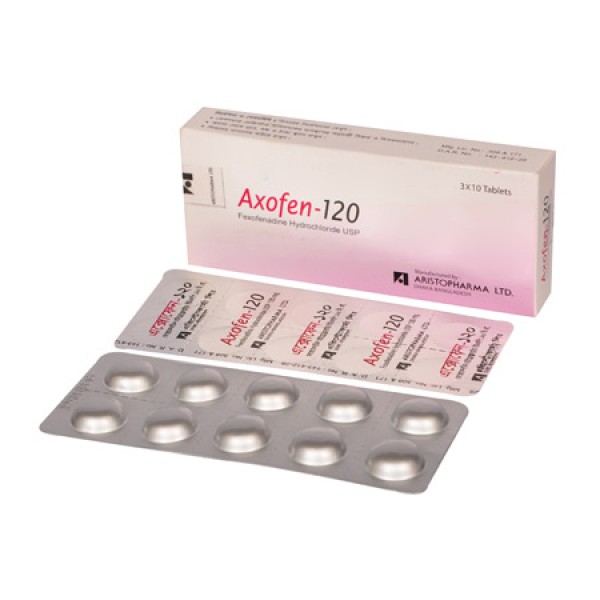
- Stock: In Stock
- Brand: Aristopharma
- Product ID: Fexofenadine Hydrochloride
🔒 100% Secure Payment | bKash | Nagad | SSLCommerz | COD
⭐ Become a FREE Member: 7% Extra Savings • Free Delivery • Refill Reminders • Priority Support
This Item is for pre order
Axofen 120 mg Tablet (Fexofenadine HCl) — Clinical Overview
| Brand Name | Axofen 120 mg Tablet |
|---|---|
| Generic Name | Fexofenadine Hydrochloride |
| Manufacturer | ACI Limited, Bangladesh |
| Strength | 120 mg per tablet |
| Dosage Form | Film-coated Tablet |
| Drug Class | Second-Generation Non-Sedating Antihistamine |
| Prescription Status | Prescription Only Medicine (POM) |
About Axofen 120 mg Tablet
Axofen 120 mg Tablet is a once-daily non-sedating antihistamine by ACI Limited, Bangladesh, delivering fexofenadine hydrochloride 120 mg per film-coated tablet. The Axofen brand covers a therapeutic range — 30 mg/5 ml paediatric suspension, 120 mg once-daily tablet for rhinitis, and 180 mg once-daily tablet for urticaria — making it one of ACI's comprehensive antihistamine offerings. The 120 mg tablet targets the management of seasonal and perennial allergic rhinitis in adults and adolescents aged 12 years and above.
As a selective peripheral H1 antagonist, fexofenadine does not cross the blood-brain barrier in clinically relevant amounts, making Axofen 120 mg free from the sedation, impaired concentration, and anticholinergic effects associated with older antihistamines. This non-sedating profile is especially important in Bangladesh's working adult population — including patients with diabetes who need to remain alert and cognitively intact while managing their allergy symptoms.
Mechanism of Action
Fexofenadine, the active metabolite of terfenadine, competitively and selectively blocks peripheral histamine H1 receptors. Unlike terfenadine, fexofenadine carries none of the cardiac risk — it has no inhibitory effect on cardiac hERG (IKr) potassium channels and does not prolong the QTc interval. Key pharmacological characteristics of Axofen 120 mg:
- CNS exclusion: Actively exported from the central nervous system by P-glycoprotein efflux transporters; therefore negligible central H1 blockade and no sedation
- Cardiac safety: No QTc prolongation — safe in patients with diabetes who often have autonomic neuropathy and pre-existing QT interval concerns
- Enzyme independence: No hepatic CYP450 metabolism of significance; excreted predominantly unchanged via biliary and renal pathways
- Pharmacokinetics: Tmax ~1–3 hours; plasma half-life ~14 hours; 24-hour efficacy at 120 mg once daily
Indications and Clinical Use
- Seasonal allergic rhinitis (SAR): Adults and adolescents ≥12 years — relief of sneezing, rhinorrhoea, nasal itching, and ocular symptoms during pollen or seasonal allergen exposure
- Perennial allergic rhinitis (PAR): Year-round management of allergy symptoms triggered by house dust mites, pet dander, mould, or occupational allergens
- Adjunctive use in urticaria: May provide partial symptom relief; the 180 mg dose is preferred for chronic idiopathic urticaria
Dosage and Administration
- Standard adult dose: 120 mg orally once daily, with or without food
- Renal impairment (CrCl <80 ml/min): Reduce dose to 60 mg once daily — fexofenadine is ~80% renally cleared
- Hepatic impairment: No dose adjustment required; negligible hepatic extraction
- Paediatric patients <12 years: Use Axofen Suspension 30 mg/5 ml (paediatric formulation) — tablets are not recommended for young children
Administration tip: Take Axofen 120 mg with water only — not fruit juice. Orange juice, apple juice, and grapefruit juice inhibit intestinal OATP1A2/1B3 transporters and reduce fexofenadine bioavailability by up to 36%. Aluminium- or magnesium-containing antacids should be taken at least 2 hours apart from Axofen 120 mg.
Safety in Diabetic Patients
- No glycaemic interference: Fexofenadine does not affect insulin secretion, insulin sensitivity, hepatic glucose output, or glucagon-like peptide-1 (GLP-1) activity. Blood glucose levels are unaffected by Axofen 120 mg.
- Drug interaction safety: The absence of meaningful CYP450 metabolism means Axofen 120 mg does not alter plasma concentrations of sulphonylureas (glibenclamide, glipizide — CYP2C9), pioglitazone (CYP2C8/3A4), repaglinide (CYP2C8/3A4), or any SGLT-2 or DPP-4 inhibitor. It is one of the safest antihistamine choices in polypharmacy settings.
- Hypoglycaemia symptom clarity: Sedating antihistamines can mask the recognition of hypoglycaemia (drowsiness, confusion, poor concentration). Axofen 120 mg preserves full alertness, ensuring patients can recognise and respond to hypoglycaemic symptoms promptly.
- Renal function monitoring: Diabetic nephropathy causes progressive renal impairment — monitor eGFR and reduce dose to 60 mg QD if eGFR falls significantly below normal.
Side Effects
- Common (≥1%): Headache, dizziness, nausea — at rates similar to placebo in double-blind trials
- Uncommon (0.1–1%): Fatigue, insomnia, dry mouth (far less frequent than first-generation agents)
- Rare (<0.1%): Hypersensitivity reactions, tachycardia, chest tightness
Storage
Store below 30°C. Keep in a cool, dry place away from direct sunlight and moisture. Keep all medicines out of reach of children.
Frequently Asked Questions (FAQ)
What is Axofen 120 mg used for?
Axofen 120 mg Tablet is used for the relief of seasonal allergic rhinitis (hay fever) and perennial allergic rhinitis in adults and adolescents aged 12 years and above. It relieves nasal congestion, sneezing, runny nose, itching, and watery eyes. It is taken once daily and provides full 24-hour allergy symptom control without causing sedation.
Is Axofen 120 mg suitable for diabetic patients?
Yes — Axofen 120 mg is an excellent antihistamine choice for patients with diabetes. It does not interfere with blood glucose levels, does not interact with common antidiabetic medications (metformin, sulphonylureas, insulin, DPP-4 inhibitors, SGLT-2 inhibitors), and preserves full alertness — which is essential for recognising hypoglycaemic symptoms. If diabetic nephropathy has significantly impaired renal function, the dose may need to be reduced to 60 mg once daily.
How is Axofen 120 mg different from Axofen 180 mg?
Axofen 120 mg is the standard dose for managing allergic rhinitis (hay fever) in adults and adolescents. Axofen 180 mg is the preferred dose for chronic idiopathic urticaria (hives) and for patients with more severe or persistent rhinitis requiring stronger histamine blockade. Both are taken once daily. Your prescribing doctor will select the dose appropriate to your diagnosis and symptom pattern.
Why should Axofen 120 mg not be taken with fruit juice?
Orange, apple, and grapefruit juices contain compounds that inhibit intestinal drug transporters (OATP1A2/1B3) responsible for absorbing fexofenadine. Taking Axofen 120 mg with these juices can reduce drug absorption by up to 36%, significantly reducing its effectiveness. Always take Axofen with plain water to ensure full therapeutic efficacy. This interaction does not affect safety — it only reduces the drug's absorption.