🔒 100% Secure Payment | bKash | Nagad | SSLCommerz | COD
⭐ Become a FREE Member: 7% Extra Savings • Free Delivery • Refill Reminders • Priority Support
This Item is for pre order
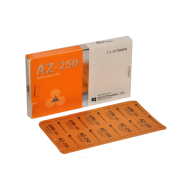
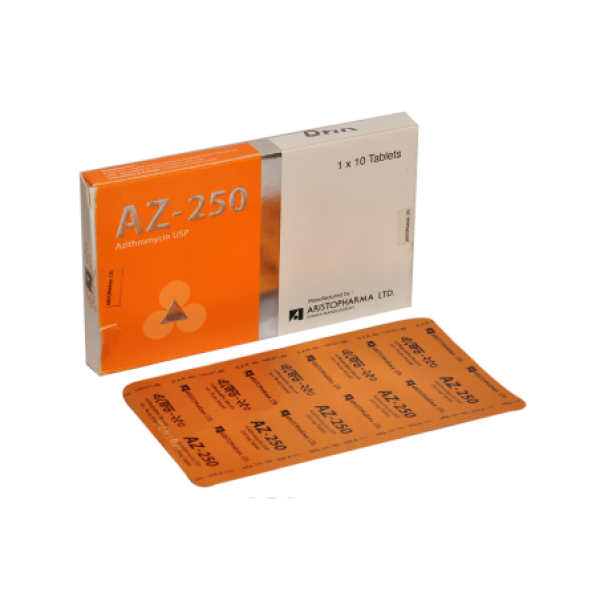
AZ 250mg Tablet (Azithromycin) — Clinical Overview
| Attribute | Details |
|---|---|
| Brand Name | AZ |
| Generic Name | Azithromycin |
| Strength | 250 mg |
| Dosage Form | Film-coated Tablet |
| Drug Class | Macrolide Antibiotic (Azalide subclass) |
| Manufacturer | ACI Limited, Bangladesh |
| Route of Administration | Oral |
About AZ 250mg Tablet
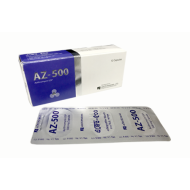
AZ 250mg is azithromycin film-coated tablet manufactured by ACI Limited, Bangladesh. Azithromycin is an azalide antibiotic — a subclass of macrolides developed to improve on erythromycin's properties. It offers broader gram-negative coverage, superior acid stability enabling better oral bioavailability (37%), and a markedly extended half-life of approximately 68 hours that permits once-daily dosing and short treatment courses of 3–5 days.
The drug inhibits bacterial protein synthesis by binding to the 50S ribosomal subunit, blocking translocation of peptidyl-tRNA. It concentrates extensively in tissues and within phagocytes, particularly macrophages and polymorphonuclear cells, at concentrations 10–100 times higher than plasma. This intracellular accumulation is clinically significant: phagocytes actively transport azithromycin to sites of infection, creating high local drug concentrations at the site of bacterial invasion. This property makes azithromycin particularly effective against intracellular pathogens such as Chlamydia trachomatis, Mycoplasma pneumoniae, and Legionella pneumophila.
Spectrum of Activity and Indications
AZ 250mg covers a broad spectrum relevant to community-acquired infections. Gram-positive organisms: Streptococcus pneumoniae (some macrolide resistance exists), Streptococcus pyogenes (Group A strep), Staphylococcus aureus (not MRSA). Gram-negative organisms: Haemophilus influenzae, Moraxella catarrhalis, Neisseria gonorrhoeae, Neisseria meningitidis. Atypical organisms: Mycoplasma pneumoniae, Chlamydia trachomatis, Chlamydophila pneumoniae, Legionella pneumophila, Ureaplasma urealyticum. Other: Helicobacter pylori (combination therapy), Salmonella typhi (fluoroquinolone-resistant strains), Campylobacter jejuni, Borrelia burgdorferi (Lyme disease — not relevant to Bangladesh), Mycobacterium avium complex (high-dose regimens in HIV).
Primary indications: community-acquired pneumonia (mild); pharyngitis and tonsillitis in penicillin-allergic patients; acute sinusitis; acute exacerbations of chronic bronchitis; uncomplicated skin and soft tissue infections; Chlamydia urogenital infections (1g single dose); traveller's diarrhoea; uncomplicated typhoid fever.
Standard Dosing Regimens
Adults — 5-day course for respiratory tract infections: 500mg on day 1 (two 250mg tablets), then 250mg once daily on days 2–5. Adults — 3-day course: 500mg once daily for 3 days (two 250mg tablets per day). Chlamydia trachomatis urogenital infection: 1g single oral dose (four 250mg tablets taken together). Uncomplicated typhoid fever: 1g on day 1, then 500mg once daily for 6 more days. Traveller's diarrhoea: 500–1000mg as a single dose or 500mg daily for 3 days. Take AZ 250mg tablets with or without food; food may help reduce gastrointestinal side effects. Swallow tablets whole — do not crush or chew.
Typhoid Management in Bangladesh with Azithromycin
Fluoroquinolone-resistant Salmonella typhi is increasingly prevalent in Bangladesh, South Asia, and Pakistan. Azithromycin 500mg once daily for 7 days achieves clinical cure rates exceeding 90% for uncomplicated enteric fever, with low relapse rates. AZ 250mg tablets allow flexible dosing: a 7-day course = day 1 (four tablets = 1g loading), then days 2–7 (two tablets = 500mg daily). Azithromycin achieves high intracellular concentrations within macrophages where Salmonella resides, contributing to its effectiveness. However, rising azithromycin resistance in S. typhi has also been reported from Bangladesh (azi-resistant XDR typhoid strains), emphasising the importance of culture and sensitivity testing before initiating therapy when possible.
Safety Profile and Adverse Effects
Gastrointestinal effects (most common): nausea (7–18%), diarrhoea (5%), abdominal pain (4%), vomiting — generally mild and resolve after completing the course. Taking tablets with food reduces GI side effects. Cardiac: QT interval prolongation — clinically significant risk in patients with pre-existing heart disease, electrolyte abnormalities, or those taking other QT-prolonging medications. Avoid in long QT syndrome. Hepatotoxicity: rare; cholestatic jaundice has been reported, particularly in elderly patients and with prolonged use. Hearing: temporary sensorineural hearing loss has been reported, more common with high-dose prolonged regimens. Hypersensitivity: rare anaphylaxis; cross-reactivity with other macrolides possible in allergic individuals. Infantile hypertrophic pyloric stenosis (IHPS): azithromycin use in neonates and in breastfeeding mothers has been associated with increased IHPS risk — exercise caution and weigh risks/benefits.
Drug Interactions
Key interactions: QT-prolonging drugs (antiarrhythmics — amiodarone, sotalol; antipsychotics — haloperidol; antimalarials — chloroquine; fluoroquinolones — moxifloxacin) — additive QT prolongation risk, potentially fatal. Warfarin — increased anticoagulant effect; monitor INR. Digoxin — azithromycin increases digoxin levels by altering gut flora that metabolises digoxin; monitor for digoxin toxicity. Antacids (Al/Mg) — reduce peak absorption by ~24%; separate doses by at least 1 hour. Cyclosporin — azithromycin inhibits CYP3A4 weakly; elevated cyclosporin levels possible. Ergot alkaloids — vasospasm risk; avoid combination. Statins — mild CYP3A4 inhibition may marginally increase statin exposure; clinical significance low with short courses.
Frequently Asked Questions (FAQ)
Q1: How does AZ 250mg differ from AZ 500mg tablets?
Both are azithromycin manufactured by ACI Limited. The 250mg tablet is used for the maintenance phase of 5-day courses (days 2–5), and for flexible dosing such as the 1g chlamydia treatment (four tablets). The 500mg tablet is more convenient for 3-day once-daily regimens (500mg × 3 days) and as a loading dose. Both forms achieve the same clinical outcomes when used in appropriate regimens.
Q2: Is AZ 250mg effective against both typical and atypical pneumonia?
Yes. Azithromycin covers both typical bacteria (Streptococcus pneumoniae, Haemophilus influenzae) and atypical organisms (Mycoplasma pneumoniae, Chlamydophila pneumoniae, Legionella pneumophila) — all important causes of community-acquired pneumonia. This dual coverage makes it particularly useful as monotherapy for mild CAP, and in combination with beta-lactams for moderate-to-severe CAP where Legionella must be covered.
Q3: Can AZ 250mg be safely used in patients with kidney disease?
Yes. Azithromycin is primarily eliminated through bile and faeces (50% biliary excretion) with only minor renal clearance. No dose adjustment is required for any degree of renal impairment, including severe CKD and dialysis patients. This makes AZ 250mg a convenient choice in the large diabetic patient population in Bangladesh who commonly have varying degrees of chronic kidney disease.
Q4: Why should AZ 250mg not be used for every cough or cold?
The vast majority of upper respiratory tract infections (colds, sore throats, coughs) are caused by viruses, against which azithromycin has absolutely no effect. Using azithromycin for viral infections wastes the medicine, causes unnecessary side effects, and — critically — contributes to the development of antibiotic-resistant bacteria. Bangladesh already has high macrolide resistance rates. Reserve AZ 250mg for confirmed or strongly suspected bacterial infections as prescribed by a physician.
Medical Disclaimer: This content is for healthcare professional reference and patient education only. AZ 250mg Tablet is a prescription-only antibiotic. Indiscriminate antibiotic use drives antimicrobial resistance — a major global health threat. Always consult a licensed physician before taking antibiotics.