- Stock: Out Of Stock
- Brand: Acme Laboratories Limited
- Product ID: Azelaic Acid
🔒 100% Secure Payment | bKash | Nagad | SSLCommerz | COD
⭐ Become a FREE Member: 7% Extra Savings • Free Delivery • Refill Reminders • Priority Support
This Item is for pre order
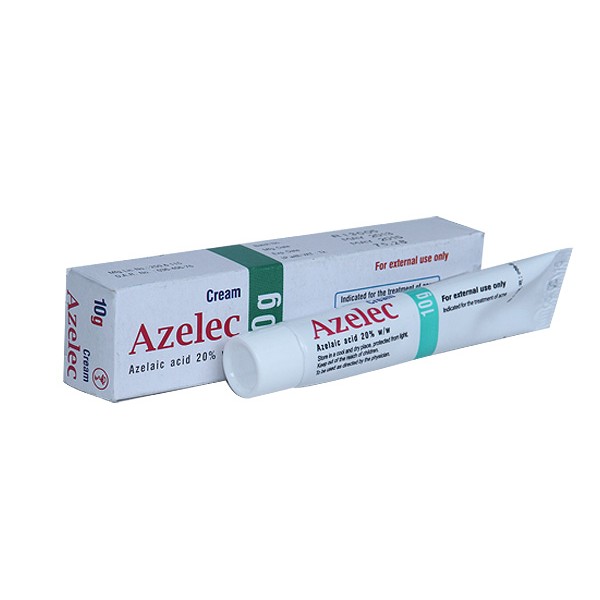
Azelec 20% Cream — Azelaic Acid for Acne & Rosacea
| Attribute | Details |
|---|---|
| Brand Name | Azelec |
| Generic Name | Azelaic Acid |
| Strength | 20% w/w |
| Dosage Form | Cream |
| Pack Size | 10 g |
| Drug Class | Dicarboxylic Acid / Comedolytic Anti-acne Agent |
| Manufacturer | Acme Laboratories Ltd., Bangladesh |
| Route of Administration | Topical (cutaneous) |
About Azelec 20% Cream
Azelec 20% Cream is a topical dermatological preparation containing azelaic acid 20% w/w, manufactured by Acme Laboratories Ltd., Bangladesh. Azelaic acid is a naturally occurring saturated dicarboxylic acid (nonanedioic acid) found in wheat, rye, and barley, with well-established clinical utility in the treatment of acne vulgaris and rosacea. Unlike antibiotic topical agents, azelaic acid does not promote antibiotic resistance — an important advantage given the rising concern over antibiotic-resistant Cutibacterium acnes (formerly Propionibacterium acnes) globally and in Bangladesh. Azelec 20% Cream is indicated for mild-to-moderate acne vulgaris, including comedonal, inflammatory, and mixed acne, as well as for the post-inflammatory hyperpigmentation (PIH) that frequently follows acne lesions — particularly relevant in darker skin phototypes (Fitzpatrick III–VI) common in the Bangladeshi population.
Mechanism of Action
Azelaic acid exerts multiple complementary mechanisms relevant to acne and rosacea pathophysiology. First, it has direct antimicrobial activity against Cutibacterium acnes and Staphylococcus epidermidis through inhibition of microbial protein synthesis — reducing the bacterial burden within follicular units. Second, it has significant comedolytic and keratolytic effects: it normalises the abnormal keratinisation (hyperkeratosis) within the pilosebaceous follicle that leads to microcomedone formation — addressing the root cause of comedonal acne rather than merely treating surface lesions. Third, azelaic acid inhibits tyrosinase, the rate-limiting enzyme in melanin biosynthesis, by competitive inhibition — explaining its efficacy in reducing post-inflammatory hyperpigmentation (PIH) and melasma. Fourth, it has anti-inflammatory properties: it reduces reactive oxygen species (ROS) generated by neutrophils and inhibits pro-inflammatory cytokine production — relevant to the inflammatory papule/pustule component of acne and the erythema of rosacea. This multi-modal mechanism makes azelaic acid uniquely positioned among topical anti-acne agents.
Clinical Indications and Evidence
Acne vulgaris (mild-to-moderate): Multiple randomised controlled trials demonstrate that azelaic acid 20% cream reduces inflammatory lesion counts by 50–70% and comedone counts by 40–60% over 12–16 weeks. It is comparable to benzoyl peroxide 5% and superior to erythromycin 2% gel in long-term (6-month) studies, with the additional benefit of being non-bleaching (unlike benzoyl peroxide) and non-photosensitising. Rosacea: Azelaic acid 15% gel is the most studied topical for inflammatory rosacea; the 20% cream is used off-label for rosacea in Bangladesh with good clinical results for papulopustular rosacea and reduction of erythema. Post-inflammatory hyperpigmentation (PIH): Systematic reviews confirm azelaic acid significantly reduces PIH compared to placebo, with a safety profile suitable for long-term use. Melasma: Comparative studies show azelaic acid 20% is similar in efficacy to hydroquinone 4% for melasma but with a better safety profile and no risk of ochronosis (paradoxical hyperpigmentation seen with prolonged hydroquinone use) — making it the preferred agent for long-term melasma management.
Dosage and Administration
Standard adult dosage: Apply a thin layer of Azelec 20% Cream to the affected area(s) twice daily (morning and evening), after washing and gently drying the skin. Massage gently until absorbed. Use on the face, neck, chest, or back as directed by the physician. For acne, treat the entire acne-prone zone rather than individual spots only — this reduces new lesion formation. Minimum treatment duration: 4 weeks before assessing response; optimal response typically requires 12–16 weeks of regular twice-daily use. Patients should be counselled that initial response is slow — adherence during the first 4–8 weeks is critical and must not be abandoned prematurely due to perceived lack of effect. Unlike retinoids, azelaic acid can be applied immediately after washing without a drying/waiting period.
Safety Profile and Special Populations
Common side effects (10–25% of users): Local irritation, burning, stinging, tingling, or pruritus at the application site — usually mild and transient, worst in the first 2–4 weeks, diminishing with continued use. Can be reduced by applying a smaller amount initially (once daily for 2 weeks, then twice daily). Uncommon: skin dryness, erythema, peeling. Rare: contact dermatitis (true allergy is very rare). Unlike topical retinoids, azelaic acid does not cause photosensitivity — sunscreen is not mandatory but remains advisable for PIH treatment. Special populations — Pregnancy: Pregnancy Category B; azelaic acid has low systemic absorption (<4% of applied dose) and no teratogenicity in animal studies; generally considered safe for use during pregnancy with physician guidance — important advantage over retinoids (Category X, contraindicated in pregnancy) and oral tetracyclines. Breastfeeding: low systemic absorption makes it unlikely to affect the nursing infant; use is generally considered acceptable. Paediatric use (<12 years): not routinely studied; use under dermatologist supervision if required. Darker skin types: excellent safety profile; does not cause hypopigmentation outside areas of active PIH — unlike hydroquinone, which can cause generalised hypopigmentation with prolonged use.
Diabetic Dermatology Relevance
Patients with diabetes mellitus have a higher susceptibility to skin infections, including bacterial superinfection of acne lesions. Hyperglycaemia impairs neutrophil function and skin barrier integrity, making acne lesions more prone to secondary infection and slower to resolve. Azelec 20% Cream provides antibacterial, anti-inflammatory, and keratolytic benefits that are particularly valuable in the diabetic patient. Additionally, the anti-inflammatory mechanism of azelaic acid (ROS reduction, cytokine inhibition) may be beneficial in the chronic low-grade inflammatory state associated with type 2 diabetes. Importantly, azelaic acid has no systemic metabolic effects and does not interact with oral hypoglycaemic agents or insulin — making it safe for use in diabetic patients without glycaemic concerns.
Frequently Asked Questions (FAQ)
Q1: Can Azelec 20% Cream be used on dark spots and uneven skin tone?
Yes — azelaic acid's tyrosinase inhibition makes it effective for post-inflammatory hyperpigmentation (dark spots left after acne heals), melasma (pregnancy mask), and general uneven skin tone in darker skin phototypes. Unlike hydroquinone, it is safe for long-term continuous use without risk of ochronosis or rebound hyperpigmentation. Clinical results for PIH and melasma typically take 2–3 months of regular twice-daily application. For optimal results, pair with broad-spectrum sunscreen (SPF 30+) to prevent UV-driven melanin stimulation counteracting the treatment.
Q2: Is Azelec 20% Cream safe during pregnancy?
Azelaic acid is Pregnancy Category B and is generally considered among the safest topical anti-acne and PIH treatments available during pregnancy. Systemic absorption is very low (<4% of applied dose), and no teratogenicity has been demonstrated in animal studies. By contrast, topical retinoids (tretinoin, adapalene) are contraindicated in pregnancy, and oral doxycycline is contraindicated after the first trimester. Women who develop pregnancy-related melasma or acne and need topical treatment can discuss Azelec with their obstetrician — it is typically considered an acceptable option when treatment is clinically needed.
Q3: How long before Azelec 20% Cream shows results for acne?
Most patients notice a reduction in new inflammatory lesions (red pimples) within 4–6 weeks of consistent twice-daily use. Significant improvement in overall lesion counts typically takes 8–12 weeks; maximum improvement is usually seen at 16 weeks. Post-inflammatory hyperpigmentation (dark marks from old acne) takes 12–16 weeks or longer to lighten. Initial weeks may include mild burning or stinging — this usually subsides by week 4. Stopping treatment early because results are not yet visible is the most common reason for treatment failure. Consistent application throughout a 4-month trial is recommended before assessing whether to continue or change therapy.
Q4: Can Azelec 20% Cream be used with other acne treatments?
Yes — azelaic acid is commonly combined with other acne treatments. It is often used in the morning while a topical retinoid (tretinoin, adapalene) is used at night to avoid interaction (retinoids can increase irritation if mixed with other actives). It can be used alongside topical clindamycin or benzoyl peroxide for moderate acne, though layering multiple actives requires physician guidance to avoid cumulative irritation. It is compatible with non-comedogenic moisturisers and broad-spectrum sunscreens. For patients on oral antibiotics (doxycycline, azithromycin) for acne, azelaic acid topical provides a complementary local mechanism and can help transition off antibiotics once initial control is achieved.
Medical Disclaimer: Azelec 20% Cream should be used under dermatologist or physician supervision. Self-treating severe cystic acne, rosacea, or melasma without professional assessment may delay appropriate management. Report any severe skin reactions, blistering, or spreading rash to your physician immediately.