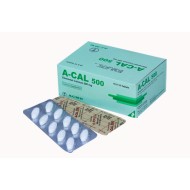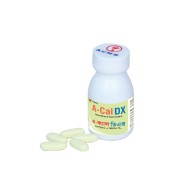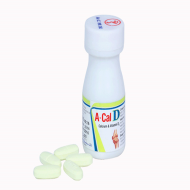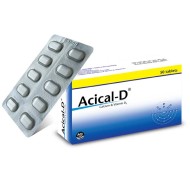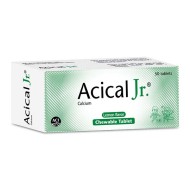
- Stock: Out Of Stock
- Brand: Incepta Pharmaceuticals
- Product ID: Calcium Carbonate
🔒 100% Secure Payment | bKash | Nagad | SSLCommerz | COD
⭐ Become a FREE Member: 7% Extra Savings • Free Delivery • Refill Reminders • Priority Support
This Item is for pre order
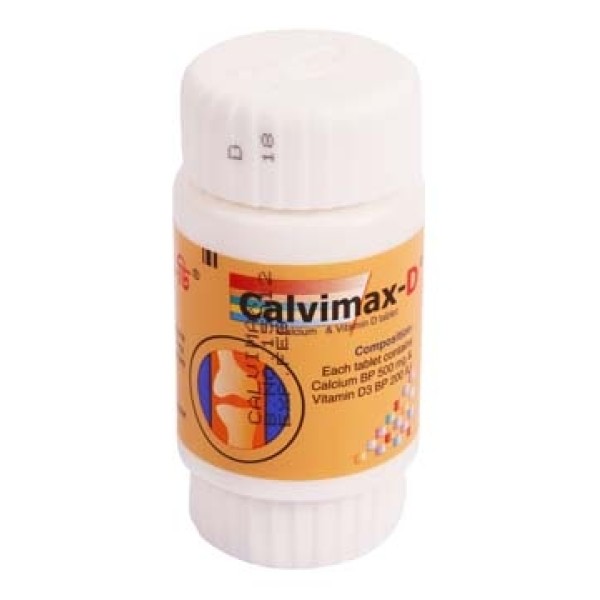
Calvimax D 30s Pack — Calcium Carbonate Tablet | Beximco Pharmaceuticals
| Generic Name | Calcium Carbonate |
| Pack Size | 30 tablets |
| Drug Class | Calcium Supplement |
| Elemental Calcium | ~40% elemental calcium per weight of Calcium Carbonate |
| Manufacturer | Beximco Pharmaceuticals Ltd. |
| Prescription Status | OTC (Over-the-Counter) |
Overview
Calvimax D provides Calcium Carbonate — the most concentrated oral calcium salt available, containing approximately 40% elemental calcium by weight. Calcium is the most abundant mineral in the human body, with 99% stored in the skeleton and teeth. It is essential for bone mineralisation, nerve signal transmission, muscle contraction, cardiac rhythm, and blood coagulation. Calcium Carbonate is well absorbed when taken with food (requires stomach acid for dissolution), making it the preferred calcium formulation for most patients. The 30-tablet pack provides a convenient monthly supply.
Why Calcium Carbonate?
Calcium Carbonate contains the highest elemental calcium content (~40%) of all calcium salts — compare to calcium citrate (~21%) and calcium gluconate (~9%). This means fewer tablets needed to meet daily requirements, making it cost-effective and practical for long-term supplementation. Must be taken with food for optimal absorption.
Indications
- Calcium deficiency — dietary inadequacy (low dairy intake, vegan diet)
- Osteoporosis — adjunctive to bisphosphonate therapy (must be spaced apart)
- Postmenopausal calcium loss in women
- During pregnancy and breastfeeding (increased calcium demand)
- Children and adolescents — bone mass accrual period
- Hypoparathyroidism — maintaining serum calcium
- Patients on long-term corticosteroids, PPIs, or anticonvulsants
Dosage and Administration
| Age/Indication | Elemental Calcium Requirement | Timing |
|---|---|---|
| Adults (maintenance) | 1000–1200 mg/day elemental calcium total (diet + supplement) | With meals, divided doses |
| Postmenopausal women | 1200 mg/day | With meals |
| Adolescents (bone building) | 1300 mg/day | With meals |
| Hypoparathyroidism | As directed by physician | With meals, multiple times daily |
Critical: Take Calcium Carbonate WITH FOOD. Unlike Calcium Citrate, Calcium Carbonate requires an acidic environment (stomach acid during digestion) for dissolution and absorption. Taking on an empty stomach significantly reduces absorption. Divide doses — absorb no more than 500mg elemental calcium at one time.
Diabetic Patient Guidance
- Fracture risk in diabetes: Both Type 1 and Type 2 diabetes increase fracture risk. Adequate calcium intake is a foundational preventive measure — aim for 1000–1200 mg elemental calcium daily from diet and supplements combined.
- PPI users (very common in diabetics): Proton pump inhibitors (omeprazole, pantoprazole) reduce stomach acid and impair Calcium Carbonate absorption. Consider switching to Calcium Citrate if on long-term PPIs, or take Calcium Carbonate with the largest meal of the day when acid secretion is highest.
- Metformin + calcium: Adequate calcium intake may help preserve Vitamin B12 absorption in patients on long-term metformin (metformin reduces B12 via a calcium-dependent ileal receptor mechanism).
- Renal disease warning: Diabetic nephropathy patients (eGFR <30) must not self-supplement with calcium — risk of hypercalcaemia, vascular and renal calcification. Consult nephrologist.
- Cardiovascular considerations: Supplemental calcium should be obtained primarily from diet where possible. If supplementation is needed, take with food. Excess supplemental calcium (without Vitamin D3) has been studied for CV risk — use Calvimax PLUS for combined Ca + D3 if D3 is also deficient.
Drug Interactions
| Drug | Interaction | Action |
|---|---|---|
| Bisphosphonates (alendronate, risedronate) | Calcium prevents bisphosphonate absorption | Take bisphosphonate on empty stomach, calcium 2+ hours later |
| Levothyroxine | Calcium reduces T4 absorption | Space ≥4 hours |
| Fluoroquinolones / Tetracyclines | Chelation reduces antibiotic absorption | Space ≥2–3 hours |
| Iron supplements | Calcium inhibits non-haeme iron absorption | Take iron separately, 2+ hours apart |
| Thiazide diuretics | Reduce urinary calcium excretion → hypercalcaemia | Monitor serum calcium periodically |
Side Effects
Constipation is the most common complaint — increase fluid intake, consider dietary fibre. Flatulence and bloating may occur. Hypercalcaemia (rare at normal doses) — symptoms: nausea, vomiting, polyuria, confusion, weakness. Do not exceed recommended doses.
Storage
Store below 25°C, dry place. Protect from sunlight and moisture. Keep out of reach of children.
Medical Disclaimer: This information is for educational purposes only. Patients with diabetes, kidney disease, or those taking bisphosphonates, levothyroxine, or antibiotics should seek pharmacist or physician advice before starting calcium supplementation. Always disclose all supplements to your healthcare provider.