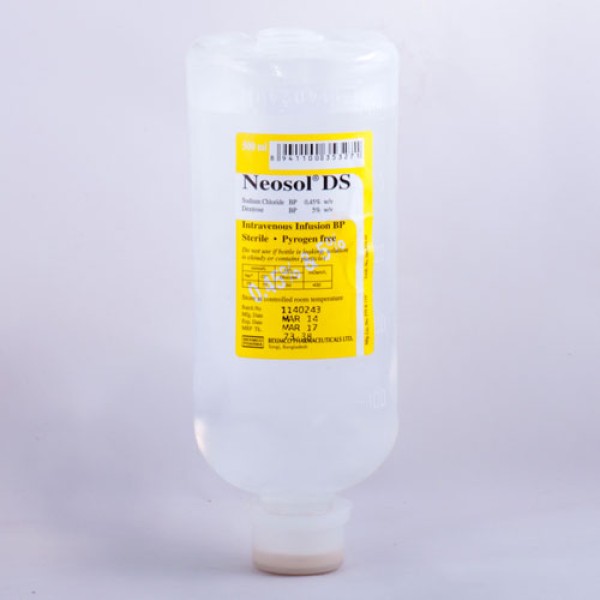
- Stock: Out Of Stock
- Brand: Beximco Pharmaceutical
- Product ID: Sodium chloride Dextrose
🔒 100% Secure Payment | bKash | Nagad | SSLCommerz | COD
⭐ Become a FREE Member: 7% Extra Savings • Free Delivery • Refill Reminders • Priority Support
This Item is for pre order
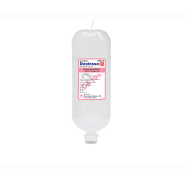
Neosol DS 250ml Infusion — Dextrose Saline | Beximco Pharmaceuticals
| Generic Name | Sodium Chloride 0.9% + Dextrose 5% Infusion (Dextrose Saline) |
| Volume | 250 mL |
| Dosage Form | IV Infusion (Intravenous Bag/Bottle) |
| Drug Class | Crystalloid IV Fluid / Electrolyte + Carbohydrate Solution |
| Manufacturer | Beximco Pharmaceuticals Ltd. |
| Tonicity | Approximately isotonic |
| Prescription Status | Hospital / Clinical Use — Prescription Required |
Overview
Neosol DS 250ml is a standard Dextrose Saline (DS) intravenous infusion — a combination of Sodium Chloride 0.9% and Dextrose 5% in a 250mL bag. This is one of the most widely used parenteral fluids in clinical practice, combining the volume expansion and sodium replacement of normal saline with the caloric and glucose support of 5% dextrose. The 250mL size is suitable for paediatric use, restricted fluid patients, and short-duration infusion requirements in adults.
Composition
| Component | Concentration | Per 250mL |
|---|---|---|
| Sodium Chloride | 0.9% (9g/L) | 2.25 g NaCl (Na⁺ 38.5 mmol, Cl⁻ 38.5 mmol) |
| Dextrose (Glucose) | 5% (50g/L) | 12.5 g glucose (~50 kcal) |
Clinical Indications
- Rehydration — mild to moderate dehydration with sodium depletion
- Maintenance fluid therapy — providing basic water, sodium, and caloric needs
- Post-operative fluid maintenance
- Vehicle for IV drug administration requiring dextrose or saline diluent
- Paediatric fluid maintenance (250mL appropriate for weight-based dosing)
- Diabetic ketoacidosis (DKA) — used when blood glucose falls below 14 mmol/L (250mg/dL) to prevent hypoglycaemia while continuing insulin
Critical Diabetic Patient Warnings
- DKA management: Neosol DS is specifically used in DKA once blood glucose falls to ≤14 mmol/L — switch from normal saline to dextrose-containing fluid to prevent hypoglycaemia while insulin continues to clear ketones. This is per standard DKA protocol.
- Hyperglycaemia risk: Dextrose 5% provides glucose — will raise blood glucose in diabetic patients. Monitor blood glucose every 1–2 hours during infusion in known diabetics. Insulin co-administration may be required.
- NOT for initial DKA resuscitation: Use normal saline (NaCl 0.9%) for the first phase of DKA fluid resuscitation — only switch to DS when glucose falls below threshold.
- Hyperosmolar risk: In Type 2 diabetes with poor glycaemic control, dextrose-containing infusions can worsen hyperglycaemia and contribute to HHS — monitor closely.
- Hyponatraemia caution: Despite containing 0.9% NaCl, dextrose saline is hypotonic relative to plasma once glucose is metabolised — can cause hyponatraemia if given in large volumes, particularly in children and patients with SIADH.
Administration
For intravenous use only. Inspect bag/bottle before use — do not use if discoloured, cloudy, or if leakage is detected. Administer via IV infusion set using aseptic technique. Infusion rate as prescribed — typically 60–125 mL/hour maintenance in adults (weight and condition-dependent). Single use only; discard unused portion.
Side Effects
Fluid overload (pulmonary oedema in cardiac or renal impairment patients). Hyperglycaemia in diabetics. Hyponatraemia with large volume infusion. Electrolyte disturbances. Local thrombophlebitis at infusion site.
Storage
Store at room temperature 15–25°C. Do not freeze. Protect from excessive heat and direct sunlight. Store in outer packaging until use.
Medical Disclaimer: Dextrose Saline infusion must only be administered under clinical supervision. Diabetic patients require close blood glucose monitoring during IV dextrose infusion. Rate, volume, and electrolyte balance must be supervised by a qualified physician. Prescription required.