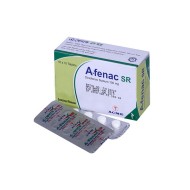
- Stock: Out Of Stock
- Brand: Acme Laboratories Limited
- Product ID: Diclofenac Sodium
🔒 100% Secure Payment | bKash | Nagad | SSLCommerz | COD
⭐ Become a FREE Member: 7% Extra Savings • Free Delivery • Refill Reminders • Priority Support
This Item is for pre order
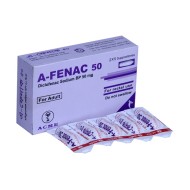
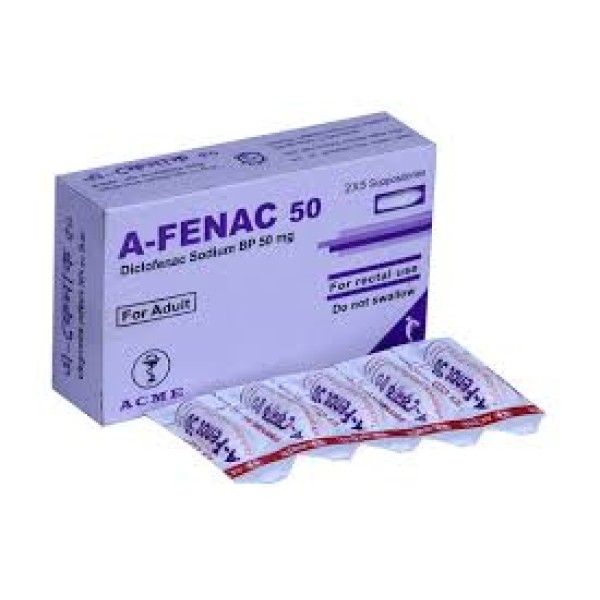
A-Fenac 50 mg Tablet (Diclofenac Sodium) — Product Overview
| Quick Reference | |
|---|---|
| Brand Name | A-Fenac 50 mg Tablet |
| Generic Name | Diclofenac Sodium 50 mg |
| Drug Class | Non-Steroidal Anti-Inflammatory Drug (NSAID) — Oral |
| Manufacturer | ACI Limited, Bangladesh |
| Dosage Form | Enteric-Coated Tablet |
| Strength | 50 mg — standard adult dose for moderate-to-severe pain and inflammation |
| Available A-Fenac Strengths | 25 mg (mild), 50 mg (standard), SR 100 mg (once/twice daily) |
| Storage | Below 30°C, dry place, original packaging |
| Prescription Status | Prescription Required |
What is A-Fenac 50 mg?
A-Fenac 50 mg is the standard-strength oral formulation of Diclofenac Sodium — the most commonly prescribed NSAID dose for adults with moderate-to-severe pain and inflammatory conditions. Each enteric-coated tablet dissolves in the small intestine rather than the stomach, reducing direct gastric irritation while delivering the full therapeutic dose into the bloodstream. Diclofenac 50 mg two to three times daily (100–150 mg/day) is the established dosing regimen for arthritis, acute musculoskeletal pain, gout, and dysmenorrhoea, balancing efficacy with safety.
Mechanism of Action
Diclofenac Sodium inhibits both cyclooxygenase-1 (COX-1) and cyclooxygenase-2 (COX-2) enzymes. COX-2 inhibition reduces synthesis of pro-inflammatory prostaglandins (particularly PGE2) at the site of tissue damage, lowering pain sensitisation, swelling, and fever. COX-1 inhibition reduces gastric cytoprotective prostaglandins (hence GI risk) and inhibits platelet aggregation. Diclofenac is unusual among NSAIDs in also inhibiting arachidonic acid release from phospholipid membranes and the lipoxygenase pathway, contributing to its strong anti-inflammatory potency relative to other NSAIDs at equivalent doses.
Indications
- Osteoarthritis — chronic joint pain management (knee, hip, hand)
- Rheumatoid arthritis — pain and inflammation (alongside DMARDs)
- Ankylosing spondylitis — NSAIDs are first-line pharmacotherapy for axial SpA
- Acute musculoskeletal pain — back pain, sprains, strains, soft tissue injuries
- Acute gout — 50 mg three times daily during acute attack
- Primary dysmenorrhoea — 50 mg up to three times daily, started at onset of menses
- Postoperative pain (mild-moderate)
- Dental pain
- Renal/biliary colic (where oral medication is tolerated)
- Migraine headache
Dosage and Administration
Standard adult dose: 50 mg two to three times daily (100–150 mg/day). Start at 50 mg twice daily, increase to three times daily only if needed.
Maximum: 150 mg/day from all diclofenac sources combined.
Acute gout: 50 mg three times daily for 2–3 days, then reduce as attack resolves.
Dysmenorrhoea: 50 mg up to three times daily, starting at onset of pain. Maximum 150 mg on day 1.
Elderly: Start at 25 mg or one 50 mg tablet twice daily. Use lowest effective dose. Regularly reassess whether continued NSAID therapy is necessary.
Duration: For chronic conditions, use the lowest effective dose for the shortest necessary period with regular review.
With food: Take after meals to reduce GI discomfort even with enteric coating. Do not crush, break, or chew — this destroys the coating.
GI protection: Co-prescribe omeprazole 20 mg or pantoprazole 20 mg once daily in patients with GI risk factors (age >65, history of ulcer, concurrent corticosteroids or anticoagulants).
A-Fenac 50 mg vs SR 100 mg — Which to Choose?
A-Fenac 50 mg (immediate-release) provides faster onset and more flexible dosing — suitable for acute pain or when dose adjustment is needed. A-Fenac SR 100 mg (sustained-release) provides 12–24 hour coverage with once or twice daily dosing, improving compliance for chronic conditions and reducing peak-trough fluctuation. For arthritis patients on regular therapy, SR 100 mg is often preferred. For acute conditions, 50 mg provides better dose flexibility.
NSAIDs in Diabetes — Important Warnings
Diclofenac and other NSAIDs carry specific risks in diabetic patients:
- Diabetic nephropathy: NSAIDs reduce renal prostaglandin synthesis → decreased renal blood flow → acute kidney injury. Risk is highest with concomitant ACE inhibitors/ARBs or diuretics (the "triple whammy"). Avoid if eGFR <30. Monitor creatinine and eGFR.
- Hypertension: NSAIDs antagonise antihypertensive drugs (especially ACE inhibitors, ARBs, thiazides). Monitor blood pressure regularly during NSAID therapy.
- Heart failure: NSAIDs cause fluid retention and can precipitate or worsen heart failure — an important concern in diabetic patients with cardiac risk.
- Peripheral oedema: NSAIDs worsen ankle/foot oedema — relevant in diabetic foot care.
- Safer alternative for mild pain: Paracetamol 500–1,000 mg is preferred for mild pain in diabetic patients — no renal, cardiac, or BP effects.
Contraindications
- NSAID hypersensitivity or aspirin-exacerbated respiratory disease
- Active peptic ulcer disease or GI bleeding
- Severe renal, hepatic, or cardiac impairment
- Third trimester of pregnancy (foetal ductus arteriosus closure risk)
- Established ischaemic heart disease, peripheral arterial disease, or cerebrovascular disease
- Inflammatory bowel disease
Side Effects
GI (most common): Epigastric pain, nausea, dyspepsia, bloating. Serious: peptic ulcer, GI bleeding (risk 1–4% per year without GI protection). Co-prescribe PPI.
Hepatic: Raised transaminases (ALT/AST) — common with diclofenac, usually transient. Monitor LFTs every 4–8 weeks in the first few months of regular use. Serious hepatotoxicity is rare.
Renal: Fluid retention, oedema, hypertension, elevated creatinine. Acute kidney injury with dehydration or in high-risk patients.
Cardiovascular: Elevated BP, increased MI and stroke risk. Diclofenac has among the highest cardiovascular risk of all traditional NSAIDs — consider naproxen if CV risk is a concern in chronic use.
Haematological: Platelet inhibition (reversible, unlike aspirin). Increased bleeding time. Avoid pre-operatively.
Key Drug Interactions
- Warfarin: Increases anticoagulant effect and GI bleeding risk — monitor INR
- ACE inhibitors/ARBs: NSAIDs reduce antihypertensive effect and increase AKI risk
- Methotrexate: NSAIDs reduce methotrexate clearance — toxicity risk, especially renally
- Lithium: NSAIDs raise lithium levels — monitor closely
- SSRIs: Additive GI bleeding risk — co-prescribe PPI
- Corticosteroids: Additive GI ulceration — co-prescribe PPI mandatory
- Ciclosporin: NSAIDs increase nephrotoxicity
Frequently Asked Questions (FAQ)
Q: Is A-Fenac 50 mg better than 25 mg for arthritis?
A: For most adults with arthritis or moderate pain, 50 mg provides more effective symptom control than 25 mg. The standard arthritis dose is 50 mg two to three times daily (100–150 mg/day). A-Fenac 25 mg is for mild pain, paediatric use, or elderly patients requiring dose reduction. For once or twice daily convenience, consider A-Fenac SR 100 mg.
Q: Can I take A-Fenac 50 mg for back pain?
A: Yes. Diclofenac 50 mg is one of the most effective NSAIDs for acute back pain and sciatica. A short course (3–5 days) at 50 mg twice to three times daily is typically used. Combine with rest, heat, and physiotherapy for best results. Do not use long-term without medical supervision.
Q: How long before A-Fenac 50 mg starts working?
A: The enteric coating delays onset slightly compared to non-coated tablets. Expect pain relief in 1–2 hours. For maximum anti-inflammatory effect (arthritis, gout), steady state is reached after 2–3 days of regular dosing.
Q: Do I need to take A-Fenac 50 mg with a stomach protector?
A: If you are over 65, have a history of stomach ulcers, are on steroids or blood thinners, or plan to use diclofenac for more than 2 weeks, yes — co-prescribe omeprazole 20 mg once daily. For short courses in low-risk young adults, a PPI is not always mandatory but is good practice.
Medical Disclaimer
For educational purposes only. Not medical advice. Diclofenac requires careful risk assessment for GI, cardiovascular, and renal safety. Always use the lowest effective dose for the shortest duration. Consult your doctor or pharmacist if you have diabetes, kidney disease, heart disease, or are on blood thinners.