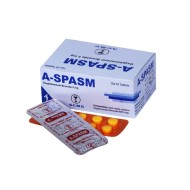
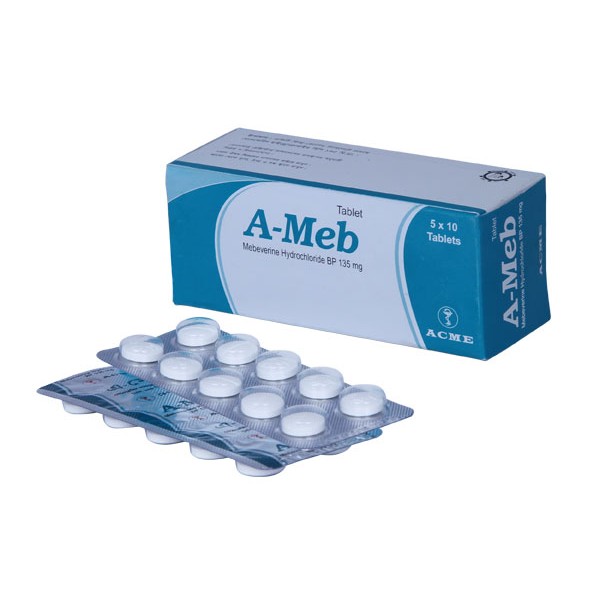
- Stock: Out Of Stock
- Brand: Acme Laboratories Limited
- Product ID: Mebeverine Hydrochloride
🔒 100% Secure Payment | bKash | Nagad | SSLCommerz | COD
⭐ Become a FREE Member: 7% Extra Savings • Free Delivery • Refill Reminders • Priority Support
This Item is for pre order
A-Meb 135 mg Tablet (Mebeverine Hydrochloride) — Product Overview
| Quick Reference | |
|---|---|
| Brand Name | A-Meb |
| Generic Name | Mebeverine Hydrochloride 135 mg |
| Drug Class | Antispasmodic (Musculotropic) / IBS Treatment |
| Manufacturer | ACI Limited, Bangladesh |
| Dosage Form | Tablet |
| Strength | 135 mg per tablet |
| Key Advantage | Non-anticholinergic — no dry mouth, urinary retention, or blurred vision |
| Storage | Below 25°C, dry place, protected from light |
| Prescription Status | Prescription Required |
What is A-Meb (Mebeverine)?
A-Meb contains Mebeverine Hydrochloride 135 mg, one of the most widely prescribed antispasmodic medicines for Irritable Bowel Syndrome (IBS) and other functional gastrointestinal disorders. Unlike older antispasmodics that work through anticholinergic blockade (like hyoscine or oxyphenonium), mebeverine acts directly on intestinal smooth muscle through a musculotropic (direct muscle action) mechanism. This means it relieves painful gut spasms without the troublesome anticholinergic side effects of dry mouth, constipation, blurred vision, or urinary retention.
Mechanism of Action
Mebeverine is a musculotropic antispasmodic with a dual mechanism of action. Firstly, it inhibits Na⁺/K⁺-ATPase (the sodium pump) in smooth muscle cell membranes, reducing sodium influx and thereby decreasing the action potential amplitude needed to trigger muscle contraction. Secondly, it depletes intracellular calcium stores through an indirect mechanism, reducing the calcium-mediated smooth muscle contraction. The net effect is a reduction in pathologically increased intestinal motility and spasm, while normal gut motility is largely preserved.
Indications
A-Meb 135 mg is indicated for:
- Irritable Bowel Syndrome (IBS): The primary indication — relieves abdominal cramping, pain, bloating, and altered bowel habits in IBS
- Spastic colon / colonic spasm: Painful bowel spasm from any cause
- Functional abdominal pain: Recurrent abdominal pain without structural cause
- Biliary colic: Adjunct to relieve biliary tract spasm
- Post-gastroenteritis gut hypersensitivity: Lingering bowel spasm after infectious diarrhoea
- Diverticular disease: To reduce colonic spasm and pain
Mebeverine vs Other Antispasmodics — Key Differences
Mebeverine (A-Meb) is the preferred antispasmodic for IBS in many guidelines due to its superior tolerability profile:
- vs Oxyphenonium/Hyoscine (anticholinergic): No dry mouth, no urinary retention, no blurred vision, no constipation, no tachycardia — mebeverine's direct muscle action avoids all anticholinergic side effects
- vs Hyoscine butylbromide (Buscopan): Mebeverine has more sustained effect for chronic IBS; hyoscine is preferred for acute colic due to faster onset
- vs Pinaverium bromide: Similar efficacy; mebeverine more widely available in Bangladesh
Dosage and Administration
Adults and adolescents over 10 years: 135 mg (1 tablet) three times daily, taken 20 minutes before meals.
Elderly: No dose adjustment required — one of the few IBS medications safe across all age groups.
Children under 10 years: Not recommended.
Duration: IBS is a chronic condition. Mebeverine may be used long-term. Start with a 4-week course and reassess. Some patients use it continuously; others use it as-needed during flares.
Administration: Taking 20 minutes before meals is important as it pre-treats the gut before the meal-stimulated gastrocolic reflex triggers spasm.
Contraindications
- Hypersensitivity to mebeverine hydrochloride
- Paralytic ileus (bowel obstruction)
- Porphyria
Side Effects
Mebeverine has an excellent tolerability profile. Because it does not have anticholinergic effects, it avoids the most troublesome side effects of older antispasmodics.
Rare: Hypersensitivity reactions including urticaria (rash), angioedema, anaphylaxis — discontinue if these occur.
Very rare: Dizziness, sleep disturbance (reported anecdotally but not confirmed in trials).
Most patients tolerate A-Meb very well with no side effects.
Precautions
- Pregnancy: Limited data; avoid unless clearly necessary
- Breastfeeding: Avoid; unknown whether excreted in breast milk
- Lactose content: Tablets may contain lactose — caution in lactose intolerance
Frequently Asked Questions (FAQ)
Q: What is A-Meb used for?
A: A-Meb (Mebeverine 135mg) is used primarily for Irritable Bowel Syndrome (IBS) — relieving abdominal cramps, spasms, bloating, and pain. It is also used for functional abdominal pain, spastic colon, biliary colic, and post-gastroenteritis gut hypersensitivity.
Q: Does A-Meb cause dry mouth like other antispasmodics?
A: No. This is one of the key advantages of mebeverine. Because it works directly on gut smooth muscle (musculotropic action) rather than blocking cholinergic nerves, it does not cause the dry mouth, constipation, urinary retention, or blurred vision associated with anticholinergic antispasmodics.
Q: When should I take A-Meb relative to meals?
A: Take A-Meb 20 minutes before meals. This ensures the drug is active when the gastrocolic reflex (triggered by eating) causes the IBS-related spasm and pain.
Q: Can I take A-Meb long-term for chronic IBS?
A: Yes. Mebeverine has a very good safety profile and can be used long-term for managing chronic IBS symptoms. Some patients use it continuously; others use it during flares. Regular medical review is recommended for any long-term medication.
Medical Disclaimer
The information provided is for educational purposes only. Always consult a healthcare professional before starting treatment for IBS or abdominal pain. Seek urgent medical attention if you have abdominal pain with fever, blood in stool, unexplained weight loss, or pain that wakes you from sleep — these may indicate a serious condition requiring investigation.