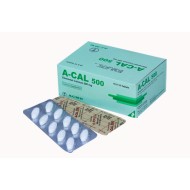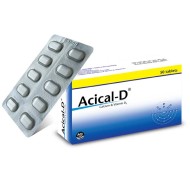
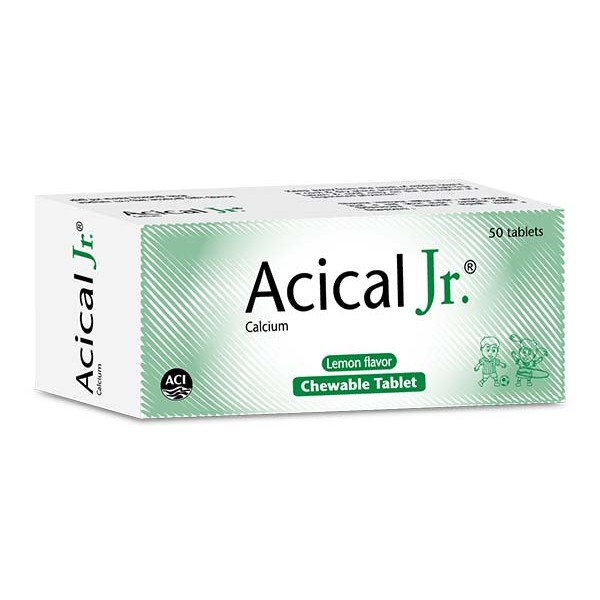
- Stock: Out Of Stock
- Brand: ACI Pharmaceuticals
- Product ID: Calcium Carbonate
🔒 100% Secure Payment | bKash | Nagad | SSLCommerz | COD
⭐ Become a FREE Member: 7% Extra Savings • Free Delivery • Refill Reminders • Priority Support
This Item is for pre order
Acical Jr. Chewable Tablet — Calcium Supplement for Children
| Product Overview | |
|---|---|
| Brand Name | Acical Jr. |
| Generic Name | Calcium Carbonate — Paediatric Chewable Tablet |
| Manufacturer | ACI Pharmaceuticals Ltd., Bangladesh |
| Drug Class | Paediatric Calcium Supplement |
| Dosage Form | Chewable Tablet (child-friendly flavour) |
| Target Population | Infants, children, and adolescents (age 2–18 years) |
| Calcium Requirement (children) | 1–3 years: 700 mg/day · 4–8 years: 1000 mg/day · 9–18 years: 1300 mg/day |
| Storage | Store below 30°C in a dry place. Keep out of reach of children. |
| Flavour | Child-friendly flavour for improved compliance |
1. Indications & Uses
Acical Jr. Chewable Tablet is a calcium carbonate supplement specifically formulated for infants, children, and adolescents. The chewable format and pleasant flavour improve compliance in children who cannot or will not swallow regular tablets. Calcium is the most critical mineral for childhood bone development, dental formation, and growth — peak bone mass is established by age 20, making childhood supplementation vital for lifelong skeletal health.
Indicated for: prevention and treatment of calcium deficiency in growing children; rickets (alongside vitamin D); ensuring adequate calcium intake in children with low dairy intake or dairy intolerance; adolescent bone building during the growth spurt; calcium supplementation in children on long-term corticosteroids or anticonvulsants; and antacid use in children with acid indigestion. In Bangladesh, where dairy consumption is low and vitamin D deficiency is prevalent, childhood calcium deficiency is common — Acical Jr. provides a convenient, palatable solution.
2. Mechanism of Action
Calcium carbonate releases Ca²⁺ in the gastric acid environment. Calcium ions are absorbed in the duodenum and proximal jejunum via TRPV6 channels (active, vitamin D-dependent transport) and passive paracellular diffusion. In children, active transport is particularly efficient due to high levels of circulating calcitriol during periods of growth. Calcium is incorporated into the hydroxyapatite crystal structure of bones [Ca₁₀(PO₄)₆(OH)₂], providing structural rigidity. During growth spurts, >400 mg of calcium can be deposited in bone daily. Calcium also supports dentine and enamel formation in developing teeth, nerve impulse transmission, and muscle contraction including cardiac muscle.
3. Dosage & Administration
Chewable tablet administration: Chew tablet thoroughly before swallowing. Give with meals or a glass of milk to maximise absorption. Do not give with iron supplements or certain antibiotics — separate by 2 hours.
Children 1–3 years: ½–1 tablet daily as directed by paediatrician (target: 700 mg/day elemental calcium from all sources).
Children 4–8 years: 1–2 tablets daily (target: 1000 mg/day elemental calcium).
Children 9–18 years: 2–3 tablets daily during growth spurt (target: 1300 mg/day elemental calcium — highest requirement of any life stage).
Note: These are supplemental doses — subtract dietary calcium intake (dairy, fish, green vegetables) from the total target. Over-supplementation is unnecessary and may cause constipation. Do not exceed recommended doses without physician guidance.
4. Side Effects
Generally well tolerated in children at recommended doses. Common: mild constipation; belching or flatulence (from CO₂ release in stomach). Rare with standard doses: nausea; hypercalcaemia (with overdose — symptoms: excessive thirst, frequent urination, lethargy, irritability); renal stones (rare in children). If constipation occurs, increase water intake and reduce dose temporarily.
5. Contraindications
Contraindicated in: hypercalcaemia; nephrolithiasis; severe renal disease; glucose-galactose malabsorption (if glucose-based excipients present). Use with caution in children immobilised for extended periods (e.g., long bone fractures) as calcium mobilisation from bone may cause hypercalcaemia.
6. Warnings & Precautions
Always chew tablet — do not swallow whole in young children. Keep out of reach of very young children (<2 years) who may choke. Do not exceed recommended doses. Ensure adequate vitamin D intake alongside calcium supplementation — without vitamin D, calcium absorption is severely impaired. Keep well hydrated. If child develops abdominal pain, vomiting, or reduced urine output, consult a doctor. Do not use as a substitute for a balanced diet including dairy, fish, and green vegetables.
7. Drug Interactions
Calcium reduces absorption of: tetracycline antibiotics, iron supplements, and zinc — separate by at least 2 hours. Thiazide diuretics in children increase risk of hypercalcaemia. Corticosteroids reduce calcium absorption from the gut — higher doses may be needed in children on long-term steroid therapy. Vitamin D supplements enhance calcium absorption — the combination is beneficial and often recommended.
8. Pharmacokinetics
In children, intestinal calcium absorption efficiency is higher than in adults — up to 60% of ingested calcium can be absorbed during peak growth (vs 20–40% in adults), driven by elevated calcitriol levels. Peak serum calcium 1–2h post-dose. Calcium is rapidly incorporated into growing bone matrix. Renal excretion of excess calcium increases with age. Vitamin D status is the primary determinant of absorption efficiency in all age groups.
9. Storage & Handling
Store below 30°C in a dry place, away from direct sunlight. Keep in original blister pack. Do not store in bathroom medicine cabinets (humidity degrades tablet). Keep away from all children when not in use — accidental overdose is a risk.
10. Overdose
Childhood calcium overdose from chewable tablets: nausea, vomiting, constipation, lethargy, excessive thirst, and reduced urine output indicating early hypercalcaemia. Stop immediately and give fluids. Seek emergency paediatric care. Bring the tablet packaging for the doctor. Do not induce vomiting unless instructed by a medical professional.
11. Missed Dose
Give as soon as remembered. If nearly time for the next dose, skip the missed dose and resume normal schedule. Consistent daily supplementation over months and years is what delivers bone health benefits — occasional missed doses are not clinically significant.
12. Clinical Evidence
Childhood calcium supplementation trials consistently show increased bone mineral density (BMD) and reduced fracture risk. A landmark NEJM study found that calcium supplementation increased BMD by 1.3% per year in pre-pubertal children vs placebo. The International Osteoporosis Foundation (IOF) affirms that adequate childhood calcium intake is the single most effective lifetime fracture prevention strategy. In Bangladesh, the 2020 National Micronutrient Survey found that only 35% of children aged 6–59 months meet daily calcium requirements — highlighting a major public health gap that Acical Jr. helps address.
13. Patient Counselling Points (for parents)
• Encourage child to chew tablet fully — do not swallow whole.
• Give with meals or a glass of milk for best absorption.
• Keep calcium supplements 2 hours apart from iron drops or antibiotics.
• Ensure the child also gets vitamin D (sunlight or supplement) for calcium to work effectively.
• Include dietary calcium sources: milk, yoghurt, small fish, leafy vegetables, sesame seeds.
• Store out of reach — children may take extras if flavoured tablets are left accessible.
• Consistent daily use over years builds lifelong strong bones.
Frequently Asked Questions (FAQ)
Q1. From what age can children take Acical Jr.?
Acical Jr. is suitable from approximately 2 years of age when children can safely chew tablets. For infants under 2, liquid calcium formulations or calcium-fortified foods are preferred. Always give under paediatrician guidance in young children. For children over 2, the chewable format provides a convenient, palatable calcium supplement.
Q2. My child doesn't drink milk. Do they need a calcium supplement?
Yes. Children who don't consume dairy products are at high risk of calcium deficiency. 1 glass of milk provides ~300 mg calcium — a child aged 9–18 needs 1300 mg/day, which is very difficult to achieve without dairy or supplementation. Acical Jr. plus dietary sources (fish, sesame, dark greens) can help fill the gap. Consult your paediatrician for the appropriate dose.
Q3. Can Acical Jr. be given with iron drops (for anaemia)?
No — not simultaneously. Calcium significantly reduces iron absorption. If your child needs both iron and calcium, give iron drops in the morning on an empty stomach and Acical Jr. with a meal 2–4 hours later. This timing maintains the efficacy of both supplements.
Q4. Does calcium supplementation make children taller?
Adequate calcium intake does not directly increase height beyond a child's genetic potential. However, calcium deficiency can impair bone growth and reduce final height in severe cases. Proper calcium intake ensures that bones develop to their full potential. Height is also strongly influenced by protein intake, overall nutrition, vitamin D, and genetics.
⚕ Medical Disclaimer: For educational purposes only. Calcium supplements in children should be recommended and supervised by a qualified paediatrician. Doses vary by age and individual needs. This information does not substitute professional medical advice.