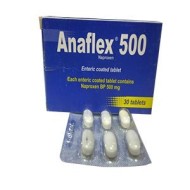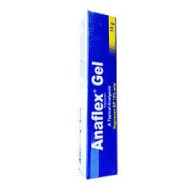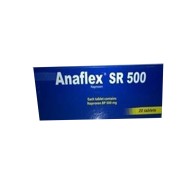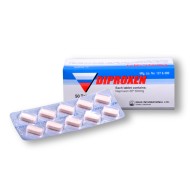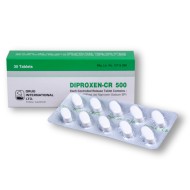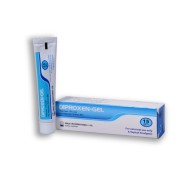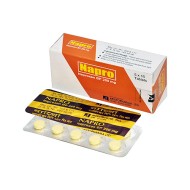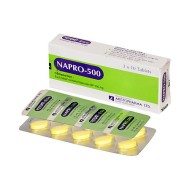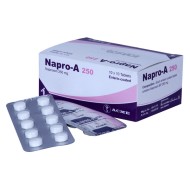
- Stock: Out Of Stock
- Brand: ACI Pharmaceuticals
- Product ID: Naproxen Sodium
🔒 100% Secure Payment | bKash | Nagad | SSLCommerz | COD
⭐ Become a FREE Member: 7% Extra Savings • Free Delivery • Refill Reminders • Priority Support
This Item is for pre order
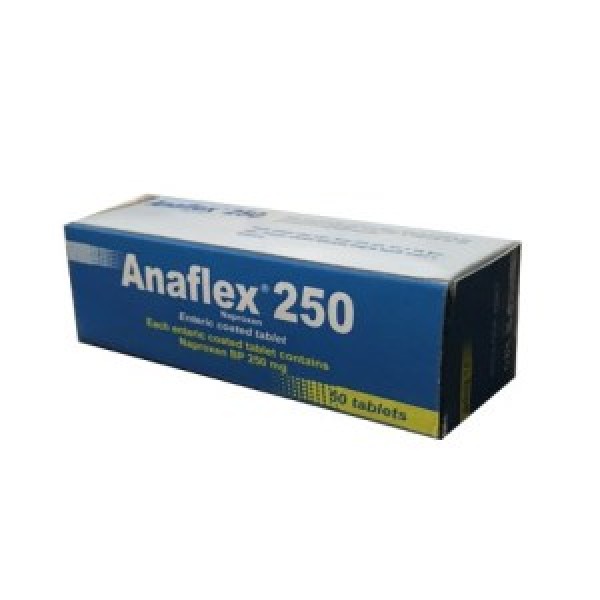
Anaflex 250 mg Tablet (Naproxen Sodium) – ACI Limited
| Brand Name | Anaflex 250 mg Tablet |
|---|---|
| Generic Name | Naproxen Sodium 250 mg |
| Strength | 250 mg |
| Dosage Form | Tablet |
| Manufacturer | ACI Limited, Bangladesh |
| Drug Class | Non-Steroidal Anti-Inflammatory Drug (NSAID) — Propionic Acid Derivative |
| Pack Size | 10 Tablets per Strip |
| Prescription Required | Yes (Rx) |
| Storage | Store below 30°C in a cool, dry place away from sunlight |
1. About Anaflex 250 mg (Naproxen Sodium)
Anaflex 250 mg Tablet contains Naproxen Sodium 250 mg, the lower-dose formulation of the long-acting propionic acid NSAID, manufactured by ACI Limited, Bangladesh. The 250 mg strength is used for mild-to-moderate pain where a full 500 mg dose may not be needed — particularly suitable for initiating therapy, elderly patients where lower NSAID doses reduce risk, paediatric inflammatory conditions, and step-down maintenance after initial higher-dose treatment.
Naproxen's key clinical advantage is its long half-life (12–17 hours), enabling twice-daily dosing. The 250 mg tablets offer dosing flexibility — two tablets equal the standard 500 mg dose, or may be used singly as a 250 mg dose in lower-dose regimens for elderly or GI-sensitive patients.
2. Mechanism of Action
Naproxen sodium non-selectively inhibits COX-1 and COX-2 enzymes, reducing prostaglandin and thromboxane synthesis from arachidonic acid. This produces:
- Analgesic effect: Reduced peripheral and central prostaglandin-mediated pain sensitisation
- Anti-inflammatory effect: Decreased PGE2 and PGI2 reduces vascular permeability, vasodilation, and leukocyte recruitment at inflammatory foci
- Antipyretic effect: Inhibition of hypothalamic PGE2 resets the febrile set point
The sodium salt formulation provides faster dissolution and absorption compared to naproxen base, giving a more rapid onset of analgesia — useful for acute pain states. Both 250 mg and 500 mg tablets contain the same active moiety; 250 mg is used when the full dose is not required or not tolerated.
3. Indications
- Mild-to-moderate arthritis pain: Osteoarthritis and rheumatoid arthritis — 250 mg twice daily as initial or maintenance dose in elderly or sensitive patients
- Ankylosing spondylitis
- Acute Gout: 500 mg initially (2 × 250 mg) then 250 mg every 8 hours
- Primary Dysmenorrhoea: 500 mg initially then 250 mg every 6–8 hours
- Mild musculoskeletal pain: Sprains, strains, tendinitis, bursitis
- Dental pain, headache, migraine
- Juvenile Idiopathic Arthritis (JIA): Paediatric dosing — naproxen is a commonly used NSAID in JIA
- Maintenance therapy: After initial response achieved on 500 mg dose, reducing to 250 mg twice daily (500 mg/day total) may be sufficient for long-term maintenance
4. Dosage and Administration
Arthritis (long-term):
- 250–500 mg twice daily (i.e., 1–2 tablets twice daily)
- Maintenance: lowest effective dose; 250 mg twice daily often sufficient
Acute gout:
- 750 mg (3 tablets) initially, then 250 mg every 8 hours
Dysmenorrhoea and other acute pain:
- 500 mg (2 tablets) initially, then 250 mg (1 tablet) every 6–8 hours
Elderly: Start with 250 mg twice daily — use minimum effective dose. Elderly patients face higher risk of GI, renal, and cardiovascular complications from NSAIDs.
Paediatric (JIA): 10 mg/kg/day in 2 divided doses — suspension may be preferred in young children; tablets appropriate for older children.
Administration: Take with food or milk to reduce GI side effects. Drink a full glass of water.
5. Contraindications
- Active peptic ulcer or history of NSAID-related GI bleeding
- Hypersensitivity to naproxen, aspirin, or other NSAIDs
- Aspirin-exacerbated respiratory disease (NSAID-sensitive asthma)
- Severe renal impairment (CrCl <30 ml/min)
- Severe hepatic impairment
- Severe heart failure
- Third trimester of pregnancy
6. Warnings and Precautions
GI risk: All NSAIDs including naproxen 250 mg carry risk of GI ulceration and bleeding. Risk increases with dose, duration, age, concurrent steroids, anticoagulants, or a history of peptic ulcer. Always take with food. Consider a proton pump inhibitor (PPI) in high-GI-risk patients, or switch to Anaflex Max (naproxen + esomeprazole).
Cardiovascular and renal risk: NSAIDs may increase CV event risk with prolonged use. May cause fluid retention, hypertension, and acute kidney injury — especially in dehydrated patients, those with existing renal disease (including diabetic nephropathy), heart failure, or on diuretics/ACE inhibitors/ARBs.
Diabetic patients: Exercise caution in diabetes. NSAIDs can: (1) worsen diabetic nephropathy — check renal function before and during treatment; (2) antagonise antihypertensives and ACE inhibitor nephroprotection; (3) cause fluid retention worsening oedema or heart failure. Use minimum dose for minimum duration. Consider paracetamol for mild pain management in diabetics with renal impairment.
Elderly: Start at lowest dose (250 mg twice daily). Monitor BP, renal function, and GI symptoms regularly. Gastroprotection with a PPI is advisable in elderly NSAID users.
7. Side Effects
Common: Nausea, dyspepsia, heartburn, abdominal discomfort, headache, dizziness, oedema, tinnitus.
Uncommon: Peptic ulcer, GI bleeding, elevated liver enzymes, rash, raised blood pressure, renal function impairment.
Rare/Serious: GI perforation, anaphylaxis, severe skin reactions (SJS/TEN), myocardial infarction or stroke with prolonged use in high-CV-risk patients.
8. Drug Interactions
- Other NSAIDs/Aspirin: Avoid combination — increased GI and renal toxicity
- Warfarin/anticoagulants: Increased bleeding risk — monitor INR
- ACE inhibitors/ARBs/diuretics: Reduced antihypertensive efficacy; increased acute kidney injury risk
- Sulphonylureas: May enhance hypoglycaemic effect — monitor blood glucose
- Methotrexate: Increased methotrexate toxicity
- Lithium: Increased lithium levels and toxicity
- Corticosteroids: Markedly increased GI ulceration risk
- SSRIs: Additive GI bleeding risk
9. Pharmacokinetics
Absorption: Rapidly and completely absorbed orally (~95% bioavailability). Tmax ~1–2 hours for sodium salt. Food does not significantly reduce absorption but delays Tmax by 1–2 hours.
Distribution: Highly protein-bound (~99% to albumin). Low Vd (~0.16 L/kg). Crosses placenta and enters breast milk.
Metabolism: Hepatic via CYP2C9 to inactive 6-desmethylnaproxen and conjugated metabolites.
Elimination: Primarily renal (~95%). Long half-life of 12–17 hours enables twice-daily dosing. Prolonged in elderly and severe hepatic impairment.
10. Clinical Role of the 250 mg Dose
The 250 mg dose has specific clinical advantages:
- Initiation in elderly: Starting at 250 mg twice daily (500 mg/day) and titrating up if needed — the "start low, go slow" approach reduces risk of adverse events
- Maintenance therapy: Once arthritis is controlled at higher doses, maintaining with 250 mg twice daily may suffice and reduces cumulative exposure
- Dose flexibility: Allows intermediate doses (250 mg + 500 mg = 750 mg/day) not possible with only 500 mg tablets
- Paediatric JIA dosing: Enables accurate weight-based dosing in older children (e.g., 250 mg twice daily for a 25 kg child = 20 mg/kg/day)
11. NSAID Pain Management in Bangladesh
Musculoskeletal pain — particularly from osteoarthritis, rheumatoid arthritis, and back pain — is one of the leading causes of disability and reduced quality of life in Bangladesh's ageing population. NSAIDs including naproxen remain cornerstones of pain management, but must be used judiciously. Key principles in Bangladesh's clinical context:
- Use the lowest effective dose for the shortest duration
- Always co-prescribe gastroprotection (PPI or H2 blocker) in elderly patients and those with GI risk
- Monitor renal function in diabetic patients — consider eGFR before and during NSAID therapy
- Topical NSAIDs (Anaflex Gel 10%) are preferred for localised musculoskeletal pain in elderly and renally impaired patients as systemic absorption is minimal
- Non-pharmacological approaches (physiotherapy, weight loss, exercise) are important adjuncts
12. ACI Limited — Anaflex Range
ACI Limited provides Bangladesh's most comprehensive naproxen portfolio under the Anaflex brand:
- Anaflex 250 mg Tablet — lower-dose starting strength (this product)
- Anaflex 500 mg Tablet (Naproxen Sodium) — standard adult dose
- Anaflex SR 500 mg — sustained-release for overnight arthritis control
- Anaflex Max 375/500 mg — with esomeprazole 20 mg for gastroprotection
- Anaflex Gel 10% (15 gm, 30 gm) — topical for localised pain
13. Storage
- Store below 30°C, cool and dry place, protected from sunlight
- Keep in original packaging
- Keep out of reach of children
- Do not use after expiry date
Frequently Asked Questions (FAQ)
Q1: What is Anaflex 250 mg used for?
Anaflex 250 mg (Naproxen Sodium 250 mg) is a lower-dose NSAID tablet used for mild-to-moderate pain and inflammation. It is used for arthritis (osteoarthritis and rheumatoid arthritis), ankylosing spondylitis, acute gout, period pain (dysmenorrhoea), musculoskeletal pain (sprains, back pain, tendinitis), dental pain, and headache. The 250 mg dose is particularly suitable for elderly patients (lower starting dose reduces side effect risk), maintenance therapy in arthritis after initial control, paediatric inflammatory arthritis (JIA), and situations where a full 500 mg dose is not required.
Q2: What is the difference between Anaflex 250 mg and Anaflex 500 mg?
Both Anaflex 250 mg and 500 mg contain the same active ingredient — Naproxen Sodium — but in different strengths. The 250 mg dose is half the standard adult dose and is used in specific situations: elderly patients (lower GI, renal, and CV risk), patients with mild pain not requiring the full dose, initiation of therapy before titrating up, maintenance dosing in arthritis once controlled, and flexible intermediate dosing (e.g., 250 mg in morning + 500 mg at night). The 500 mg is the standard adult treatment dose for moderate-to-severe pain and inflammation. Both have the same long 12–17 hour half-life — twice-daily dosing applies to both.
Q3: How is Anaflex 250 mg suitable for elderly patients?
Elderly patients are at higher risk of NSAID side effects — particularly GI bleeding, acute kidney injury, and cardiovascular events — because of reduced gastric mucosal defences, declining renal function, and higher prevalence of heart disease and hypertension. Starting at 250 mg twice daily (half the standard dose) applies the "start low, go slow" principle: achieving meaningful pain relief while minimising the risk of serious adverse effects. If 250 mg twice daily is insufficient, the dose can be increased to 500 mg twice daily. Elderly patients on Anaflex should also take a proton pump inhibitor (PPI) and have their renal function and blood pressure monitored regularly.
Q4: Can I take Anaflex 250 mg with my diabetes medications?
Naproxen can interact with certain diabetes medications: (1) Sulphonylureas (glibenclamide, glipizide, gliclazide) — naproxen may displace them from protein binding, potentially increasing hypoglycaemic effect. Monitor blood glucose more carefully when starting naproxen. (2) ACE inhibitors/ARBs taken for diabetic nephropathy — NSAIDs reduce their kidney-protective effect and can precipitate acute kidney injury. (3) Naproxen itself does not affect insulin action. For mild pain in diabetic patients with kidney disease, paracetamol (acetaminophen) is generally safer than NSAIDs. Always inform your physician about all your medications before starting Anaflex.