- Stock: Out Of Stock
- Brand: ACI Pharmaceuticals
- Product ID: Amoxicillin + Clavulanic Acid
🔒 100% Secure Payment | bKash | Nagad | SSLCommerz | COD
⭐ Become a FREE Member: 7% Extra Savings • Free Delivery • Refill Reminders • Priority Support
This Item is for pre order
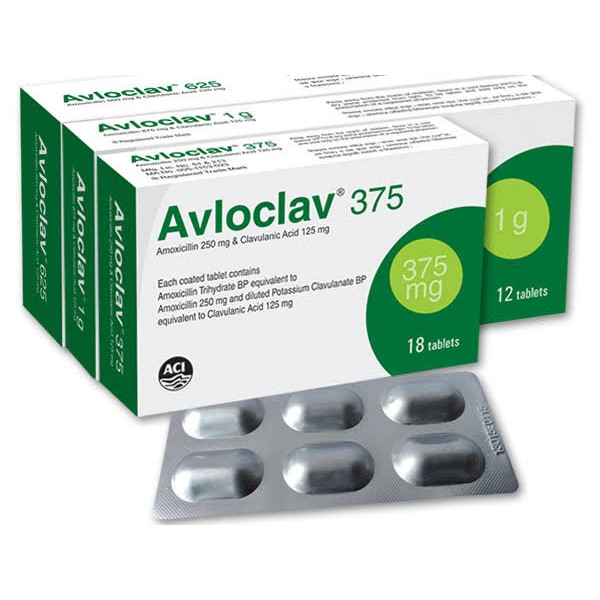
Avloclav 250mg+125mg (Amoxicillin + Clavulanic Acid) – Co-amoxiclav Tablet
| Brand Name | Avloclav 250mg+125mg |
|---|---|
| Generic Name | Amoxicillin 250mg + Clavulanic Acid 125mg |
| Strength | Amoxicillin 250 mg + Clavulanic Acid 125 mg per tablet |
| Dosage Form | Film-coated Tablet |
| Manufacturer | ACI Limited, Bangladesh |
| Drug Class | Beta-Lactam Antibiotic + Beta-Lactamase Inhibitor (Co-amoxiclav) |
| Prescription Required | Yes (Rx) |
| Storage | Store below 25°C. Protect from moisture. Keep in original packaging. |
1. About Avloclav 375 (Amoxicillin 250mg + Clavulanic Acid 125mg)
Avloclav 375 tablets contain Amoxicillin 250 mg (as trihydrate) and Clavulanic Acid 125 mg (as potassium clavulanate), manufactured by ACI Limited, Bangladesh. The combination — commonly known as Co-amoxiclav or Augmentin — pairs a broad-spectrum aminopenicillin antibiotic with a beta-lactamase inhibitor, overcoming resistance mechanisms in many common bacterial pathogens. The 375 mg formulation (250/125) is used in mild-to-moderate infections in adults and older children, particularly where beta-lactamase-producing organisms are suspected or confirmed.
2. Mechanism of Action
Amoxicillin is a beta-lactam antibiotic that inhibits bacterial cell wall synthesis by covalently binding to penicillin-binding proteins (PBPs), interfering with the final transpeptidation step of peptidoglycan cross-linking. This leads to cell wall weakening and osmotic lysis. Clavulanic acid is a beta-lactamase inhibitor with weak intrinsic antibacterial activity. It irreversibly inactivates many plasmid-mediated beta-lactamases — enzymes that would otherwise hydrolyse amoxicillin's beta-lactam ring, rendering it inactive. The combination restores amoxicillin's bactericidal activity against beta-lactamase-producing organisms (S. aureus, H. influenzae, M. catarrhalis, E. coli, K. pneumoniae) that would otherwise be amoxicillin-resistant.
3. Spectrum and Indications
Susceptible organisms: Beta-lactamase-producing Staphylococcus aureus (MSSA), H. influenzae, M. catarrhalis, E. coli, K. pneumoniae, Proteus mirabilis, Bacteroides fragilis, anaerobes, and streptococci (including Group A, B, G).
- Lower respiratory tract infections: community-acquired pneumonia, acute exacerbations of COPD, bronchitis caused by susceptible organisms
- Upper respiratory tract: acute bacterial sinusitis, otitis media, tonsillopharyngitis (beta-lactamase-producing organisms)
- Urinary tract infections: cystitis and pyelonephritis (E. coli, K. pneumoniae)
- Skin and soft tissue infections: cellulitis, wound infections, diabetic foot infections (mild-moderate)
- Dental infections: dentoalveolar abscess (polymicrobial, anaerobes)
4. Dosage
Adults and children ≥12 years (standard dose): One tablet (250mg+125mg) three times daily (TDS) for 5–7 days. Take with food at start of meals.
Higher dose for severe infections: Use Avloclav 625 (500+125mg) TDS or Avloclav 1000mg+125mg (875+125mg BD). Duration: 5–14 days depending on infection type and severity.
Renal impairment: Dose adjustment required. eGFR 10–30 mL/min: extend dosing interval to BD; eGFR <10 mL/min: avoid high-dose formulations. Important in diabetic nephropathy patients.
5. Contraindications
- Known hypersensitivity to amoxicillin, clavulanate, or any penicillin
- History of amoxicillin-clavulanate-associated jaundice or hepatic dysfunction
- Infectious mononucleosis (risk of maculopapular rash)
6. Avloclav in Diabetic Patients
Co-amoxiclav is frequently used in diabetic patients for two key indications: (1) Diabetic foot infections (DFI): Mild-to-moderate DFI involves aerobic gram-positive cocci (staph, strep) and often polymicrobial flora including anaerobes; co-amoxiclav's coverage (gram-positive + anaerobes + some gram-negatives) makes it a first-line oral option for mild-moderate DFI per IDSA/IWGDF guidelines; (2) UTI in diabetics: Diabetic patients have higher rates of gram-negative UTI including K. pneumoniae; co-amoxiclav provides effective oral coverage. Important: renal dosing adjustment for diabetic nephropathy (CKD). Monitor renal function (creatinine, eGFR) before prescribing. Hyperglycaemia may worsen during infection — monitor glucose closely during antibiotic treatment.
7. Side Effects
Common: Diarrhoea (15–20% — take with food, use probiotic), nausea, vomiting, rash. Uncommon: Urticaria, candidal overgrowth (oral thrush, vaginal candidiasis — higher risk in diabetic women on broad-spectrum antibiotics). Rare: Hepatitis and cholestatic jaundice (clavulanic acid component — more common in older males; monitor LFTs if prolonged use), haematological abnormalities, severe hypersensitivity (anaphylaxis).
8. Drug Interactions
Warfarin: INR elevation reported — monitor closely. Oral contraceptives: May reduce efficacy (inform patients). Methotrexate: Renal tubular secretion inhibited — risk of methotrexate toxicity. Probenecid: Increases amoxicillin levels. Allopurinol: Increased rash risk. Metformin: No direct pharmacokinetic interaction, but antibiotic-related GI effects may reduce metformin absorption/tolerability during treatment.
Frequently Asked Questions (FAQ)
Q1: Why is Avloclav used instead of plain Amoxicillin for some infections?
Plain amoxicillin is appropriate for infections caused by organisms that do not produce beta-lactamase. However, many clinically important bacteria have acquired plasmid-mediated beta-lactamases that destroy amoxicillin before it can act. The key beta-lactamase producers relevant in Bangladesh are: Staphylococcus aureus (skin/soft tissue infections), Haemophilus influenzae (respiratory infections), Moraxella catarrhalis (sinusitis, otitis), E. coli and K. pneumoniae (UTI, DFI). For these organisms, plain amoxicillin fails — Avloclav (amoxicillin + clavulanate) is required to restore bactericidal efficacy. Clinical rule of thumb: use plain amoxicillin for uncomplicated streptococcal pharyngitis and pneumonia; use Avloclav for skin infections, diabetic foot, sinusitis, otitis, and UTI caused by gram-negatives.
Q2: How should Avloclav be taken to minimise diarrhoea?
Diarrhoea is the most common side effect of Avloclav, affecting 15–20% of patients, primarily due to clavulanate's effects on gut flora. Evidence-based strategies to minimise it: (1) Take with food — always at the start of a meal; this slows absorption, reduces peak clavulanate concentration in the gut, and significantly reduces diarrhoea incidence; (2) Probiotics: Take a probiotic (Lactobacillus rhamnosus GG, Saccharomyces boulardii) at least 2 hours separated from the Avloclav dose — multiple meta-analyses confirm reduction in antibiotic-associated diarrhoea; (3) Duration: Complete only the prescribed course — unnecessary prolongation increases diarrhoea risk; (4) Avoid: Alcohol, high-fibre foods, dairy products immediately before doses; (5) If severe diarrhoea develops (>4 loose stools/day, bloody stools, fever): stop Avloclav and seek medical review — rule out Clostridium difficile colitis (rare but serious).
Q3: Can Avloclav 375 be used for diabetic foot infection?
Avloclav 375 (250+125mg TDS) is appropriate only for mild diabetic foot infections — those limited to skin and subcutaneous tissue without deep involvement, systemic infection, or significant vascular compromise. For mild DFI: adequate oral coverage for gram-positive organisms (Staphylococcus aureus MSSA, Streptococcus) and anaerobes (important in superficial necrotic tissue). Limitations: the 375mg formulation may provide insufficient drug levels for moderate-to-severe DFI; use Avloclav 625 (500+125mg TDS) or Avloclav 1000 (875+125mg BD) for moderate infections. Severe DFI (deep tissue/bone involvement, limb-threatening, sepsis) requires IV antibiotics and hospitalisation. All DFI antibiotic treatment must be combined with: wound debridement, offloading, glycaemic optimisation, vascular assessment, and culture-directed therapy.
Q4: How long should Avloclav be taken for common infections?
Treatment duration should follow evidence-based guidelines: Sinusitis: 5–7 days; Otitis media: 5–7 days (adults), 10 days (children <2 years); Community-acquired pneumonia (mild): 5–7 days; Urinary tract infection (uncomplicated cystitis): 5–7 days; Pyelonephritis: 10–14 days; Mild diabetic foot infection: 7–14 days (longer if slow healing); Skin and soft tissue infections: 5–7 days; Dental abscess: 3–5 days. Never take antibiotics beyond the prescribed duration — it increases side effects without improving outcomes and promotes resistance. If symptoms persist after completing the full course, reassess with a physician rather than self-prescribing additional courses.