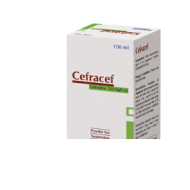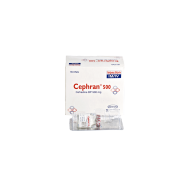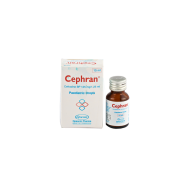

- Stock: Out Of Stock
- Brand: ACI Pharmaceuticals
- Product ID: Cephradine
🔒 100% Secure Payment | bKash | Nagad | SSLCommerz | COD
⭐ Become a FREE Member: 7% Extra Savings • Free Delivery • Refill Reminders • Priority Support
This Item is for pre order
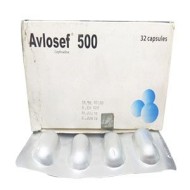
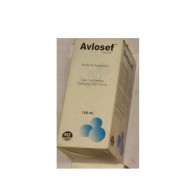
Avlosef PD Drops – Concentrated Cephradine for Infants and Young Children
| Brand Name | Avlosef PD Drops |
|---|---|
| Generic Name | Cephradine Paediatric Drops 125mg per 1.25ml |
| Strength | 125mg per 1.25ml (100mg/ml concentrated) |
| Dosage Form | Concentrated Paediatric Oral Drops |
| Manufacturer | ACI Limited, Bangladesh |
| Drug Class | First-Generation Cephalosporin Antibiotic |
| Prescription Required | Yes (Rx) |
| Storage | Reconstituted: 2–8°C, use within 7 days. Dry powder: below 25°C. |
1. Concentrated Drops for Precise Infant Dosing
Avlosef PD Drops by ACI Limited contain cephradine 125mg per 1.25ml (100mg/ml) — a highly concentrated formulation designed for neonates and young infants requiring accurate, small-volume dosing. At 100mg/ml, Avlosef PD Drops are 4× more concentrated than standard cephradine 125mg/5ml suspension (25mg/ml), allowing therapeutic doses to be delivered in volumes of 0.5–2ml. This is essential for: (1) Newborns and young infants under 3 months with limited oral intake capacity; (2) Premature infants and low-birth-weight neonates; (3) Any infant where minimising liquid volume is critical for safe swallowing. Administration must use a calibrated 1ml oral syringe — never a teaspoon. The dropper delivers measured volumes; the syringe allows 0.1ml precision.
2. Cephradine PD Drops: Indications in Infants
In young infants, cephradine PD drops are appropriate for: (1) Skin and soft tissue infections: Impetigo neonatorum (S. aureus, Group B Strep), omphalitis (navel infections) — though omphalitis is usually managed with IV antibiotics in hospital; (2) Mild upper respiratory tract bacterial infections in infants over 3 months with confirmed bacterial aetiology; (3) Urinary tract infections — confirmed on culture in infants. Important: febrile infants under 3 months with any suspected infection should be evaluated in a hospital setting for possible serious bacterial infection. Avlosef PD drops are for clearly mild, well-defined outpatient infections in infants — not for empiric treatment of undifferentiated fever in neonates.
3. Cephradine in Neonatal Skin Infections
The neonatal period (first 28 days) has unique infection patterns. S. aureus and Group B Streptococcus (GBS) dominate early neonatal skin infections. Cephradine covers both organisms. Relevant conditions: (1) Staphylococcal scalded skin syndrome (SSSS): Generalised blistering due to S. aureus exfoliative toxin — requires hospital IV antistaphylococcal antibiotics, not oral drops; (2) Localised bullous impetigo (a milder form): Isolated bullae in otherwise well infant — may be managed with oral cephradine drops in carefully selected cases under medical supervision; (3) Infected skin folds: Intertrigo with bacterial superinfection in neonatal skinfolds — topical first, oral cephradine if spreading; (4) Paronychia (nail fold infection): S. aureus nail fold infection in neonates — oral cephradine drops if spreading beyond localised area.
4. Dosage
Cephradine infant dosing: 25–50mg/kg/day in 4 divided doses (every 6 hours). Using PD drops 100mg/ml: volume per dose (ml) = (weight × dose/day) ÷ 4 ÷ 100. For 4kg infant at 25mg/kg/day: (4 × 25) ÷ 4 ÷ 100 = 0.25ml per dose QDS. For 4kg at 50mg/kg/day (severe): 0.5ml per dose QDS. For 7kg infant at 25mg/kg/day: 0.44ml per dose QDS. Always use a 1ml oral syringe for accuracy. Reconstitute with the volume of water specified on label — add water in two stages, shake between additions. Refrigerate reconstituted drops; shake before each use; discard after 7 days.
5. Cephradine PD vs Amoxicillin PD Drops: Comparison
Both cephradine PD drops (Avlosef) and amoxicillin PD drops (Avlomox) are concentrated antibiotic drop formulations for infants. Comparison: (1) S. aureus skin infections: Cephradine preferred — better β-lactamase stability against S. aureus penicillinase; (2) Group B Strep infections: Both equally effective; (3) Gram-negative infections (E. coli UTI): Amoxicillin may be slightly preferred for susceptible organisms; cephradine also active against many E. coli strains; (4) Respiratory infections: Amoxicillin preferred for H. influenzae (common in AOM/pneumonia); (5) Penicillin allergy history: Cephradine can be used in non-anaphylactic allergy; (6) Both require weight-based dosing via 1ml syringe — never teaspoon. The choice between Avlosef PD and Avlomox PD in clinical practice depends primarily on the suspected organism and any allergy history.
Frequently Asked Questions (FAQ)
Q1: How do I measure the correct dose of Avlosef PD drops for my baby?
Use only the 1ml oral syringe with 0.1ml markings. Steps: (1) Shake the bottle well for at least 10 seconds; (2) Draw back the syringe plunger to the prescribed ml mark; (3) Place syringe tip gently between the baby's cheek and gum — not aimed at the throat; (4) Push the plunger slowly while the baby is upright or semi-upright; (5) Follow with a small amount of breast milk if needed for palatability; (6) Wash syringe with clean water after each use. These drops are 100mg/ml — four times more concentrated than standard suspension. A teaspoon (5ml) would deliver 500mg — a dangerous overdose for a young infant.
Q2: My 2-month-old has a skin infection — is Avlosef PD drops safe?
Cephradine PD drops can be used in infants over 1 month for clearly localised, mild skin infections under medical supervision. For a 2-month-old with skin infection: (1) A doctor must examine the infant before prescribing — assessing whether infection is truly localised or has systemic signs; (2) Systemic signs (fever, poor feeding, lethargy, spreading infection) require hospital assessment and likely IV antibiotics — not oral drops at home; (3) If the doctor confirms it is a mild, localised skin infection, weight-based cephradine PD drops are appropriate. Use the prescribed ml dose and complete the full course. Do not self-prescribe antibiotics for infants under 3 months.
Q3: The PD drops bottle looks almost empty after 3 days — is there enough for the full course?
PD drops are highly concentrated — the bottle contains a small volume of powder that reconstitutes to a small volume of liquid, sufficient for the prescribed course at the prescribed dose. If the dose has been calculated correctly for the infant's weight, the bottle should contain enough for the full course. If you are concerned the bottle may run out: (1) Check: are you using the correct ml dose? Ensure you're not dispensing more than prescribed; (2) Recalculate: use the formula (weight × daily dose) ÷ 4 ÷ 100 per dose; (3) Contact your pharmacist to confirm the prescribed dose is appropriate for your baby's weight. Obtain a fresh bottle from the pharmacy if genuinely insufficient — do not dilute or extend the suspension beyond 7 days.
Q4: Can I mix cephradine PD drops with formula milk or breast milk?
Mixing a small amount of cephradine PD drops with 2–5ml of breast milk or formula is acceptable to improve palatability. Key points: (1) Mix with a small volume only — if the infant doesn't finish, the dose is incomplete; (2) Breast milk and standard formula do not significantly affect cephradine absorption; (3) Do not mix with juice or acidic liquids — may affect stability; (4) Best practice: administer drops directly via syringe between cheek and gum, then offer breast or bottle feed immediately after. Direct syringe delivery is the most reliable method to ensure complete dose delivery.