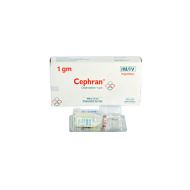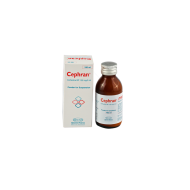
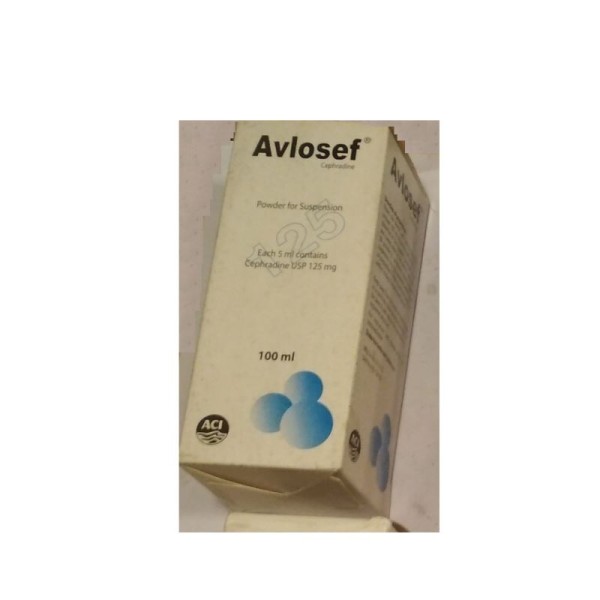
- Stock: Out Of Stock
- Brand: ACI Pharmaceuticals
- Product ID: Cephradine
🔒 100% Secure Payment | bKash | Nagad | SSLCommerz | COD
⭐ Become a FREE Member: 7% Extra Savings • Free Delivery • Refill Reminders • Priority Support
This Item is for pre order
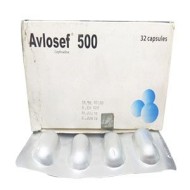
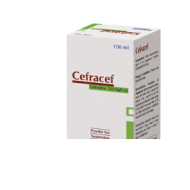
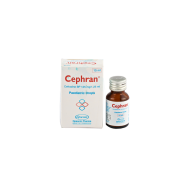
Avlosef 125mg/5ml Suspension – Standard Cephradine for Outpatient Paediatric Infections
| Brand Name | Avlosef Suspension 100ml |
|---|---|
| Generic Name | Cephradine 125mg per 5ml Suspension |
| Strength | 125mg per 5ml (25mg/ml) |
| Dosage Form | Powder for Oral Suspension |
| Manufacturer | ACI Limited, Bangladesh |
| Drug Class | First-Generation Cephalosporin Antibiotic |
| Prescription Required | Yes (Rx) |
| Storage | Dry powder: below 25°C. Reconstituted: 2–8°C, use within 7 days. |
1. Standard Cephradine Suspension for Community Paediatric Practice
Avlosef 125mg/5ml Suspension, by ACI Limited, is the standard-strength cephradine oral suspension (25mg/ml) and the most widely used concentration for outpatient management of common bacterial infections in children aged 3 months to approximately 8–10 years (up to approximately 15–18kg where volumes remain practical). It serves as the natural step-up from Avlosef PD concentrated drops for infants once a child can swallow larger volumes, and bridges to Avlosef capsules when the child can swallow solid dosage forms. In community and primary care settings across Bangladesh, Avlosef 125mg/5ml is prescribed for: skin and soft tissue infections, acute tonsillitis, otitis media, UTI, and infected wounds — conditions requiring a first-generation cephalosporin with consistent oral bioavailability and a familiar dosing format.
2. Cephradine Suspension for Acute Tonsillitis in Children
Acute tonsillitis/pharyngitis is one of the most common presentations in Bangladeshi paediatric primary care. Distinguishing bacterial from viral tonsillitis determines whether antibiotics are indicated: Signs suggesting bacterial (Group A Strep) tonsillitis: exudate on tonsils, tender anterior cervical lymph nodes, fever, absence of cough (McIsaac/Centor criteria). Signs suggesting viral tonsillitis: runny nose, cough, hoarse voice, mouth ulcers, conjunctivitis — no antibiotics needed. When bacterial tonsillitis is confirmed or strongly suspected: cephradine suspension 25–50mg/kg/day in 2–4 divided doses × 10 days. A 10-day course is essential — shorter courses for Group A Strep increase relapse risk and, critically, risk of acute rheumatic fever (ARF) with potential permanent cardiac valvular damage. ARF is still prevalent in Bangladesh — completing the full 10-day cephradine course for strep tonsillitis is a public health priority, not merely a guideline recommendation.
3. Cephradine for Community-Acquired UTI in Children
Urinary tract infections in children aged 3 months to 5 years are important to treat appropriately — untreated or inadequately treated UTI in young children can cause permanent renal scarring. E. coli causes approximately 80% of paediatric UTI in Bangladesh. Cephradine coverage of E. coli: variable — many community E. coli strains are susceptible, but resistance rates have been increasing. For confirmed UTI: (1) Urine culture and sensitivity before starting antibiotics in children where possible — particularly important for recurrent UTI; (2) Cephradine 25–50mg/kg/day for 7–10 days for pyelonephritis; 3–5 days for uncomplicated lower UTI over 2 years; (3) If culture returns showing cephradine resistance, step to appropriate oral agent based on sensitivity. If clinical response is good and culture confirms sensitivity, complete the course. Post-UTI imaging (renal ultrasound, DMSA scan) is recommended for children with first febrile UTI under 6 months, recurrent UTI, or poor response to treatment.
4. Dosage
Paediatric cephradine dose: 25–50mg/kg/day in 4 divided doses (QDS) or 2 divided doses (BD) for mild-moderate infections. Using 125mg/5ml suspension (25mg/ml): volume per dose (ml) = (weight × daily dose) ÷ (number of doses) ÷ 25 × 5 = (weight × daily dose) ÷ doses ÷ 5. For 10kg child at 25mg/kg/day QDS: (10 × 25) ÷ 4 ÷ 5 = 12.5ml QDS — large volume. Consider switching to DS suspension or capsules for children over 10–12kg. Reconstitute with water marked on bottle; refrigerate; use within 7 days; shake before each dose.
5. Recognising Treatment Failure and When to Escalate
Clinical response should be apparent within 48–72 hours of starting cephradine. Signs that should prompt reassessment and possible escalation: (1) Persistent or worsening fever at 72 hours: Consider antibiotic failure — re-examine, check for abscess, obtain cultures; (2) Spreading cellulitis despite 48 hours of therapy: May indicate MRSA (resistant to all cephalosporins) or need for incision and drainage; (3) New systemic signs: Rapid deterioration, rigors, new rash — escalate to IV antibiotics and hospital referral; (4) Failure to improve tonsillitis by day 3–4: Peritonsillar abscess may be developing — examine for uvular deviation, drooling, severe dysphagia. Surgical drainage may be needed; (5) Returning symptoms within 2 weeks of completing treatment: Recurrence may indicate resistance, re-infection, or an underlying structural problem (vesicoureteral reflux for UTI, tonsillar hypertrophy for recurrent tonsillitis).
Frequently Asked Questions (FAQ)
Q1: My child is 8 years old and weighs 25kg — is the 125mg/5ml suspension still appropriate?
For a 25kg child, the 125mg/5ml suspension doses are very large and the DS (250mg/5ml) suspension or capsules are more practical. At standard dose (25mg/kg/day QDS): (25 × 25) ÷ 4 ÷ 5 = 31ml per dose — impractically large. DS suspension gives 15.6ml per dose — still large. Avlosef 250mg or 500mg capsules are far more practical at this weight if the child can swallow them. If the child cannot swallow capsules, DS suspension is manageable. Standard 125mg/5ml suspension is most practical for children under approximately 12–15kg.
Q2: Why does my child need to take cephradine for a full 10 days for tonsillitis?
Group A Streptococcal (GAS) tonsillitis requires 10 days of antibiotics to reliably eradicate the bacteria and prevent complications. The critical complication is acute rheumatic fever (ARF) — an immune reaction that can cause permanent heart valve damage. ARF risk is substantially reduced by completing a full 10-day antibiotic course. Studies show: 3-day courses → inadequate GAS eradication and high rheumatic fever risk; 5-day courses → better but still higher risk than 10 days; 10-day courses → consistently suppress GAS and protect against rheumatic fever. In Bangladesh, where rheumatic heart disease remains a significant problem, completing the full 10-day tonsillitis course is especially important. Even if your child feels completely well by day 3, continue the medicine until day 10.
Q3: My child vomited after the cephradine suspension dose — do I repeat it?
If vomiting occurs within 30 minutes of a dose: give the same dose again once the child has settled (usually 15–30 minutes after vomiting). If vomiting occurs after 30 minutes, the dose has likely been absorbed — do not repeat. To reduce vomiting: (1) Give cephradine suspension with a small amount of food or milk; (2) Use the correct volume — larger volumes are harder to tolerate; (3) Consider DS suspension if volumes are large (smaller volume for same dose); (4) If vomiting is persistent and the child cannot tolerate oral antibiotics, seek medical review — IV antibiotics may be needed. Shake the bottle well before giving; refrigerating the suspension slightly may improve taste.
Q4: Can cephradine suspension be used for ear infections (otitis media) in children?
Yes — cephradine covers S. pneumoniae and S. aureus, two of the three main AOM pathogens. However, for AOM, amoxicillin is typically preferred as first-line because it has better coverage of H. influenzae and M. catarrhalis. Cephradine is appropriate for AOM when: (1) Mild penicillin allergy history (rash) makes amoxicillin less desirable; (2) Amoxicillin treatment has failed (cephradine then provides alternative coverage); (3) The clinical picture suggests S. aureus as the pathogen. For first-episode, non-severe AOM in children over 2 years, watchful waiting for 48–72 hours is appropriate before prescribing any antibiotic. If antibiotics are needed, amoxicillin remains first-line; cephradine is a valid second choice or alternative in amoxicillin allergy.