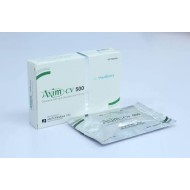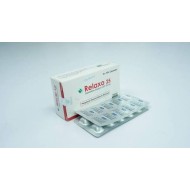
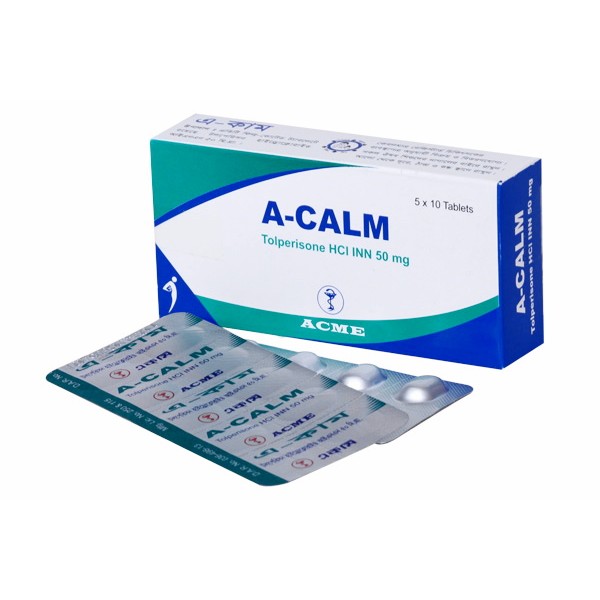
- Stock: Out Of Stock
- Brand: Acme Laboratories Limited
- Product ID: Tolperisone Hydrochloride
🔒 100% Secure Payment | bKash | Nagad | SSLCommerz | COD
⭐ Become a FREE Member: 7% Extra Savings • Free Delivery • Refill Reminders • Priority Support
This Item is for pre order
A-CALM 50 mg Tablet (Tolperisone Hydrochloride) — Product Overview
| Quick Reference | |
|---|---|
| Brand Name | A-CALM |
| Generic Name | Tolperisone Hydrochloride 50 mg |
| Drug Class | Centrally-Acting Muscle Relaxant |
| Manufacturer | ACI Limited, Bangladesh |
| Dosage Form | Tablet |
| Strength | 50 mg per tablet |
| Also available as | 150 mg tablet |
| Storage | Below 25°C, in a dry place protected from light |
| Prescription Status | Prescription Required |
What is A-CALM (Tolperisone)?
A-CALM contains Tolperisone Hydrochloride 50 mg, a centrally-acting muscle relaxant with membrane-stabilising properties. Unlike many older muscle relaxants (such as diazepam), tolperisone does not cause significant sedation or impair psychomotor function, making it highly suitable for working patients. It has been widely used in Europe, Asia, and Bangladesh for several decades to treat painful muscle spasm and spasticity of neurological origin. A-CALM is manufactured by ACI Limited, one of Bangladesh's leading pharmaceutical manufacturers.
Mechanism of Action
Tolperisone acts through multiple complementary mechanisms. It inhibits voltage-gated sodium channels in neuronal membranes, reducing the frequency of action potentials in hyperexcitable motor neurons. It also blocks voltage-gated calcium channels, reducing neurotransmitter release at spinal interneurons. The net effect is a reduction in pathologically increased muscle tone and spasm, without significantly affecting normal muscle function or causing central sedation. It also has local anaesthetic-like membrane-stabilising properties.
Indications
A-CALM 50 mg is indicated for:
- Painful muscle spasm: Associated with musculoskeletal conditions — neck pain, back pain (lumbago), spondylosis, spondyloarthritis
- Post-traumatic spasm: After sports injuries, whiplash, or surgical procedures
- Spasticity of neurological origin: Sequelae of stroke, multiple sclerosis, myelopathy, cerebral palsy, or spinal cord injury
- Arthritic conditions: Adjunct to NSAIDs for painful muscle spasm in osteoarthritis and rheumatoid arthritis
- Post-operative rehabilitation: To reduce reflex muscle guarding and improve physiotherapy outcomes
- Vascular diseases: Adjunct in obliterative arterial diseases and Raynaud's syndrome (due to mild vasodilatory effect)
Dosage and Administration
Adults (starting dose): 50 mg (1 tablet) three times daily. The dose may be gradually increased to 150 mg three times daily (total 450 mg/day) based on response and tolerability.
Elderly: Start with 50 mg three times daily; increase slowly with monitoring.
Children (for spasticity): 5 mg/kg/day in three divided doses, adjusted to response.
Administration: Take after meals with a glass of water to reduce risk of GI upset. Do not crush or chew — swallow whole.
Advantages Over Other Muscle Relaxants
Tolperisone has several clinically important advantages:
- Non-sedating: Unlike diazepam or baclofen, tolperisone does not cause significant drowsiness or impair daily activities
- No dependence: No addiction potential or withdrawal effects
- Safe for drivers and working patients: Does not significantly impair psychomotor function
- No alcohol interaction: Unlike most CNS-acting drugs, tolperisone does not potentiate alcohol effects significantly
Contraindications
- Hypersensitivity to tolperisone hydrochloride or eperisone
- Myasthenia gravis
- Not recommended for children under 3 months
Side Effects
Common: Headache, low blood pressure (hypotension), feeling of weakness, nausea. These are usually mild and transient.
Uncommon: Dizziness, dry mouth, fatigue, abdominal pain.
Rare: Anaphylactic/allergic reactions including urticaria, angioedema, anaphylactic shock — more common in patients with aspirin or NSAID hypersensitivity.
Tolperisone is notably free from the sedative and addiction-related side effects that limit other muscle relaxants.
Precautions
- Renal/hepatic impairment: Use with caution; consider dose reduction
- Hypersensitivity: Patients allergic to NSAIDs may have cross-reactive allergy to tolperisone; start with low dose and monitor
- Pregnancy: Not recommended; limited safety data
- Breastfeeding: Avoid; passes into breast milk
Frequently Asked Questions (FAQ)
Q: Does A-CALM (Tolperisone) cause drowsiness?
A: No — tolperisone is uniquely non-sedating among muscle relaxants. Unlike diazepam, carisoprodol, or baclofen, A-CALM does not cause significant drowsiness, making it suitable for patients who need to work, drive, or study.
Q: How long does A-CALM take to work?
A: Many patients notice some muscle relaxation within 1–2 hours of the first dose. Full therapeutic benefit is typically seen after 1–2 weeks of regular use, especially in chronic conditions like spondylosis or post-stroke spasticity.
Q: Can A-CALM be taken with pain killers (NSAIDs)?
A: Yes. Tolperisone is commonly prescribed alongside NSAIDs (diclofenac, ibuprofen, naproxen) or paracetamol for combined pain relief. The muscle relaxant and analgesic effects are complementary. Note: patients with NSAID allergy have slightly higher risk of tolperisone allergy.
Q: Is A-CALM addictive?
A: No. Tolperisone has no addiction potential, no dependence, and no withdrawal syndrome. This makes it superior to benzodiazepine-based muscle relaxants (diazepam) for long-term use in chronic conditions.
Medical Disclaimer
The information provided is for educational purposes only. Always consult a qualified healthcare professional before starting muscle relaxant therapy. Stop taking A-CALM and seek medical attention immediately if you develop signs of an allergic reaction (rash, swelling, difficulty breathing).