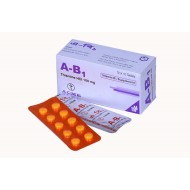
- Stock: Out Of Stock
- Brand: NIPRO JMI Pharma Ltd.
- Product ID: Azilsartan Medoxomil
Available Options
🔒 100% Secure Payment | bKash | Nagad | SSLCommerz | COD
⭐ Become a FREE Member: 7% Extra Savings • Free Delivery • Refill Reminders • Priority Support
This Item is for pre order
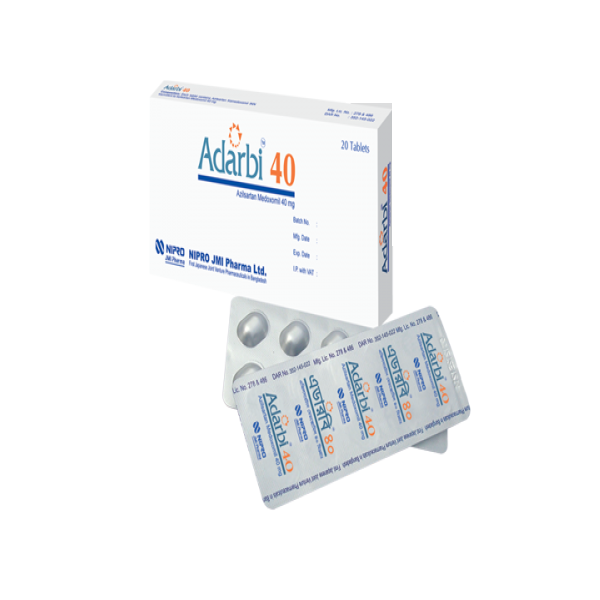
Adarbi 40mg Tablet — Azilsartan Medoxomil
Generic Name: Azilsartan Medoxomil 40mg
Manufacturer: Beximco Pharmaceuticals Ltd.
Drug Class: Angiotensin II Receptor Blocker (ARB) — Antihypertensive
Dosage Form: Tablet
Prescription Status: Prescription Only (Rx)
Mechanism of Action
Azilsartan medoxomil is a prodrug converted to the active form azilsartan, a selective and potent antagonist of the angiotensin II type 1 (AT1) receptor. By blocking AT1 receptors, it prevents angiotensin II-mediated vasoconstriction, aldosterone secretion, sympathetic activation, and sodium retention — leading to vasodilation and blood pressure reduction. Azilsartan has among the highest AT1 receptor binding affinity of all ARBs, resulting in more sustained 24-hour blood pressure control.
Relevance to diabetes: Hypertension is a major comorbidity in Type 2 Diabetes, significantly amplifying cardiovascular and renal risks. ARBs like azilsartan also provide reno-protective effects by reducing intraglomerular pressure and proteinuria — slowing the progression of diabetic nephropathy.
Advantages of Azilsartan
- Superior 24-hour blood pressure reduction compared to valsartan and olmesartan in head-to-head trials
- Once-daily dosing with consistent trough-to-peak ratio
- Renoprotective — reduces albuminuria in diabetic nephropathy
- No significant metabolic effects — does not worsen blood glucose, lipids, or uric acid
- Well tolerated; no cough (unlike ACE inhibitors)
Indications
- Hypertension (primary/essential) — monotherapy or in combination
- Hypertension with Type 2 Diabetes — cardiovascular risk reduction
- Diabetic nephropathy with hypertension — renoprotection and blood pressure control
- Heart failure with reduced ejection fraction (as part of RAAS blockade)
Dosage and Administration
| Stage | Dose | Notes |
|---|---|---|
| Starting dose | 40mg once daily | With or without food |
| Titration | Increase to 80mg after 2–4 weeks | If BP target not achieved on 40mg |
| Maximum dose | 80mg once daily | Higher doses provide no added benefit |
| Volume-depleted patients | Start at 40mg — monitor closely | Risk of symptomatic hypotension |
Take at the same time each day. May be taken with or without food. Full antihypertensive effect seen within 2 weeks; maximum effect at 4 weeks.
Blood Pressure Targets in Diabetes
| Patient Group | BP Target | Notes |
|---|---|---|
| Diabetes + Hypertension (general) | <130/80 mmHg | ADA/ESC 2023 guideline target |
| Diabetic nephropathy (proteinuria) | <130/80 mmHg | ARB preferred; monitor K+ and creatinine |
| Elderly (>65 years) | <140/90 mmHg (individualise) | Avoid aggressive lowering; fall risk |
Black Box Warning — Foetal Toxicity
Azilsartan is contraindicated in pregnancy. Drugs acting on the renin-angiotensin system can cause foetal and neonatal injury or death when administered in the 2nd and 3rd trimesters. Discontinue as soon as pregnancy is detected. Counsel women of childbearing potential about the risk.
Contraindications
- Pregnancy (all trimesters)
- Hypersensitivity to azilsartan or any ARB
- Co-administration with aliskiren in patients with diabetes or moderate-to-severe renal impairment (eGFR <60)
- Concurrent use with ACE inhibitor (dual RAAS blockade — increased risk of hypotension, hyperkalaemia, renal impairment)
Drug Interactions
| Drug / Class | Effect |
|---|---|
| ACE inhibitors / Aliskiren | Avoid — dual RAAS blockade; hypotension, hyperkalaemia, renal failure |
| Potassium-sparing diuretics, potassium supplements | Hyperkalaemia risk — monitor serum K+ |
| NSAIDs | Attenuate antihypertensive effect; worsen renal function |
| Lithium | ARBs reduce lithium clearance — toxicity risk |
| Antidiabetic agents (SU, insulin) | ARBs may enhance hypoglycaemic effect — monitor blood glucose |
Side Effects
| System | Side Effects |
|---|---|
| Cardiovascular | Hypotension (especially in volume-depleted patients), dizziness |
| Renal | Rise in serum creatinine (especially in RAS-dependent renal perfusion), hyperkalaemia |
| GI | Nausea, diarrhoea (uncommon) |
| Respiratory | No cough (unlike ACE inhibitors) |
| Metabolic | Mild elevation in creatinine (acceptable within first 2 weeks — monitor) |
Monitoring
- Blood pressure — at each clinic visit; home monitoring encouraged
- Serum potassium and creatinine — at baseline, 2 weeks after initiation/dose change, then annually
- Urine albumin-to-creatinine ratio (ACR) — annually in diabetic nephropathy
- Pregnancy test — in women of childbearing potential before starting
Storage
Store below 30°C. Protect from moisture and light. Keep out of reach of children.
Medical Disclaimer
The information provided here is for educational and informational purposes only and is not a substitute for professional medical advice, diagnosis, or treatment. Adarbi (Azilsartan Medoxomil) must only be used under the supervision of a qualified physician. This medication is contraindicated in pregnancy. Regular monitoring of blood pressure, renal function, and serum potassium is essential. DiabetesStore.com.bd does not endorse self-medication.